 Breakingdefense
 MBDA Unveils Advanced Anti-Drone Systems at ILA 2026 Amid Rising UAV Threats
Article Content

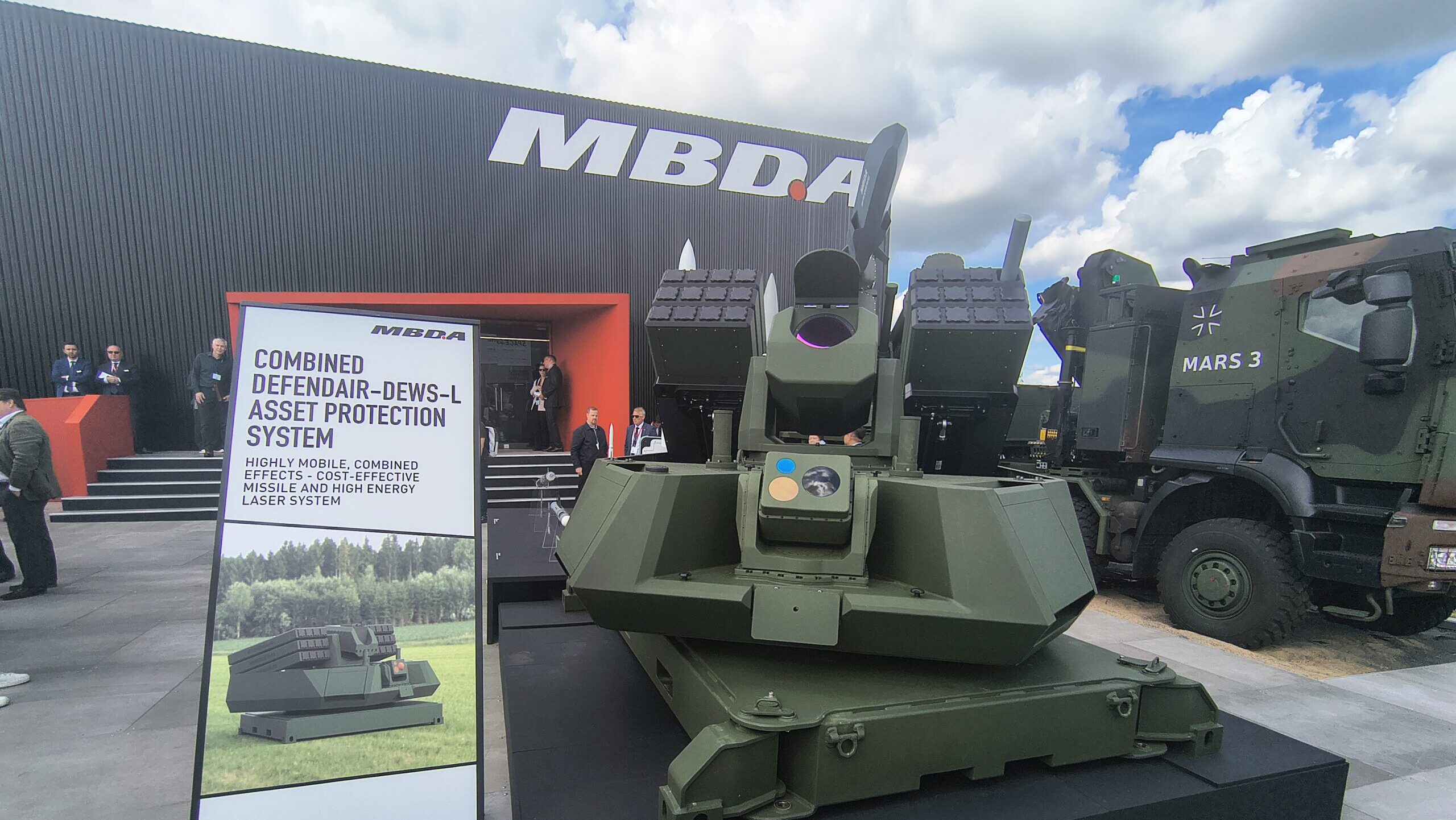
- •MBDA introduced a hybrid anti-drone system featuring a laser and missile interceptor.
- •The system targets the growing threat of low-cost unmanned aerial vehicles (UAVs).
- •Initial deployment with the German Armed Forces is anticipated before the decade's end.
At the ILA 2026 in Berlin, MBDA showcased a new anti-drone system combining the DEFENDAIR guided missile with a high-energy laser weapon, addressing the increasing threat from small, fast, and low-cost drones. This hybrid platform aims for initial deployment with the German Armed Forces before the decade's end. The system is designed to neutralize drone swarms and other unmanned aerial threats effectively. MBDA's presentation comes in the context of heightened military focus on counter-drone technologies, particularly due to ongoing conflicts in Ukraine and the Middle East. The company is also expanding its deep precision strike capabilities, including hypersonic weapons and one-way attack drones, to meet evolving defense demands. The DEWS-L laser weapon is intended for close-range engagements, complementing the missile interceptor's longer-range capabilities. This development reflects a broader trend in defense sectors worldwide to enhance air defense without incurring high costs for interceptors.
Ask AI about this cluster
Answers cite the sources they use
Timeline
More articles in this cluster (2)
Continue Reading
 Critical WSO2 API Manager Vulnerability Under Active Exploitation A critical vulnerability (CVE-2026-5430) in WSO2 API Manager is being actively exploited, allowing unauthenticated attackers to forge admin tokens via JWT authentication bypass. This flaw, which has a CVSS score of 10.0, affects multiple WSO2 products including API Manager, Universal Gateway, Traffic Manager, and API…
  Critical Linux Kernel Vulnerability CVE-2025-39682 Under Active Exploitation A critical vulnerability (CVE-2025-39682) in the Linux kernel allows remote code execution through mishandling of zero-length TLS records. This flaw affects kTLS-enabled hosts running vulnerable kernel versions, exposing them to attackers without authentication. CISA added this vulnerability to its Known Exploited…