 Constellationr
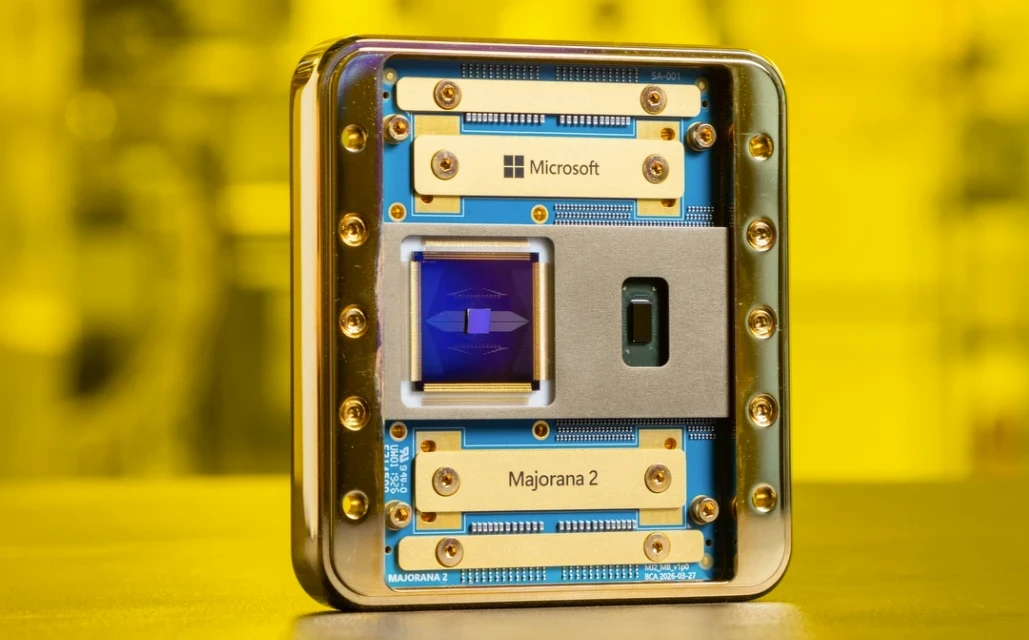
 Microsoft Launches Majorana 2, Enhancing Quantum Computing Reliability
Article Content

- •Microsoft's Majorana 2 offers a 1,000x improvement in qubit reliability.
- •The new quantum hardware is set to accelerate Microsoft's roadmap to a utility-scale quantum computer by 2029.
- •Majorana 2 utilizes agentic AI and new materials, including lead as a superconductor, for enhanced performance.
On June 2, 2026, Microsoft announced Majorana 2, a new generation of topological quantum computing hardware. This advancement features a 1,000x improvement in qubit reliability, significantly accelerating Microsoft's quantum computing roadmap. The unveiling occurred at Microsoft Build 2026, coinciding with increased competition in quantum technology, highlighted by IBM's recent $1 billion funding from the US government for quantum chip development. Dr. Chetan Nayak emphasized the role of agentic AI in designing quantum systems and materials. Majorana 2 utilizes a new material stack, replacing aluminum with lead as the superconductor, which enhances performance and reliability. Microsoft aims to achieve a utility-scale quantum computer by 2029, moving the target date from 2033. The company plans to integrate these systems into Azure, rejecting modular architectures in favor of a single-chip design with over 1 million qubits.
Ask AI about this cluster
Answers cite the sources they use
Timeline
More articles in this cluster (8)
Following this threat?
Track Azure in your own feed — you're alerted when they show up in new reporting, leak sites or exploitation.
Free account · no card needed
Continue Reading
 Critical WSO2 API Manager Vulnerability Under Active Exploitation A critical vulnerability (CVE-2026-5430) in WSO2 API Manager is being actively exploited, allowing unauthenticated attackers to forge admin tokens via JWT authentication bypass. This flaw, which has a CVSS score of 10.0, affects multiple WSO2 products including API Manager, Universal Gateway, Traffic Manager, and API…
  Critical Linux Kernel Vulnerability CVE-2025-39682 Under Active Exploitation A critical vulnerability (CVE-2025-39682) in the Linux kernel allows remote code execution through mishandling of zero-length TLS records. This flaw affects kTLS-enabled hosts running vulnerable kernel versions, exposing them to attackers without authentication. CISA added this vulnerability to its Known Exploited…