 www.sgr.org.uk
 Military Emissions Reporting Gaps Threaten Climate Goals
Article Content

- •Military emissions data is underreported, covering less than 10% of actual emissions.
- •Major military spenders do not include military emissions in their climate action plans.
- •Failure to address military emissions jeopardizes global climate targets.
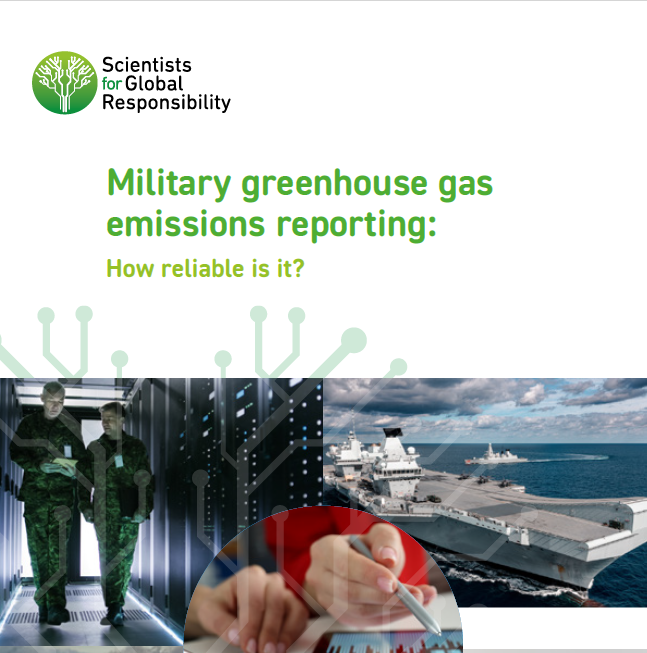
A report by Scientists for Global Responsibility reveals that military greenhouse gas emissions data is severely underreported, with official UN figures covering less than 10% of actual emissions. The analysis indicates that military emissions are not adequately included in countries' Nationally Determined Contributions (NDCs) under the UNFCCC, particularly among major military spenders like the US, China, and Russia. This lack of transparency and accountability undermines global climate targets, as military emissions are significant contributors to overall greenhouse gas emissions. The report emphasizes that without addressing military emissions, countries are unlikely to meet their net zero ambitions or adhere to climate targets of 1.5 and 2 degrees Celsius. The findings highlight the need for integrating conflict prevention and peacebuilding into climate action strategies.
Ask AI about this cluster
Answers cite the sources they use
Timeline
More articles in this cluster (2)
Common questions
How much of military emissions are reported?
Which countries are failing to report military emissions?
What are the implications of these findings?
Continue Reading
 CVE-2015-3306 Exploited in ProFTPD FTP Servers CVE-2015-3306, a vulnerability in ProFTPD 1.3.5, allows remote attackers to read and write arbitrary files using the SITE CPFR and SITE CPTO commands. This exploit can lead to unauthorized access and potential remote code execution, as the commands are executed with the privileges of the ProFTPD service. Active…
  CISA Mandates Urgent Patching of Five Critical Flaws Exploited by Flax Typhoon The U.S. Cybersecurity and Infrastructure Security Agency (CISA) has ordered federal agencies to patch five critical vulnerabilities by October 11, 2026, following exploitation by the China-linked hacking group Flax Typhoon. The vulnerabilities, added to CISA's Known Exploited Vulnerabilities (KEV) catalog, include…