 science.nasa.gov
NASA's Lucy Reaches Trojan Asteroid Region After 5-Year Journey
Article Content

- •NASA's Lucy is the first spacecraft to reach the Trojan asteroid region.
- •Lucy traveled over 2.2 billion miles since its launch on October 16, 2021.
- •The first encounter with a Trojan asteroid, Eurybates, is scheduled for August 11, 2027.
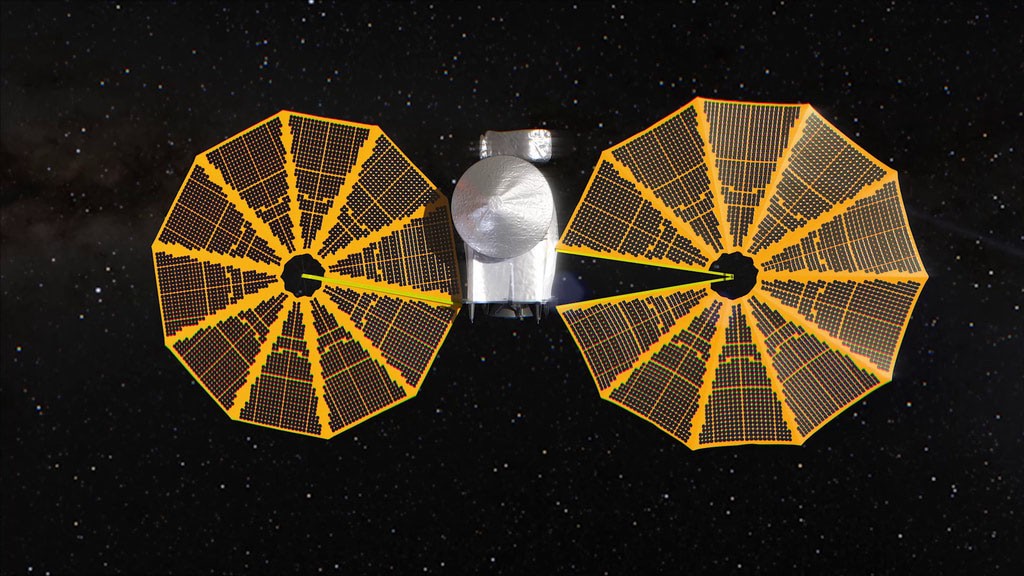
NASA's Lucy spacecraft has successfully entered the Jupiter Trojan asteroid region, specifically Lagrange point 4 (L4), after traveling over 2.2 billion miles since its launch on October 16, 2021. This milestone marks Lucy as the first spacecraft to explore these primitive solar-system bodies, which are believed to provide insights into the early Solar System. The mission will examine the Trojan asteroids, with the first encounter scheduled for August 11, 2027, when it will approach the asteroid Eurybates. The Trojans are located approximately 484 million miles from Jupiter, with an average separation of over 6 million miles between them. Previous missions have not targeted these asteroids, making Lucy's journey significant for planetary science. The spacecraft's position is tracked using radio signals and images of surrounding stars, confirming its arrival at L4.
Ask AI about this cluster
Answers cite the sources they use
Timeline
More articles in this cluster (4)
Common questions
What is the purpose of Lucy's mission?
When will Lucy encounter its first asteroid?
How far did Lucy travel to reach the Trojan region?
Continue Reading
 North Korean Hackers Steal $6.3 Billion from Binance in Record Crypto Heist On October 29, 2026, Binance, the world's largest cryptocurrency exchange, reported a massive security breach resulting in the theft of approximately $6.3 billion across ten blockchains. The attack is attributed to North Korea's TraderTraitor hacking group, which gained access via a compromised DevOps engineer's…
 Chinese Actor Compromises US Government Networks via PHP2Shell Exploit A suspected Chinese nation-state actor exploited vulnerabilities in Palo Alto Networks firewalls using a chained PHP2Shell exploit and a Linux kernel privilege escalation flaw. The attack, which began on October 23, targeted 25 servers across the US, Japan, Taiwan, and South Korea, with a focus on US…