 Defensedaily
 NGA Launches CubeSats to Enhance Geomagnetic Data Collection
Article Content

- •NGA launched three CubeSats on March 30, 2026, to enhance geomagnetic data collection.
- •The satellites support the World Magnetic Model, vital for military and commercial navigation.
- •This launch demonstrates NGA's commitment to innovative data collection methods through the MagQuest program.
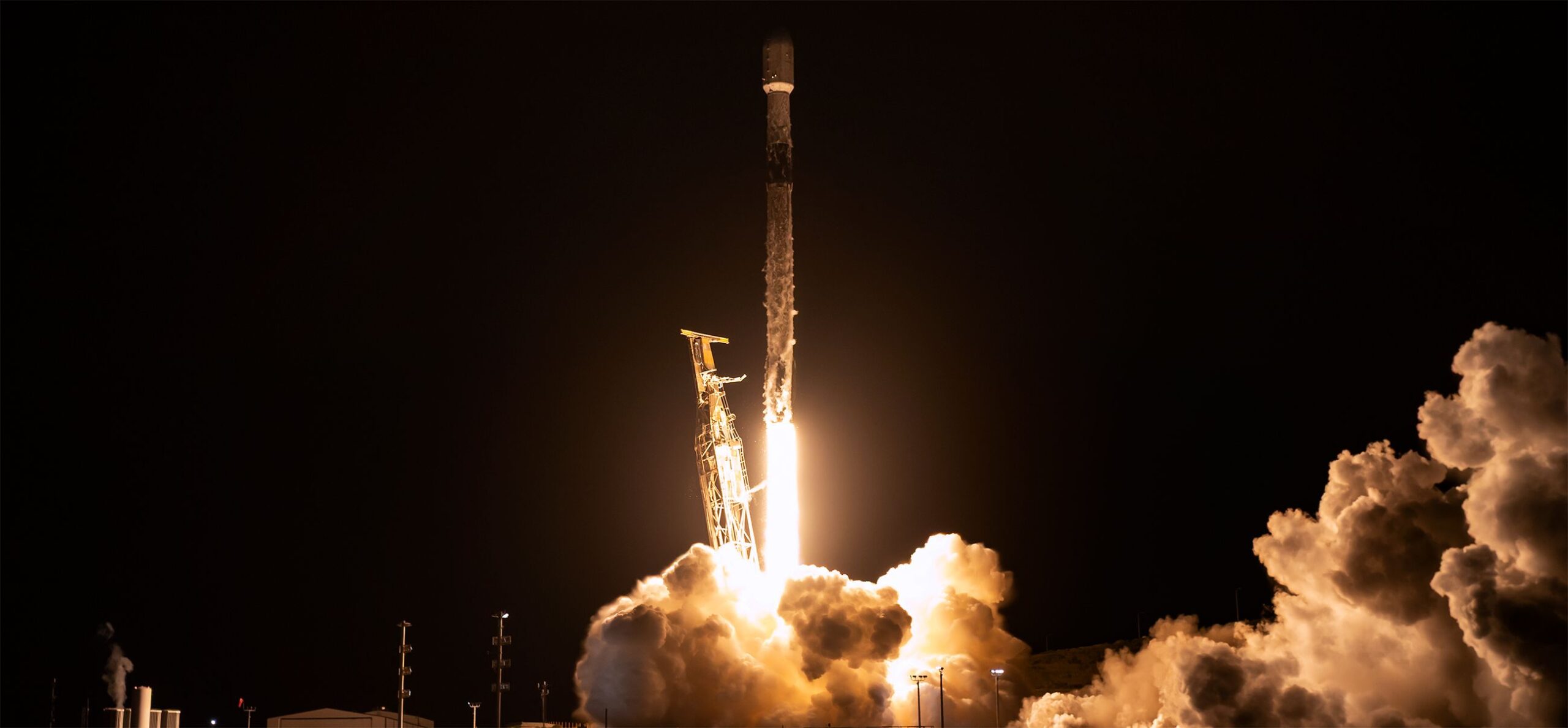
On March 30, 2026, the National Geospatial-Intelligence Agency (NGA) successfully launched three CubeSats as part of its MagQuest program to improve geomagnetic data collection. The satellites were deployed via a SpaceX Falcon 9 rocket from Vandenberg Space Force Base, California. Each CubeSat is equipped with unique magnetometer technologies aimed at enhancing the accuracy of the World Magnetic Model (WMM), which is crucial for military systems, commercial aviation, and GPS applications. The launch marks a significant step in NGA's efforts to innovate data collection methods, as the agency collaborates with partners like the National Oceanic and Atmospheric Administration and the British Geological Survey. The CubeSats are the first of their kind to collect geomagnetic data in orbit, with capabilities including a compact scalar-vector magnetometer and a diamond quantum magnetometer. This initiative is part of NGA's ongoing commitment to update the WMM every five years, responding to the constantly changing Earth's magnetic field. The successful deployment of these satellites is expected to provide high-quality magnetic data essential for various applications.
Ask AI about this cluster
Answers cite the sources they use
Timeline
More articles in this cluster (3)
Continue Reading
 CVE-2015-3306 Exploited in ProFTPD FTP Servers CVE-2015-3306, a vulnerability in ProFTPD 1.3.5, allows remote attackers to read and write arbitrary files using the SITE CPFR and SITE CPTO commands. This exploit can lead to unauthorized access and potential remote code execution, as the commands are executed with the privileges of the ProFTPD service. Active…
  CISA Mandates Urgent Patching of Five Critical Flaws Exploited by Flax Typhoon The U.S. Cybersecurity and Infrastructure Security Agency (CISA) has ordered federal agencies to patch five critical vulnerabilities by October 11, 2026, following exploitation by the China-linked hacking group Flax Typhoon. The vulnerabilities, added to CISA's Known Exploited Vulnerabilities (KEV) catalog, include…