 Telecom.Economictimes.Indiatimes
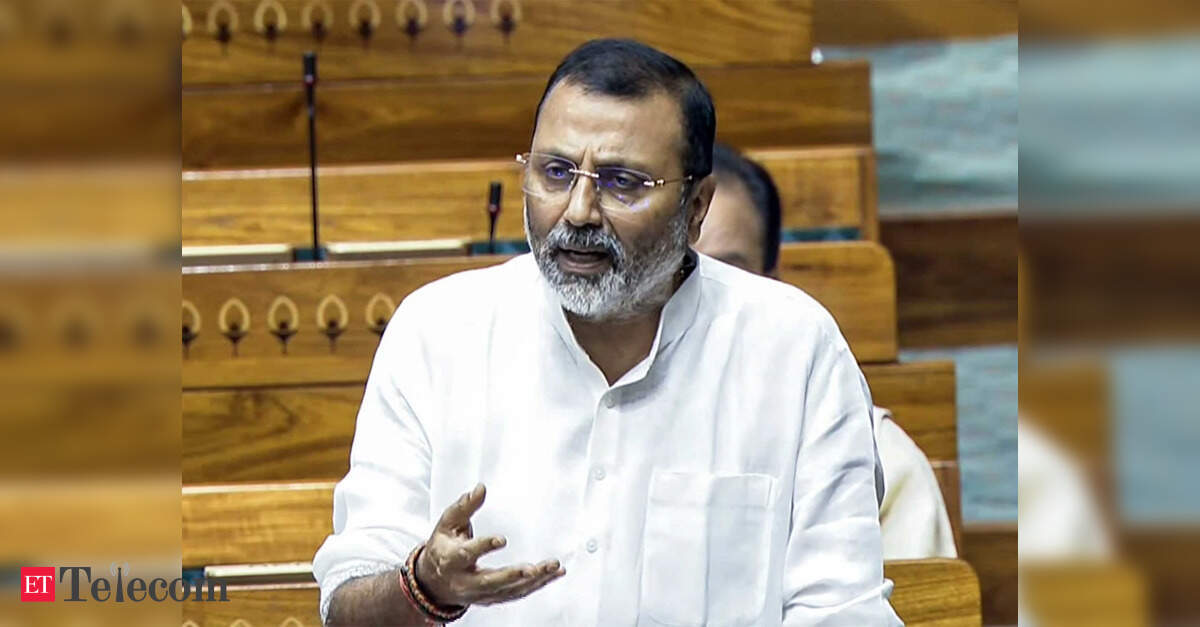
Nishikant Dubey Responds to Elon Musk on Starlink's Security Concerns
Article Content

- •Nishikant Dubey asserts India's security policy is unaffected by social media.
- •Concerns about Starlink's entry into India were raised by security agencies.
- •Dubey criticized Musk for not addressing internet access issues in the U.S.
BJP MP Nishikant Dubey stated that India's security policy is not influenced by social media pressure, addressing Elon Musk's criticism regarding the government's resistance to Starlink's entry into the Indian market. Dubey emphasized that security concerns raised by defense and investigation agencies were taken seriously by the Parliamentary Standing Committee on Information Technology. He noted that similar concerns were flagged by the previous Congress-led government in 2013-14 but did not elaborate on the nature of these threats. Dubey challenged Musk to first provide affordable internet access to the underserved in the U.S. before criticizing India's stance. The debate centers around the regulatory process for Starlink's commercial launch in India.
Ask AI about this cluster
Answers cite the sources they use
Timeline
More articles in this cluster (2)
Common questions
What are the security concerns regarding Starlink?
How is the Indian government responding to Musk's criticism?
What is the current status of Starlink's entry into India?
Continue Reading
 Critical BeyondTrust 9.3 Vulnerability Actively Exploited by Threat Actor A critical vulnerability (CVE-2026-102764) in BeyondTrust Remote Support has been discovered and is actively being exploited by the threat group ARMORY CASTLE, reportedly linked to China. The vulnerability, which has a CVSS score of 9.3, allows unauthenticated attackers to upload files and potentially compromise host…
 Lazarus APT Launches Operation FlashHole Using AI and Post-Quantum Cryptography Kaspersky has identified a cyberespionage campaign, dubbed Operation FlashHole, attributed to the Lazarus APT group, active since July 2025. The campaign has targeted at least three organizations in South Korea's construction, software, and wire-communication sectors. Attack methods include spear-phishing emails…