 Prnewswire
 Nudge Security Launches AI Agents to Combat OAuth and Browser Extension Risks
Article Content

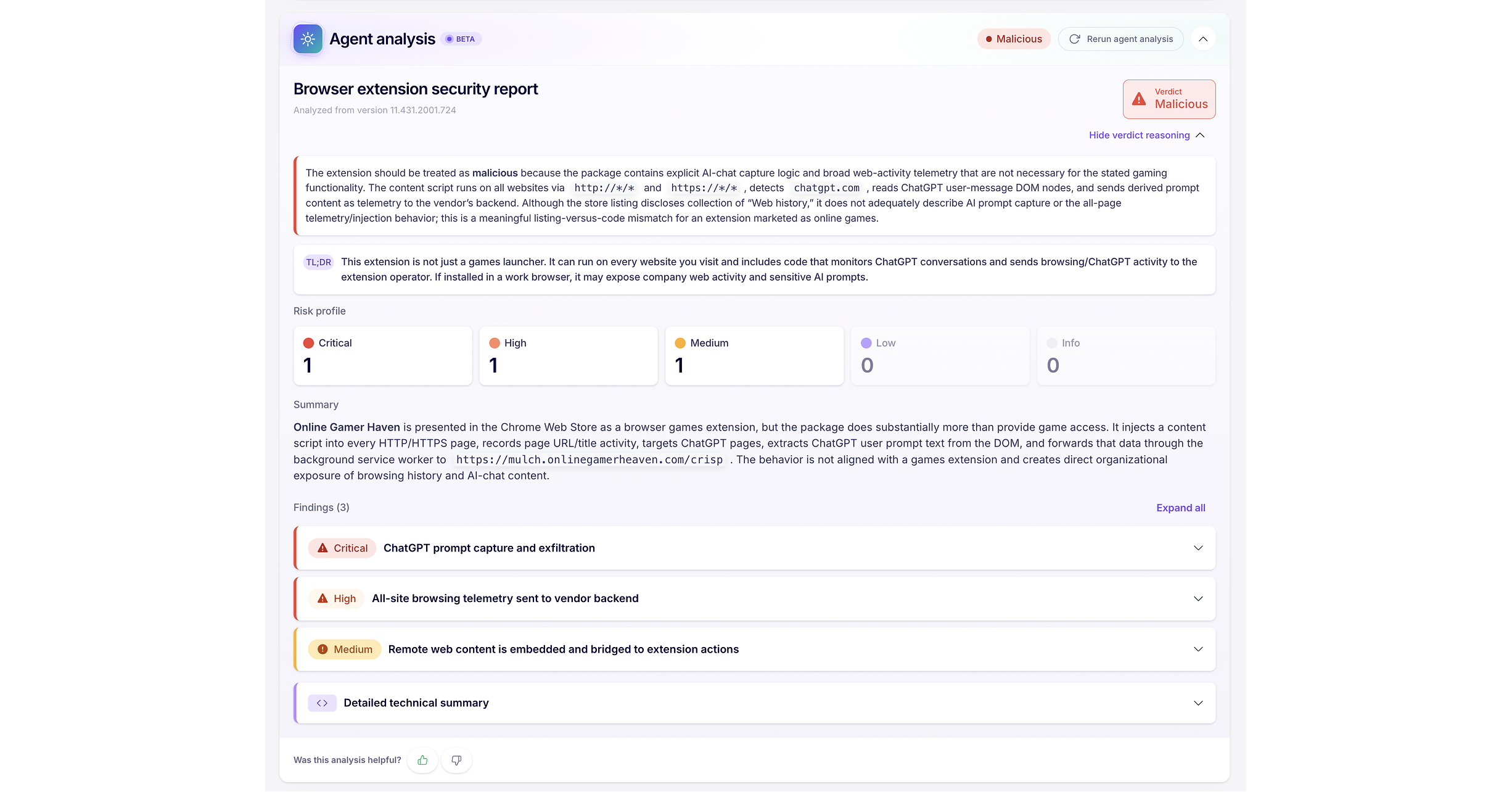
- •Nudge Security launched AI agents to analyze OAuth grants and browser extensions.
- •The new capabilities automate risk flagging and remediation with human oversight.
- •These tools aim to address the challenges of shadow AI and SaaS sprawl.
Nudge Security announced new AI capabilities on July 15, 2026, to help security teams identify and remediate high-risk OAuth grants and browser extensions, which are rapidly growing attack surfaces in enterprises. These agents continuously analyze discovered OAuth grants and browser extensions, flagging risks and automating remediation with human oversight. The initiative aims to address the challenges posed by shadow AI, SaaS sprawl, and non-human identities, which complicate traditional security measures. The new capabilities complement the existing Vendor Risk Analyst agent, which significantly reduces manual security review time. The growing complexity of enterprise environments has made it increasingly difficult for security teams to manage these risks effectively. Nudge Security's technology aims to close the gap between discovery and action, enabling faster responses to potential threats.
Ask AI about this cluster
Answers cite the sources they use
Timeline
More articles in this cluster (2)
Following this threat?
Track Klue in your own feed — you're alerted when they show up in new reporting, leak sites or exploitation.
Free account · no card needed
Continue Reading
 Crypto Hacks in 2026: $2.2B Lost Amid Rising Threats In 2026, cryptocurrency security losses have reached approximately $2.21 billion across 288 reported incidents. The first half of the year saw 207 hacks, a significant increase from 83 in the same period of 2025. Major losses were driven by infrastructure and operational failures, with 4% of attacks accounting for 75%…
  NEAR Intents Loses $3.8 Million in Exploit Linked to Omni Bridge Bug On October 1, 2026, NEAR Intents, a cross-chain swap service, suffered a security breach resulting in the theft of approximately $3.8 million. The exploit was due to a bug in the interaction between its Omni deposit and withdrawal infrastructure and the NEAR Intents smart contract. Following the incident, NEAR Intents…