 Straitstimes
Phishing Scams Targeting SingPost Customers via WhatsApp
Ask AI about this cluster
Analyzing cluster data...
Referenced clusters:
Something went wrong. Please try again.
Cluster AI
Ask questions about this threat cluster with AI-powered analysis.
Get Researcher $29.99/moArticle Content
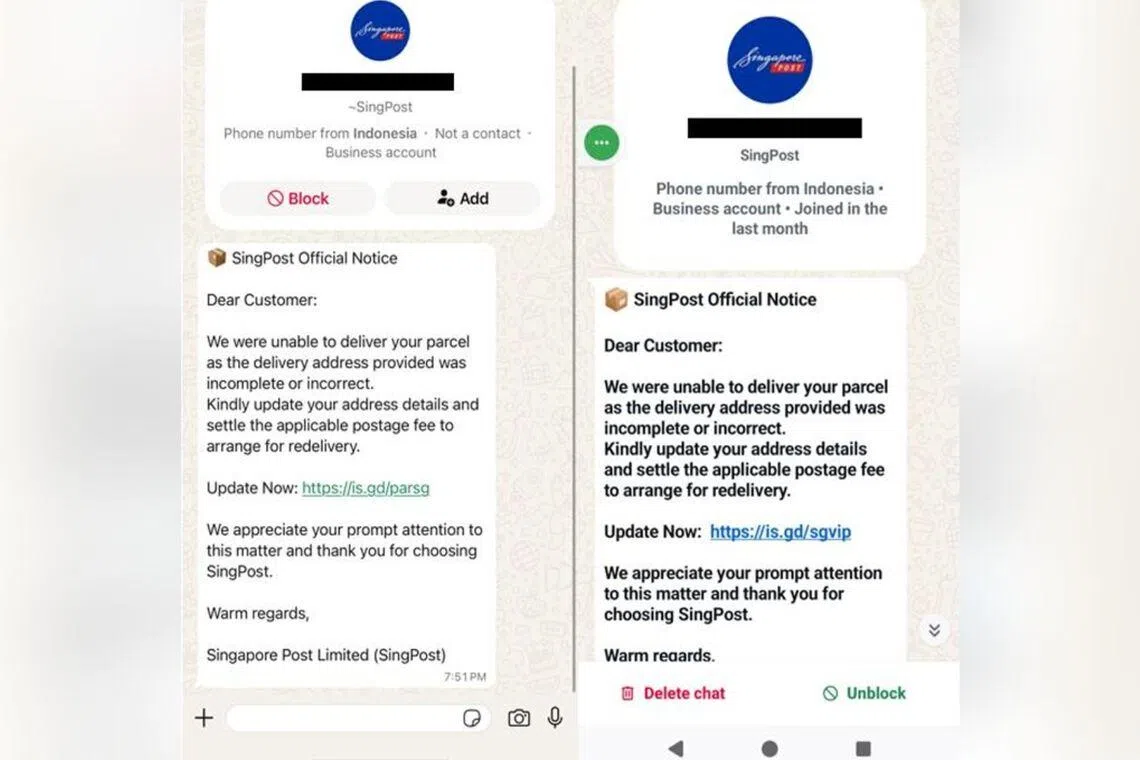
The Singapore Police have issued a warning about phishing scams involving WhatsApp messages impersonating Singapore Post Limited (SingPost). Since March 15, 2026, at least 10 cases have been reported, resulting in losses exceeding $22,000. Victims receive messages claiming failed parcel deliveries due to incomplete information and are prompted to click on a link to update their details. This link directs them to a phishing website where they are asked to provide sensitive banking information. Victims only realize they have been scammed after unauthorized transactions appear in their accounts. The police advise the public to ignore suspicious links and not to disclose sensitive information. They recommend using the ScamShield app and contacting the ScamShield Helpline for verification. The situation is ongoing as the police continue to investigate and warn the public.
Key Points: • At least 10 phishing cases reported since March 15, 2026, with losses over $22,000. • Victims receive WhatsApp messages impersonating SingPost regarding failed parcel deliveries. • Police advise ignoring suspicious links and using the ScamShield app for protection.