 Lbc
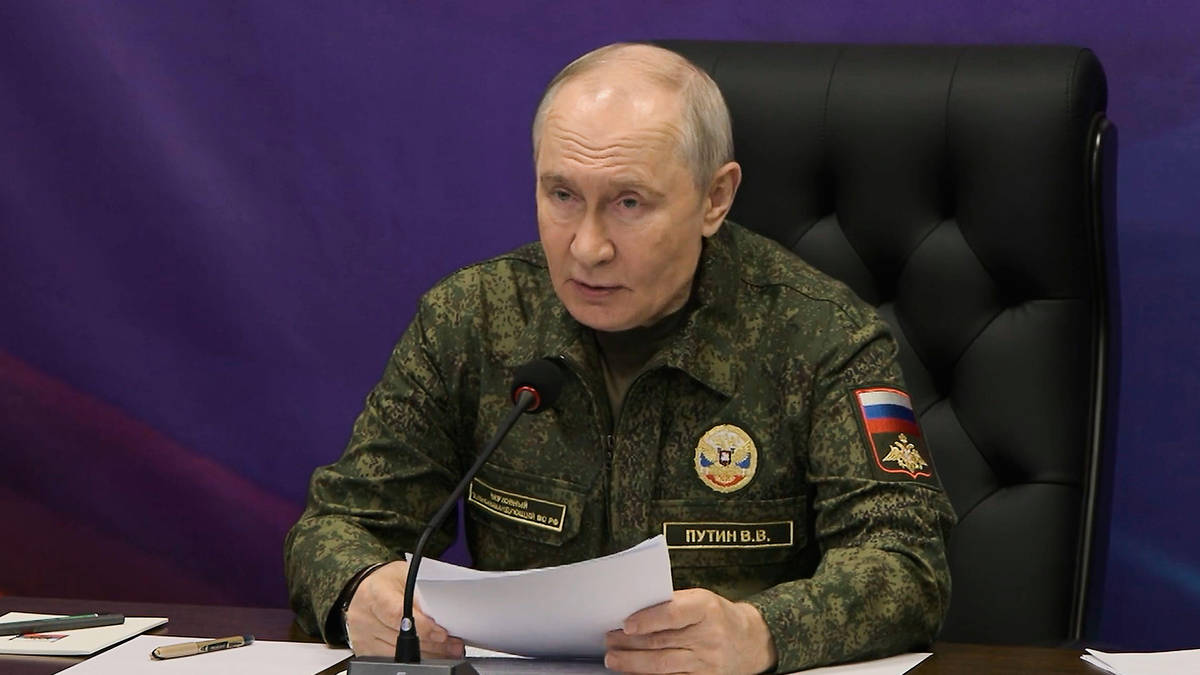
Lbc Putin Declares Non-Negotiable 'Security Zone' in Ukraine
Article Content

- •Putin's announcement marks a significant escalation in the Ukraine conflict.
- •The security zone is positioned as non-negotiable in future peace talks.
- •Zelenskyy seeks further European support amid ongoing military challenges.
On October 17, 2026, Russian President Vladimir Putin announced the establishment of a non-negotiable 'security zone' within Ukraine, spanning 660 km (410 miles) along the border. This decision is framed as a response to Ukraine's military actions in Russia's Kursk region during 2024-25. Putin stated that the Russian armed forces are tasked with both expelling Ukrainian forces and securing this zone, which is currently 70% under Russian control. Kremlin spokesperson Dmitry Peskov confirmed that this area includes parts of the Sumy and Kharkiv regions, which Russia does not officially claim. Ukrainian President Volodymyr Zelenskyy criticized the move, asserting that it undermines peace negotiations and called for increased European support. The situation remains tense, with ongoing military actions and diplomatic disputes between Ukraine and Russia, particularly regarding U.S. involvement and energy deals.
Ask AI about this cluster
Answers cite the sources they use
Timeline
More articles in this cluster (3)
Common questions
What is the extent of the security zone?
How has Ukraine responded to this announcement?
What are the implications for peace talks?
Continue Reading
 Critical Zero-Day Exploited in BeyondTrust Remote Support by China-linked Group A critical vulnerability in BeyondTrust Remote Support, tracked as CVE-2026-102764 with a CVSS score of 9.3, has been exploited by the China-linked espionage group Armory Castle since August 29, 2026. This flaw allows unauthenticated remote attackers to perform file operations, gaining root control and access to…
  CISA Warns of Exploited Vulnerabilities in ProFTPD, ONLYOFFICE, Strapi, and More The U.S. Cybersecurity and Infrastructure Security Agency (CISA) added five vulnerabilities to its Known Exploited Vulnerabilities (KEV) catalog, including critical flaws in ProFTPD, ONLYOFFICE Docs, Strapi, Apache Struts, and ISC BIND. These vulnerabilities are being by Chinese actors for cyber espionage, targeting…