 Kyivpost
 Putin's Diplomatic Efforts in Central Asia Yield Minimal Gains Amidst Regional Tensions
Article Content

- •Putin's visit to Kazakhstan resulted in minimal diplomatic gains for Russia.
- •Kazakhstan continues to assert its strategic autonomy against Kremlin pressure.
- •Russia's influence in the region is challenged by Kazakhstan's ties with the West.
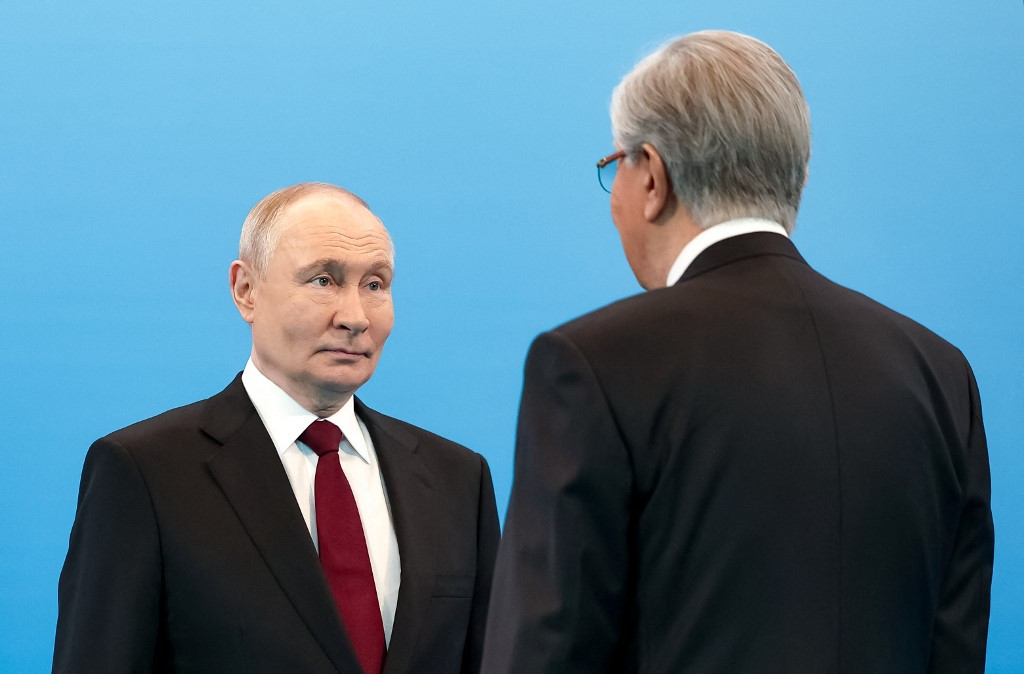
Russian President Vladimir Putin's recent visit to Kazakhstan highlighted the Kremlin's waning influence in Central Asia. Despite high-level talks, Kazakhstan's President Tokayev resisted pressure on trade and labor, maintaining strategic autonomy. Putin's focus shifted to Armenia, where he warned against its pro-European stance, indicating Moscow's anxiety over losing control in the region. Kazakhstan's refusal to abandon alternative trade routes limits Russia's geopolitical leverage. The situation reflects broader tensions in the former Soviet space, exacerbated by the ongoing war in Ukraine and Kazakhstan's growing ties with Western nations. The Kremlin's inability to secure labor commitments from Kazakhstan further complicates its domestic challenges. Overall, the visit resulted in empty rhetoric rather than substantial agreements.
Ask AI about this cluster
Answers cite the sources they use
Timeline
More articles in this cluster (2)
Continue Reading
 Critical Zero-Day Vulnerability in Cisco Secure Email Gateway Exploited On September 14, 2026, Cisco disclosed a critical SQL injection vulnerability (CVE-2026-76461) in its Secure Email Gateway, allowing unauthenticated remote attackers to execute arbitrary commands with root privileges. This vulnerability arises from insufficient validation in the email parsing logic. Cisco confirmed…
  Critical WSO2 API Manager Vulnerability Under Active Exploitation A critical vulnerability (CVE-2026-5430) in WSO2 API Manager is being actively exploited, allowing unauthenticated attackers to forge admin tokens via JWT authentication bypass. This flaw, which has a CVSS score of 10.0, affects multiple WSO2 products including API Manager, Universal Gateway, Traffic Manager, and API…