 Channelnewsasia
 Putin's Visit to China Reinforces Unshakeable Sino-Russian Ties Amid Global Turmoil
Article Content

- •Putin's visit to China on May 19, 2026, follows Trump's recent trip, emphasizing Sino-Russian ties.
- •Chinese state media portrays the relationship as a stabilizing force in a volatile global landscape.
- •Bilateral trade between China and Russia has surpassed $200 billion annually for three consecutive years.
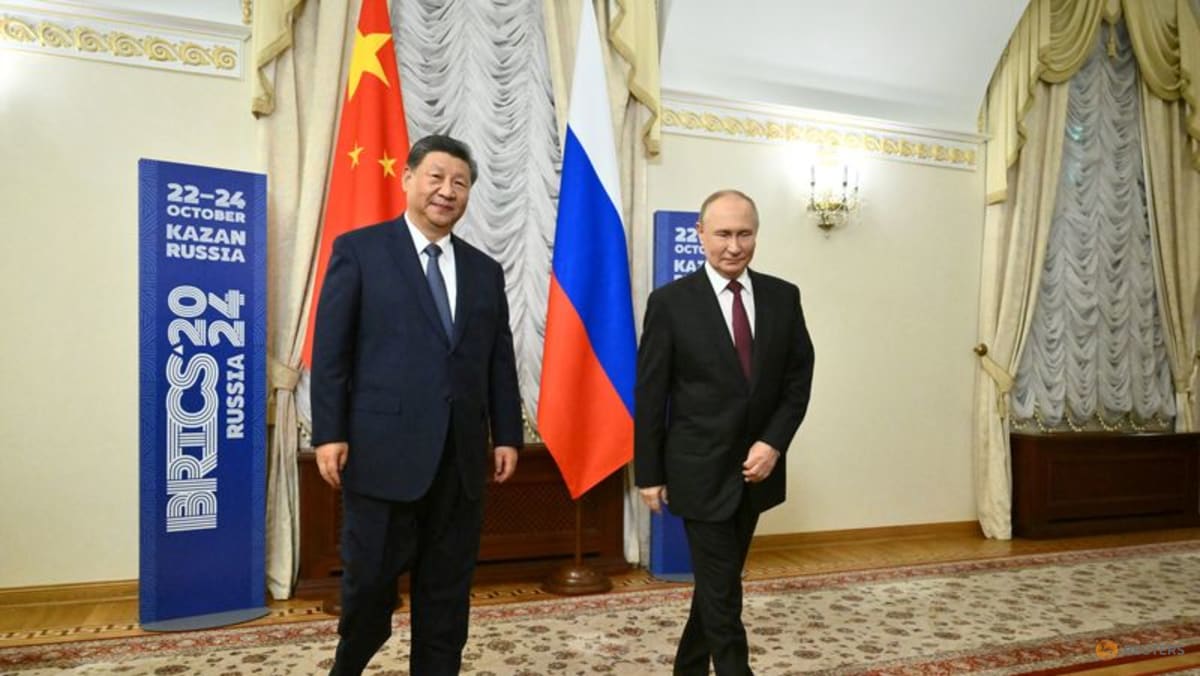
Russian President Vladimir Putin visited Beijing on May 19, 2026, for talks with Chinese President Xi Jinping. This visit follows a significant trip by US President Donald Trump, aimed at stabilizing US-China relations. Both leaders emphasized the strength of Sino-Russian ties, which have deepened since Russia's invasion of Ukraine in 2022. Chinese state media described these relations as 'unshakeable' and a source of global stability amid international challenges. The two leaders are expected to sign a joint declaration to further strengthen their strategic partnership. Bilateral trade has exceeded $200 billion annually, with emerging sectors like AI and green economy flourishing. Putin's visit is seen as a counterbalance to the recent US diplomatic efforts in the region. The relationship is characterized by mutual dependence, particularly in energy, as China is now the main buyer of Russian oil.
Ask AI about this cluster
Answers cite the sources they use
Timeline
More articles in this cluster (2)
Continue Reading
 Critical WSO2 API Manager Vulnerability Under Active Exploitation A critical vulnerability (CVE-2026-5430) in WSO2 API Manager is being actively exploited, allowing unauthenticated attackers to forge admin tokens via JWT authentication bypass. This flaw, which has a CVSS score of 10.0, affects multiple WSO2 products including API Manager, Universal Gateway, Traffic Manager, and API…
  Red Heron Exploits Gitea RCE Flaw in Multinational Campaign A Chinese-speaking threat actor, tracked as Red Heron, exploited the CVE-2026-60004 remote code execution vulnerability in Gitea, compromising 1,386 instances across seven countries. The campaign involved source-code theft, credential collection, and lateral movement, affecting organizations in Canada, Argentina…