 Dexpose
 Rising Threat of Social Engineering Attacks in Cybersecurity
Article Content

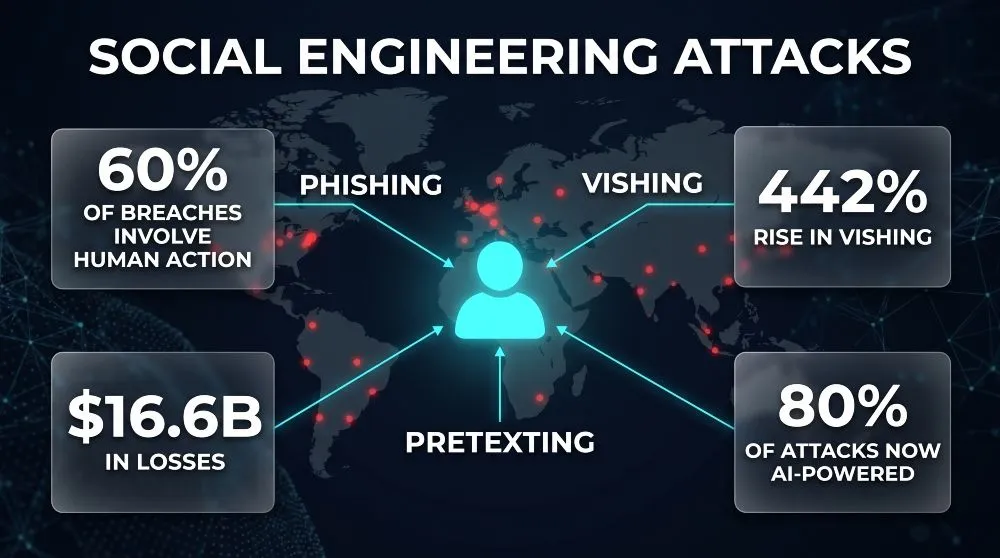
- •Social engineering is responsible for 60% of confirmed cyber breaches.
- •Attacks exploit human psychology rather than technical vulnerabilities.
- •Increased awareness and training are essential to mitigate risks.
Social engineering attacks have become the most common method for cyber breaches, manipulating individuals to reveal sensitive information. According to Verizon’s 2025 Data Breach Investigations Report, approximately 60% of confirmed breaches involved human actions rather than technical exploits. These attacks exploit cognitive biases and psychological pressure, making them particularly dangerous as they can bypass technical defenses entirely. Common methods include phishing, pretexting, and baiting, which target vulnerabilities in human decision-making. Organizations and individuals are increasingly affected, with reports indicating a rise in the intensity and number of these attacks through 2024. Cybersecurity educational programs and detection techniques are being developed to combat this growing threat. The current status emphasizes the need for awareness and training to mitigate risks associated with social engineering.
Ask AI about this cluster
Answers cite the sources they use
Timeline
More articles in this cluster (2)
Following this threat?
Track Guardians Of Peace, Poison Ivy and Department of Energy in your own feed — you're alerted when they show up in new reporting, leak sites or exploitation.
Free account · no card needed
Continue Reading
 Critical Zero-Day Exploited in BeyondTrust Remote Support by China-linked Group A critical vulnerability in BeyondTrust Remote Support, tracked as CVE-2026-102764 with a CVSS score of 9.3, has been exploited by the China-linked espionage group Armory Castle since August 29, 2026. This flaw allows unauthenticated remote attackers to perform file operations, gaining root control and access to…
  CISA Warns of Exploited Vulnerabilities in ProFTPD, ONLYOFFICE, Strapi, and More The U.S. Cybersecurity and Infrastructure Security Agency (CISA) added five vulnerabilities to its Known Exploited Vulnerabilities (KEV) catalog, including critical flaws in ProFTPD, ONLYOFFICE Docs, Strapi, Apache Struts, and ISC BIND. These vulnerabilities are being by Chinese actors for cyber espionage, targeting…