 United24Media
 Russia Expands Military Infrastructure Near NATO Borders, Potentially Deploying 115,000 Troops
Article Content

- •Russia is expanding military infrastructure to potentially deploy 115,000 troops near NATO borders.
- •New facilities are being constructed in Pechenga and Petrozavodsk, increasing troop capacity significantly.
- •Military experts warn that this build-up is aimed at preparing for future confrontations with NATO.
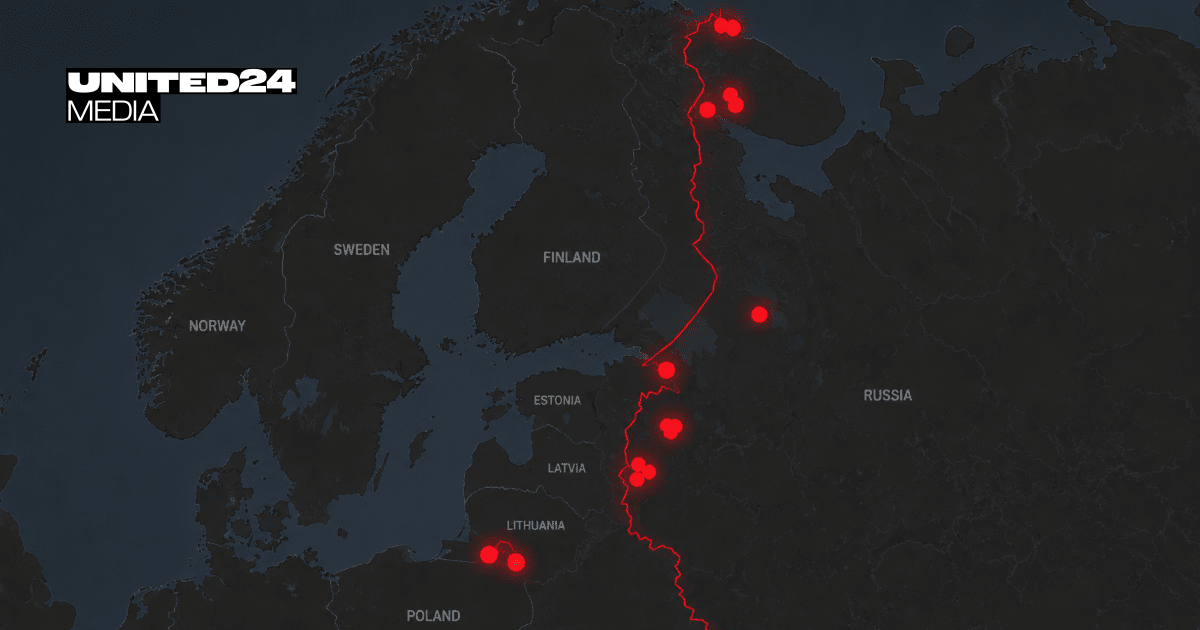
A joint investigation by Nordic and Baltic media has revealed that Russia is significantly expanding its military infrastructure near its borders with NATO countries. This includes the construction of new barracks and military facilities capable of accommodating up to 115,000 troops, a substantial increase from previous capacities. Key locations identified include Pechenga, Petrozavodsk, and various sites in Kaliningrad. Military experts from Finland, Sweden, and Norway have expressed serious concerns about these developments, suggesting they are preparations for a potential large-scale confrontation with NATO after the Ukraine conflict. Norway's Chief of Defence, Eirik Kristoffersen, indicated that the threat level to Norway is increasing, particularly due to Russia's nuclear assets located nearby. The military build-up is viewed as a strategic move by Russia to enhance its capabilities in the region. As of now, the immediate military threat remains low while Russia is engaged in Ukraine, but this could change rapidly.
Ask AI about this cluster
Answers cite the sources they use
Timeline
More articles in this cluster (8)
Continue Reading
 Critical WSO2 API Manager Vulnerability Under Active Exploitation A critical vulnerability (CVE-2026-5430) in WSO2 API Manager is being actively exploited, allowing unauthenticated attackers to forge admin tokens via JWT authentication bypass. This flaw, which has a CVSS score of 10.0, affects multiple WSO2 products including API Manager, Universal Gateway, Traffic Manager, and API…
  Critical Linux Kernel Vulnerability CVE-2025-39682 Under Active Exploitation A critical vulnerability (CVE-2025-39682) in the Linux kernel allows remote code execution through mishandling of zero-length TLS records. This flaw affects kTLS-enabled hosts running vulnerable kernel versions, exposing them to attackers without authentication. CISA added this vulnerability to its Known Exploited…