 Bbc
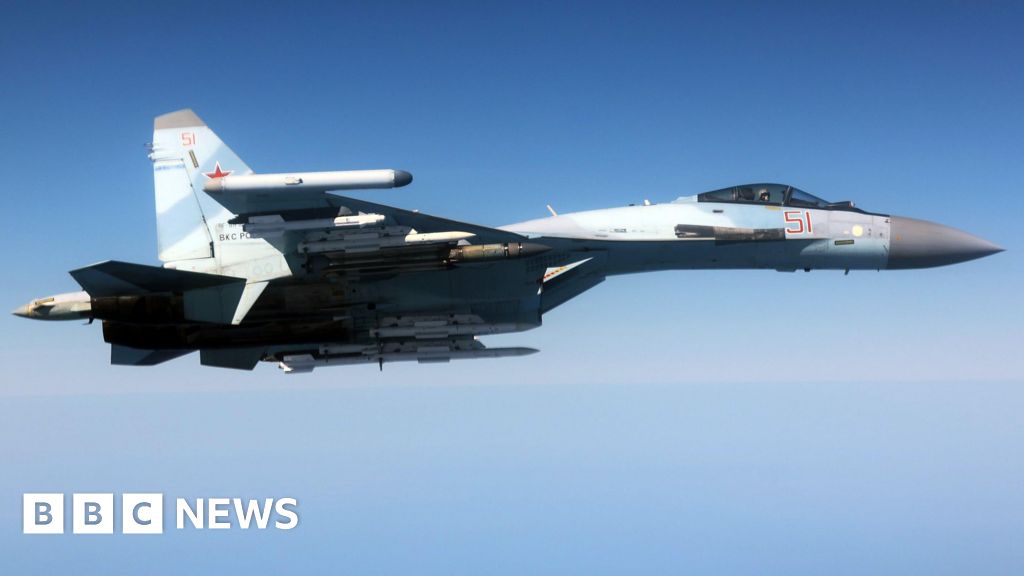
Bbc Russian Jets Intercept UK Surveillance Aircraft Over Black Sea
Article Content

- •Two Russian jets intercepted a UK RAF Rivet Joint aircraft over the Black Sea.
- •The interception triggered emergency systems on the British aircraft, disabling its autopilot.
- •UK officials condemned the Russian pilots' actions, citing a serious risk of accidents.
In April 2026, two Russian military jets, a Su-35 and a Su-27, dangerously intercepted a British RAF Rivet Joint surveillance aircraft over the Black Sea. The Russian jets flew as close as six meters to the British plane, triggering emergency systems that disabled its autopilot. This incident, described by UK Defense Minister John Healey as 'dangerous and unacceptable,' marks the most serious encounter since a similar incident in 2022 when a Russian pilot fired a missile at a British aircraft. The RAF Rivet Joint was conducting a routine flight in international airspace as part of NATO operations. The UK government has formally complained to the Russian embassy regarding this incident, emphasizing that it will not deter the UK's commitment to defend NATO and its allies. The situation reflects ongoing tensions between the UK and Russia amid the Ukraine conflict and increased military activity in the region.
Ask AI about this cluster
Answers cite the sources they use
Timeline
More articles in this cluster (13)
Continue Reading
 Critical WSO2 API Manager Vulnerability Under Active Exploitation A critical vulnerability (CVE-2026-5430) in WSO2 API Manager is being actively exploited, allowing unauthenticated attackers to forge admin tokens via JWT authentication bypass. This flaw, which has a CVSS score of 10.0, affects multiple WSO2 products including API Manager, Universal Gateway, Traffic Manager, and API…
  Critical Linux Kernel Vulnerability CVE-2025-39682 Under Active Exploitation A critical vulnerability (CVE-2025-39682) in the Linux kernel allows remote code execution through mishandling of zero-length TLS records. This flaw affects kTLS-enabled hosts running vulnerable kernel versions, exposing them to attackers without authentication. CISA added this vulnerability to its Known Exploited…