 fas.org
 Russia's Sarmat ICBM Deployment Faces Significant Delays and Bureaucratic Challenges
Article Content

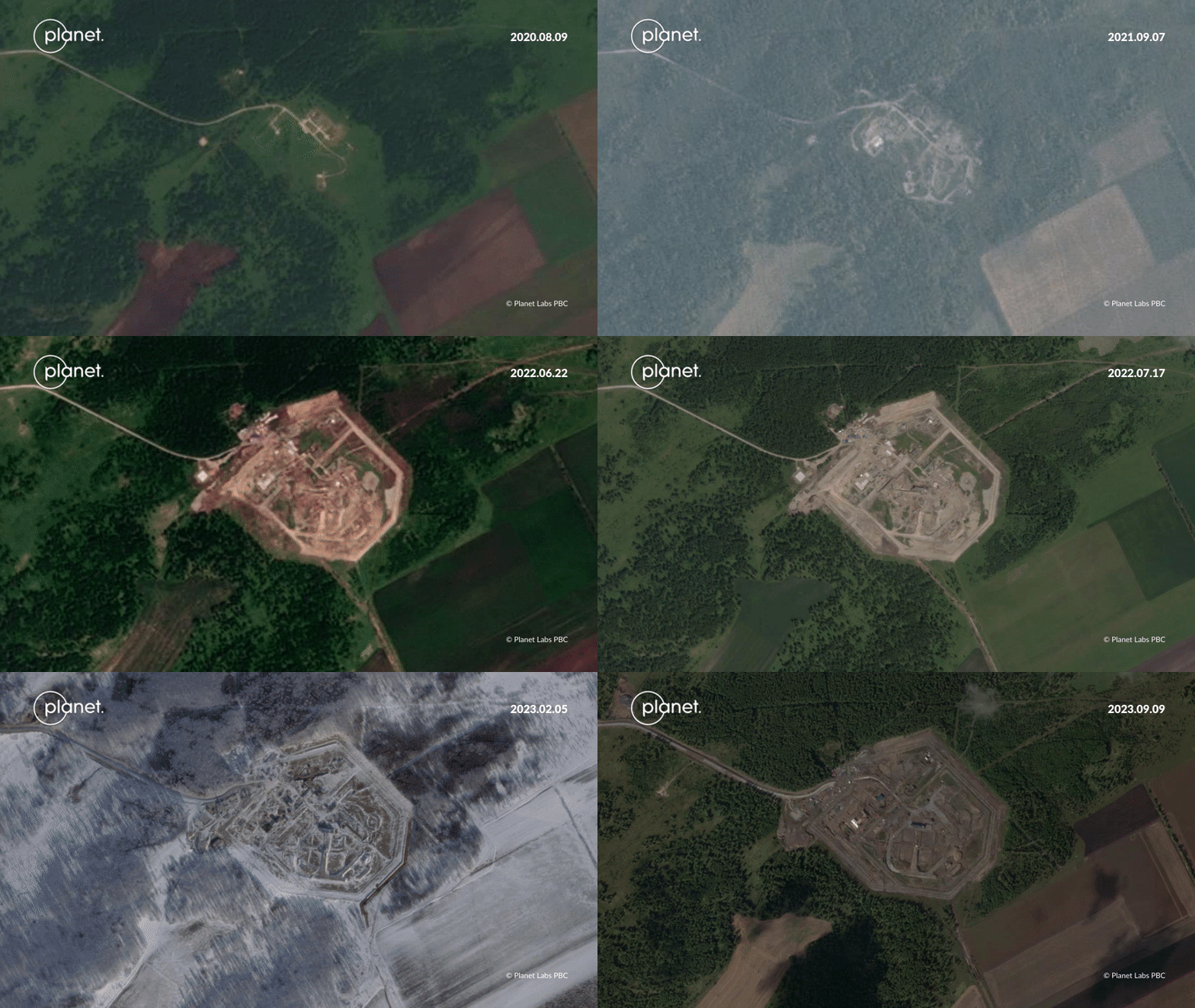
- •Russia's Sarmat ICBM was declared operational in 2023, but actual deployment is delayed.
- •Major construction at missile silos indicates full operational capability may take over a decade.
- •The loss of verification measures under the New START treaty complicates assessments of Russia's nuclear capabilities.
Internal documents reveal that Russia's RS-28 Sarmat ICBM was declared operational in 2023 despite ongoing production and testing delays. The Kremlin's claims of combat readiness have not been substantiated by actual deployment, with major construction still underway at missile silos. Satellite imagery indicates that while some preparations are in progress, full deployment may take over a decade. The Sarmat missile is intended to replace the aging RS-20V Voevoda ICBM, but its operational status remains uncertain. The U.S. has lost verification measures previously established under the New START treaty, complicating assessments of Russia's strategic capabilities. The situation reflects a broader issue of bureaucratic inefficiency within the Russian defense sector. As of now, the first regiment is still undergoing upgrades, with no confirmed deployment of the Sarmat missile.
Ask AI about this cluster
Answers cite the sources they use
Timeline
More articles in this cluster (5)
Continue Reading
 Critical Zero-Day Vulnerability in F5 BIG-IP APM Exploited for Remote Code Execution F5 Networks has reported a critical vulnerability in its BIG-IP Access Policy Manager (APM), tracked as CVE-2026-94127, which is being actively exploited in the wild. The flaw allows unauthenticated attackers to execute remote code on systems configured with both an APM access policy and an OAuth profile. This…
  Massive Network of AI Proxy Servers Used for Malicious Activities Uncovered Security researchers from Team Cymru have identified over 10,000 proxy servers in China facilitating malicious AI activities. These servers, termed 'transfer stations,' are primarily used to bypass geographic restrictions and conduct model distillation attacks against frontier AI models. The infrastructure allows…