 energyandcleanair.org
 Russia's Fossil Fuel Exports Surge Amid Sanctions
Article Content
Browse articles 
- •Russia's LNG export revenue hit a 44-month high in September 2026.
- •EU imports of Russian LNG increased by 60% month-on-month.
- •Crude oil export revenues fell 8%, reflecting ongoing sanctions.
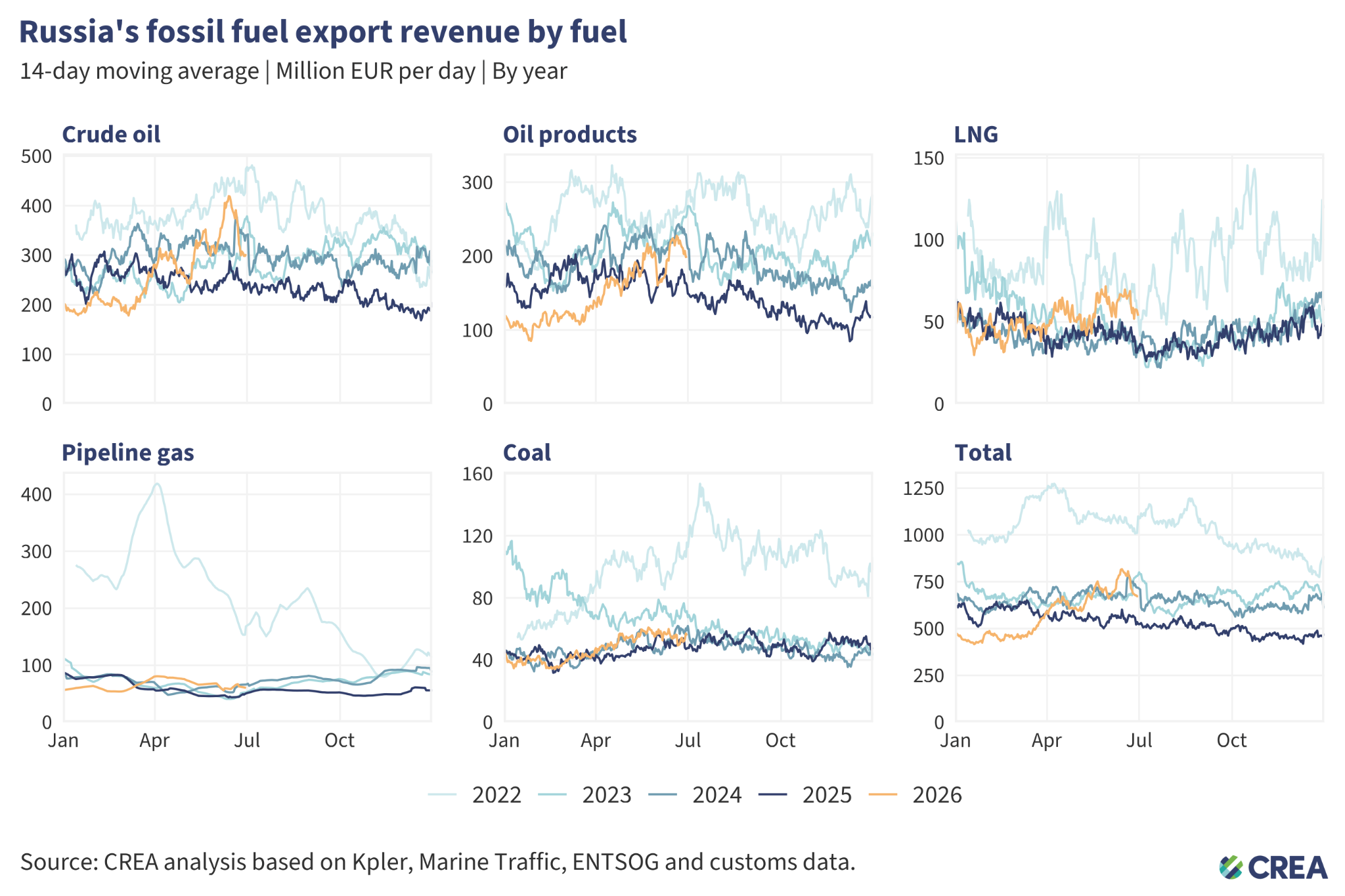
In September 2026, Russia's liquefied natural gas (LNG) export revenue reached a 44-month high at EUR 75 million per day, despite a 6% decrease in overall export volumes. The EU has overtaken Turkiye as the third-largest importer of Russian fossil fuels. Crude oil export revenues fell 8% month-on-month to EUR 339 million per day, with volumes dropping 11%. Notably, EU imports of Russian LNG rebounded by 60% from August's record low. Shipments from Turkiye accounted for 55% of total supplies, while shipments from South Korea fell significantly due to legal threats. The article highlights the ongoing impact of sanctions and geopolitical tensions on energy markets.
Ask AI about this cluster
Answers cite the sources they use
Updated just now How this analysis works
Timeline
2026-09-01
EU overtakes Turkiye in Russian fossil fuel imports
The EU has become the third-largest importer of Russian fossil fuels, surpassing Turkiye.
Article 12026-09-01
LNG export revenue reaches 44-month high
Russia's LNG export revenue increased to EUR 75 million per day in September, the highest since January 2023.
Article 12026-09-01
Crude oil export revenues drop 8%
Crude oil export revenues fell to EUR 339 million per day, with volumes decreasing by 11% in September.
Article 1More articles in this cluster (2)
Common questions
How have sanctions affected Russian fossil fuel exports?
Sanctions have led to fluctuations in export revenues, with LNG exports rebounding despite overall volume decreases.
What is the current status of EU imports from Russia?
EU imports of Russian LNG have increased significantly, surpassing Turkiye as the third-largest importer.
What are the implications of these export trends?
The trends indicate ongoing geopolitical tensions and the effectiveness of sanctions in shaping energy markets.
Continue Reading
 Critical Zero-Day Exploited in BeyondTrust Remote Support by China-linked Group A critical vulnerability in BeyondTrust Remote Support, tracked as CVE-2026-102764 with a CVSS score of 9.3, has been exploited by the China-linked espionage group Armory Castle since August 29, 2026. This flaw allows unauthenticated remote attackers to perform file operations, gaining root control and access to…
  CISA Warns of Exploited Vulnerabilities in ProFTPD, ONLYOFFICE, Strapi, and More The U.S. Cybersecurity and Infrastructure Security Agency (CISA) added five vulnerabilities to its Known Exploited Vulnerabilities (KEV) catalog, including critical flaws in ProFTPD, ONLYOFFICE Docs, Strapi, Apache Struts, and ISC BIND. These vulnerabilities are being by Chinese actors for cyber espionage, targeting…