 Latimes
 Sandy Fire Threatens Santa Susana Nuclear Site in Southern California
Article Content

- •The Sandy Fire has burned over 2,215 acres and is currently 30% contained.
- •Air quality monitoring is underway due to the fire's proximity to a former nuclear reactor site.
- •Evacuations are in effect for communities near the fire, with health officials issuing air quality alerts.
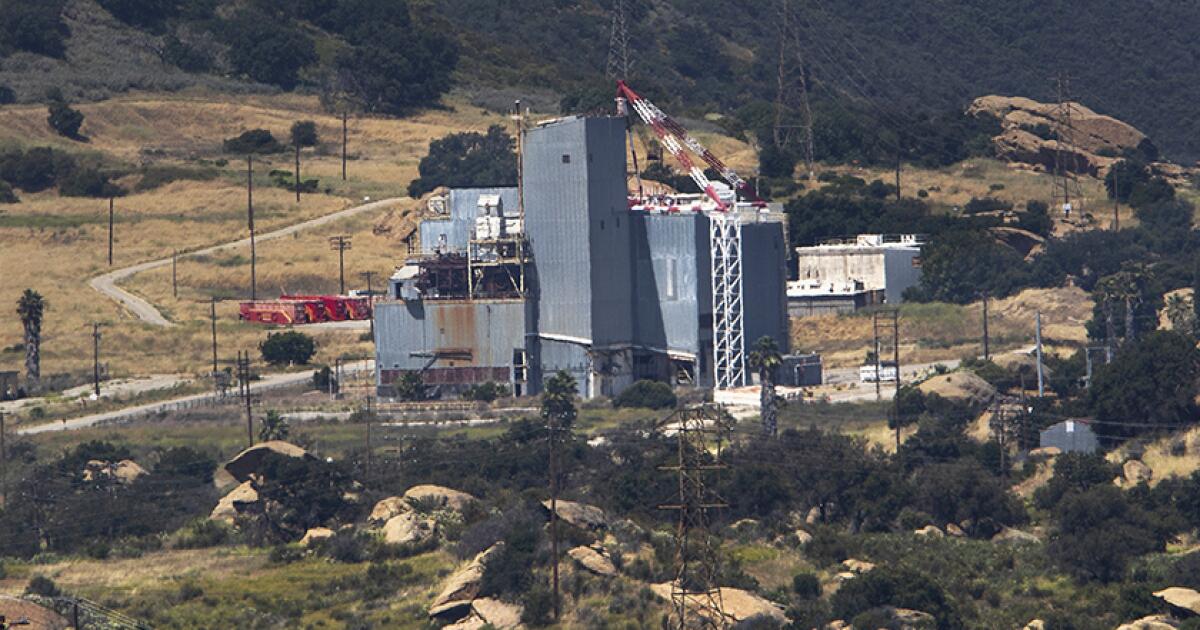
The Sandy Fire in Simi Valley, California, has burned over 2,215 acres and is 30% contained as of May 21, 2026. The fire is near the Santa Susana Field Laboratory, a former nuclear reactor site, prompting air quality monitoring due to potential contamination risks. Evacuations are in place for nearby communities as the fire continues to threaten the area. Fire officials report that air quality alerts have been issued due to fine particle pollution. The Ventura County Fire Department is actively monitoring the situation and has stated that the fire has not yet reached the laboratory site. Boeing, which owns the facility, has evacuated personnel and is coordinating with local authorities. The Department of Toxic Substances Control is also involved in monitoring efforts to safeguard public health. Although the site is in a historically wildfire-prone area, officials assert that the risk of radiation release remains low based on recent measurements.
Ask AI about this cluster
Answers cite the sources they use
Timeline
More articles in this cluster (3)
Continue Reading
 Critical WSO2 API Manager Vulnerability Under Active Exploitation A critical vulnerability (CVE-2026-5430) in WSO2 API Manager is being actively exploited, allowing unauthenticated attackers to forge admin tokens via JWT authentication bypass. This flaw, which has a CVSS score of 10.0, affects multiple WSO2 products including API Manager, Universal Gateway, Traffic Manager, and API…
  Critical Linux Kernel Vulnerability CVE-2025-39682 Under Active Exploitation A critical vulnerability (CVE-2025-39682) in the Linux kernel allows remote code execution through mishandling of zero-length TLS records. This flaw affects kTLS-enabled hosts running vulnerable kernel versions, exposing them to attackers without authentication. CISA added this vulnerability to its Known Exploited…