 Coingabbar
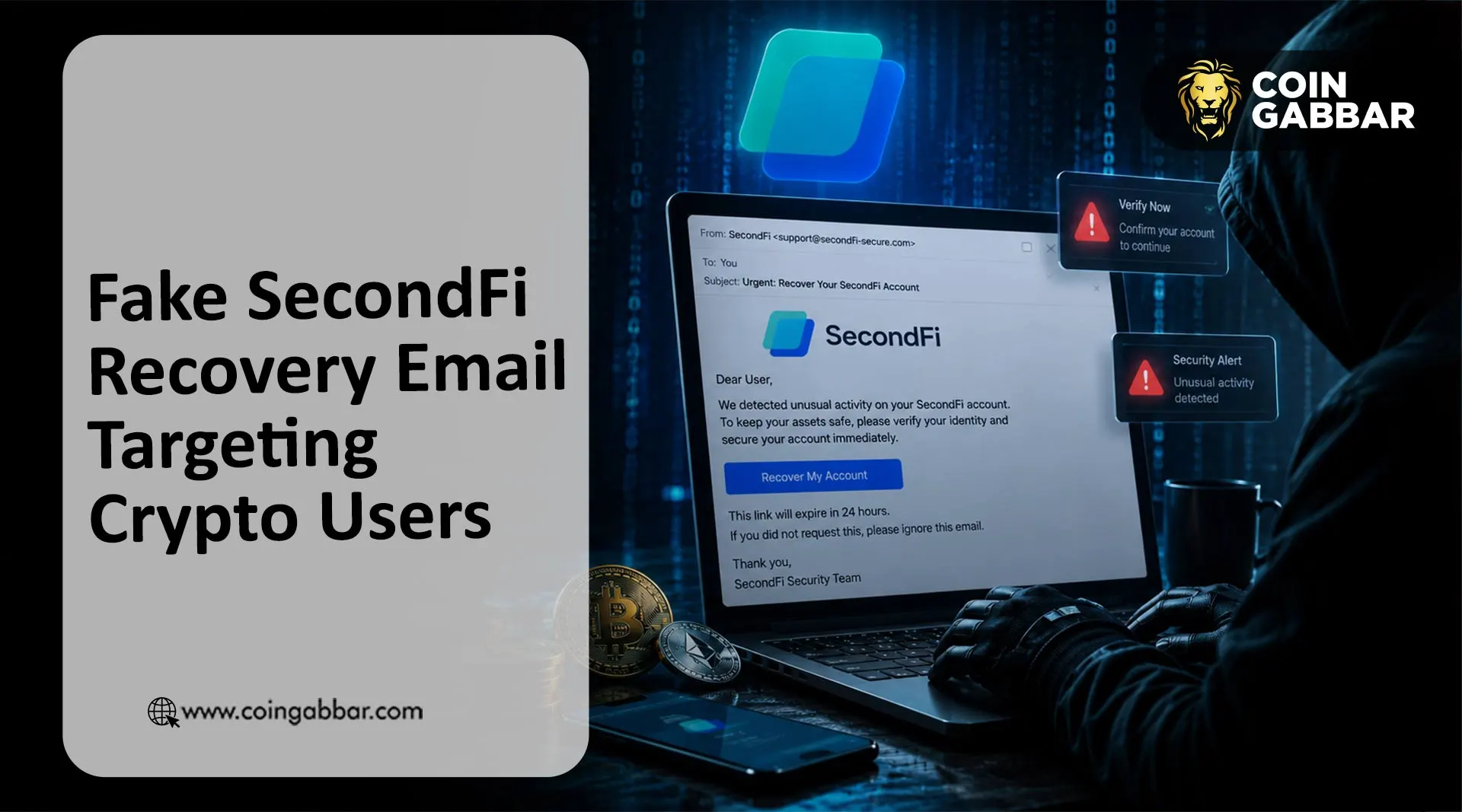
 SecondFi Phishing Scam Targets Users After Security Breach
Article Content

- •SecondFi users are targeted by phishing emails claiming to be recovery notices.
- •The phishing scam follows a significant security breach affecting user funds.
- •Users should only submit support tickets through official channels and avoid unsolicited requests.
SecondFi has issued a warning about a phishing scam targeting its users via email. The scam claims to be an official recovery notice, urging users to enter a 'Quarantine Mode' and sign a Service Agreement to recover their assets. SecondFi confirmed that these requests are fraudulent and that legitimate recovery does not require signing any documents. The phishing attempts follow a real security breach that exposed user funds, with estimates of losses ranging from 16 million ADA to over 129 million ADA. Users are advised to only submit support tickets through official channels and to avoid unsolicited emails. The company emphasizes that it will never ask for recovery phrases or private keys. The situation highlights the ongoing risks following a security incident, as scammers exploit user confusion and fear.
Ask AI about this cluster
Answers cite the sources they use
Timeline
More articles in this cluster (2)
Following this threat?
Track Cardano in your own feed — you're alerted when they show up in new reporting, leak sites or exploitation.
Free account · no card needed
Continue Reading
 Critical BeyondTrust 9.3 Vulnerability Actively Exploited by Threat Actor A critical vulnerability (CVE-2026-102764) in BeyondTrust Remote Support has been discovered and is actively being exploited by the threat group ARMORY CASTLE, reportedly linked to China. The vulnerability, which has a CVSS score of 9.3, allows unauthenticated attackers to upload files and potentially compromise host…
  Lazarus APT Launches Operation FlashHole Using AI and Post-Quantum Cryptography Kaspersky has identified a cyberespionage campaign, dubbed Operation FlashHole, attributed to the Lazarus APT group, active since July 2025. The campaign has targeted at least three organizations in South Korea's construction, software, and wire-communication sectors. Attack methods include spear-phishing emails…