 isc.sans.edu
 SmartApeSG Campaign Distributes Multiple RATs via ClickFix Technique
Article Content

- •SmartApeSG campaign uses fake CAPTCHA and ClickFix to deploy multiple RATs.
- •Remcos RAT initiates the infection, followed by NetSupport, StealC, and Sectop RATs.
- •Defenders are advised to block malicious domains and strengthen endpoint detection.
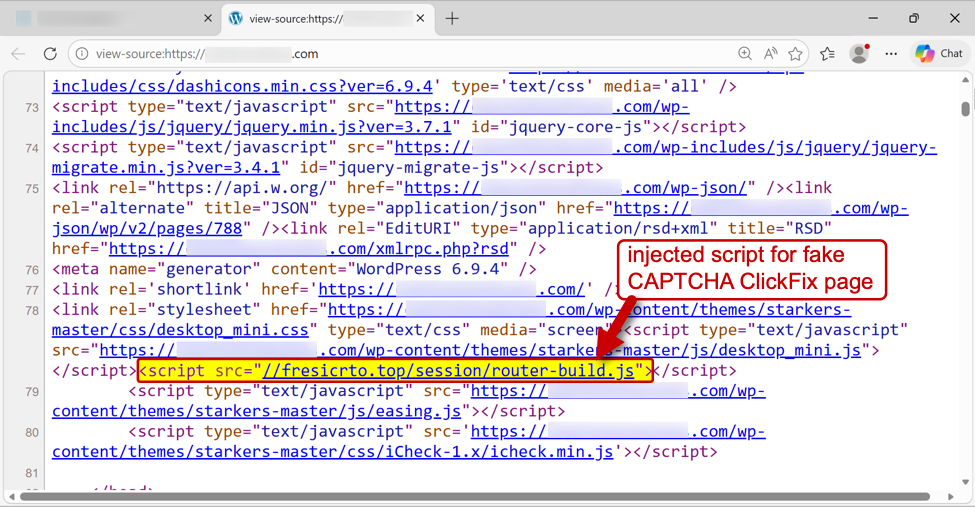
The SmartApeSG campaign employs a fake CAPTCHA page and ClickFix script to deliver various remote access trojans (RATs) including Remcos, NetSupport, StealC, and Sectop RAT. The attack begins with Remcos RAT, which communicates with its command-and-control server shortly after execution. Subsequent malware, such as NetSupport RAT, is delivered approximately four minutes later, followed by StealC and Sectop RAT at intervals of one hour and eighteen minutes. The malware is packaged in archive files that utilize DLL side-loading to execute. Indicators of compromise include specific domains, IP addresses, and file hashes associated with the malware. Security measures recommended include blocking known malicious domains and enhancing endpoint detection rules. The campaign has been observed to change indicators frequently, necessitating ongoing vigilance.
Ask AI about this cluster
Answers cite the sources they use
Timeline
More articles in this cluster (2)
Following this threat?
Track SmartApeSG and ArecheClient2 in your own feed — you're alerted when they show up in new reporting, leak sites or exploitation.
Free account · no card needed
Continue Reading
 CVE-2015-3306 Exploited in ProFTPD FTP Servers CVE-2015-3306, a vulnerability in ProFTPD 1.3.5, allows remote attackers to read and write arbitrary files using the SITE CPFR and SITE CPTO commands. This exploit can lead to unauthorized access and potential remote code execution, as the commands are executed with the privileges of the ProFTPD service. Active…
  CISA Mandates Urgent Patching of Five Critical Flaws Exploited by Flax Typhoon The U.S. Cybersecurity and Infrastructure Security Agency (CISA) has ordered federal agencies to patch five critical vulnerabilities by October 11, 2026, following exploitation by the China-linked hacking group Flax Typhoon. The vulnerabilities, added to CISA's Known Exploited Vulnerabilities (KEV) catalog, include…