 Amp.Dw
 South Korea Plans Nuclear Submarine to Counter North Korean Threats
Article Content

- •South Korea plans to build its first nuclear-powered submarine by the mid-2030s.
- •The initiative aims to counter North Korea's submarine-launched nuclear threats.
- •The U.S. supports South Korea's nuclear submarine development amid regional tensions.
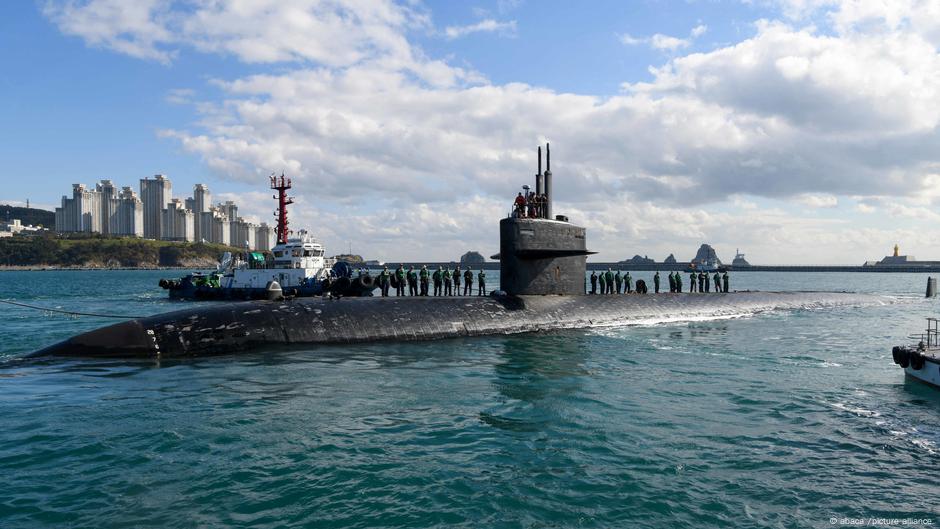
South Korea has unveiled plans to develop its first nuclear-powered attack submarine, expected to be operational by the mid-2030s. This initiative, named the Jangbogo-N Project, aims to enhance South Korea's naval capabilities in response to North Korea's advancing submarine-launched nuclear and missile threats. Defense Minister Ahn Gyu-back announced the project during a meeting at the naval base in Jinhae, emphasizing its strategic importance. The submarines will be built domestically and are designed to significantly improve operational capabilities compared to existing diesel submarines. The U.S. has endorsed this initiative, promising support in building the vessels, although there are discussions regarding the construction location. The project has been in consideration since the early 1990s, and experts note that it reflects a broader arms race in Northeast Asia, involving China and Japan as well. Challenges remain, including technology transfer, nonproliferation concerns, and industrial capabilities.
Ask AI about this cluster
Answers cite the sources they use
Timeline
More articles in this cluster (12)
Continue Reading
 Critical Zero-Day Vulnerability in Cisco Secure Email Gateway Exploited On September 14, 2026, Cisco disclosed a critical SQL injection vulnerability (CVE-2026-76461) in its Secure Email Gateway, allowing unauthenticated remote attackers to execute arbitrary commands with root privileges. This vulnerability arises from insufficient validation in the email parsing logic. Cisco confirmed…
  Critical WSO2 API Manager Vulnerability Under Active Exploitation A critical vulnerability (CVE-2026-5430) in WSO2 API Manager is being actively exploited, allowing unauthenticated attackers to forge admin tokens via JWT authentication bypass. This flaw, which has a CVSS score of 10.0, affects multiple WSO2 products including API Manager, Universal Gateway, Traffic Manager, and API…