 Thedrive
Spyware Found in Cheap Aftermarket Car Head Units
Article Content

- •Cheap aftermarket head units may contain spyware and unnecessary bloatware.
- •AI-assisted reverse-engineering revealed significant data collection risks.
- •Consumers should be cautious when purchasing low-cost IoT devices.
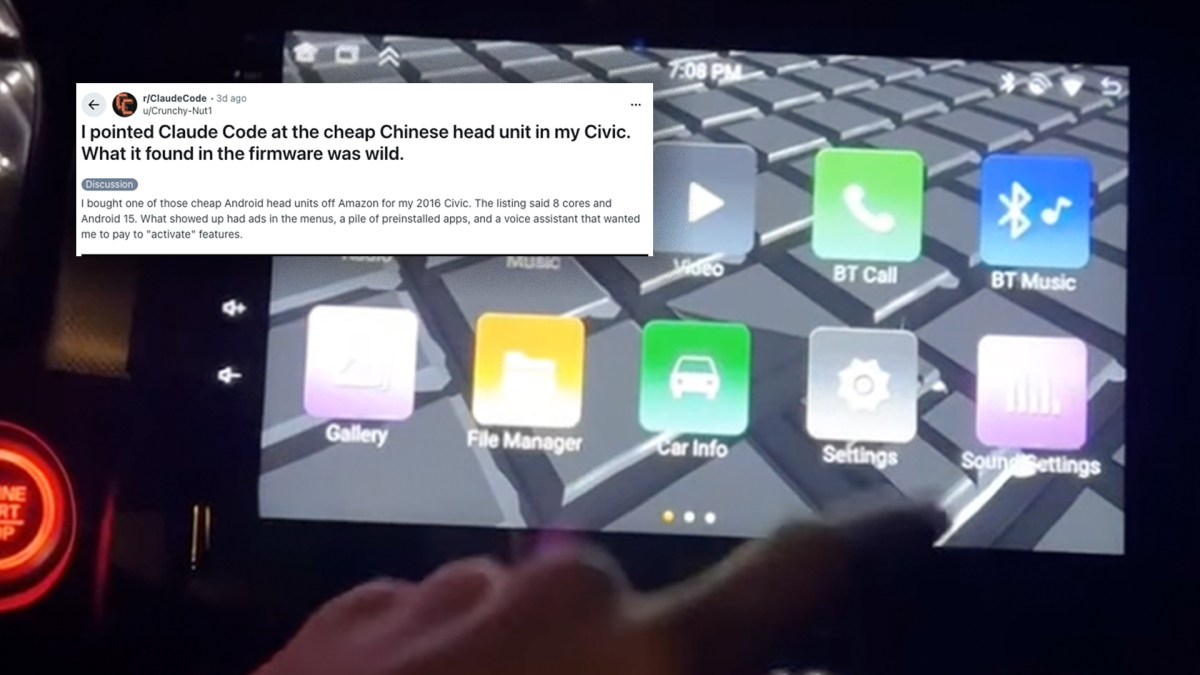
A Civic owner discovered significant spyware in a cheap aftermarket head unit purchased from Amazon. The device contained pre-installed bloatware, including a voice assistant that consumed a third of processing power while idle, Baidu location services, a call recorder, and other irrelevant apps for the U.S. market. The findings highlight the risks associated with Internet of Things (IoT) devices, particularly those from lesser-known brands. The owner utilized AI to reverse-engineer the device, revealing the extent of the data collection and unnecessary software. This incident raises concerns about consumer privacy and the lack of transparency from vendors regarding the software bundled with their products. The situation reflects a broader trend of 'enfshittification' in tech products, where users are burdened with unwanted software. As consumers increasingly replace older technology, awareness of these issues is crucial.
Ask AI about this cluster
Answers cite the sources they use
Timeline
More articles in this cluster (2)
Common questions
What specific spyware was found?
How can consumers protect themselves?
Is this a widespread issue?
Continue Reading
 Binance Hack: $6.3 Billion Stolen in Largest Crypto Heist On October 29, 2026, Binance, the world's largest cryptocurrency exchange, reported a major security incident involving an estimated $6.3 billion in stolen funds. The attack was attributed to a compromised laptop belonging to a DevOps engineer, allowing unauthorized withdrawal transactions. Approximately $3 billion in…
 China-Linked Hackers Exploit PHP2Shell Vulnerabilities to Breach U.S. Government Systems On October 21, 2026, the PHP development team released patches for two critical vulnerabilities in PHP, known as PHP2Shell (CVE-2026-109618 and CVE-2026-109619), which allow unauthenticated remote code execution. These vulnerabilities were actively exploited by a suspected China-linked threat actor who compromised 25…