 www.huntress.com
 Surge in Password Spraying Attacks Exploits MFA Gaps
Article Content

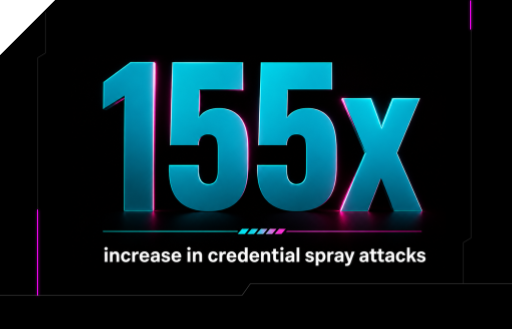
- •Huntress observed a 155x increase in password spraying attacks in 2026.
- •Over 81 million login attempts targeted Azure CLI users, compromising 78 accounts.
- •Attackers exploited ROPC to bypass MFA, revealing significant security gaps.
In the first half of 2026, Huntress reported a 155x increase in password spraying attacks, primarily targeting Microsoft's Azure CLI. This surge was driven by a campaign from LSHIY LLC, resulting in over 81 million login attempts and 78 account compromises within two weeks. Attackers exploited legacy OAuth behavior, specifically Resource Owner Password Credentials (ROPC), which bypassed multi-factor authentication (MFA) measures. Despite the high volume of attacks, no post-compromise activity was observed, suggesting that attackers may have been validating credentials for resale. The campaign highlighted significant gaps in MFA configurations, particularly in relation to Conditional Access Policies (CAP). Security experts emphasize the need for organizations to review their authentication methods to mitigate such risks.
Ask AI about this cluster
Answers cite the sources they use
Timeline
More articles in this cluster (6)
Following this threat?
Track Azure in your own feed — you're alerted when they show up in new reporting, leak sites or exploitation.
Free account · no card needed
Continue Reading
 CVE-2015-3306 Exploited in ProFTPD FTP Servers CVE-2015-3306, a vulnerability in ProFTPD 1.3.5, allows remote attackers to read and write arbitrary files using the SITE CPFR and SITE CPTO commands. This exploit can lead to unauthorized access and potential remote code execution, as the commands are executed with the privileges of the ProFTPD service. Active…
  CISA Mandates Urgent Patching of Five Critical Flaws Exploited by Flax Typhoon The U.S. Cybersecurity and Infrastructure Security Agency (CISA) has ordered federal agencies to patch five critical vulnerabilities by October 11, 2026, following exploitation by the China-linked hacking group Flax Typhoon. The vulnerabilities, added to CISA's Known Exploited Vulnerabilities (KEV) catalog, include…