 Warontherocks
 Taiwan's Semiconductor Industry at Risk from Chinese Economic Coercion
Article Content

- •Taiwan manufactures 90% of advanced semiconductors, crucial for global tech.
- •China seeks to control Taiwan through economic coercion rather than military force.
- •U.S. and allies must implement strategies to deter Chinese aggression effectively.
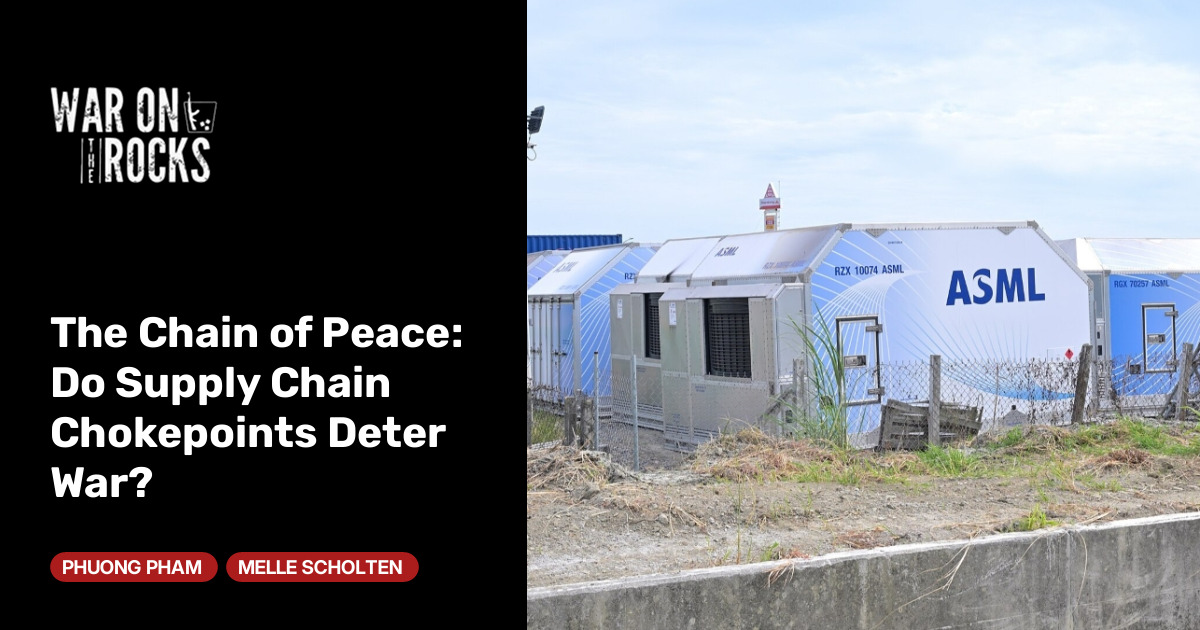
Taiwan produces 90% of the world's advanced semiconductors, making it a strategic target for China. The Chinese government aims to exert economic pressure to gain control over Taiwan without military confrontation. The U.S. and its allies must develop military, economic, and diplomatic strategies to deter this coercion. The situation is critical as failure to act could lead to significant disruptions in the global tech economy. The ongoing geopolitical tensions highlight the importance of Taiwan's semiconductor supply chain in international security. Current strategies focus on leveraging supply chain interdependencies to deter Chinese aggression. The recent Trump-Xi summit did not yield concrete solutions, leaving the situation unresolved.
Ask AI about this cluster
Answers cite the sources they use
Timeline
More articles in this cluster (3)
Continue Reading
 Critical WSO2 API Manager Vulnerability Under Active Exploitation A critical vulnerability (CVE-2026-5430) in WSO2 API Manager is being actively exploited, allowing unauthenticated attackers to forge admin tokens via JWT authentication bypass. This flaw, which has a CVSS score of 10.0, affects multiple WSO2 products including API Manager, Universal Gateway, Traffic Manager, and API…
  Critical Linux Kernel Vulnerability CVE-2025-39682 Under Active Exploitation A critical vulnerability (CVE-2025-39682) in the Linux kernel allows remote code execution through mishandling of zero-length TLS records. This flaw affects kTLS-enabled hosts running vulnerable kernel versions, exposing them to attackers without authentication. CISA added this vulnerability to its Known Exploited…