 cofense.com
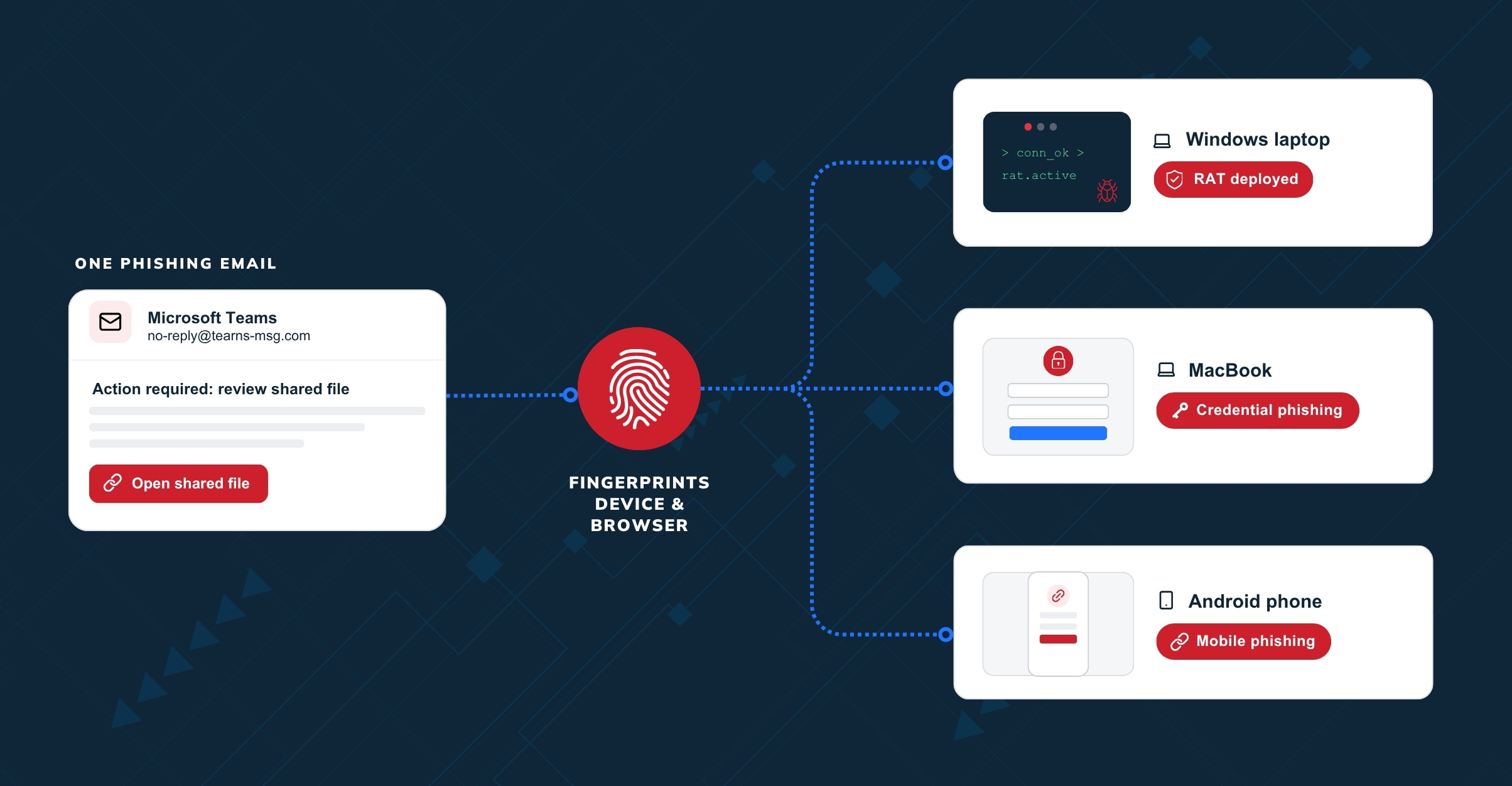
Phishing Campaigns Evolve to Target Specific Devices and Operating Systems
Article Content

- •Phishing tactics have evolved to use user-agent data for targeted attacks.
- •Modern campaigns deliver OS-specific malware, increasing compromise rates.
- •Threat actors are using legitimate tools as malware to evade detection.
Recent research indicates a significant evolution in phishing tactics, with threat actors moving from generic attacks to sophisticated, platform-aware campaigns. These modern phishing operations utilize user-agent data to tailor their payloads to the victim's device and operating system, increasing the likelihood of compromise. Cofense Intelligence reports that attackers are now delivering targeted emails with complex narratives and multi-stage infection chains. This shift has been driven by improvements in secure email gateways and the use of AI in email defenses, making traditional phishing methods less effective. The campaigns can deliver various malware, including remote access tools, depending on the victim's environment. The use of legitimate tools as malware makes detection more challenging for automated defenses. Additionally, threat actors are leveraging platforms like Telegram for data exfiltration, showcasing a trend towards more sophisticated cybercrime operations.
Ask AI about this cluster
Answers cite the sources they use
Timeline
More articles in this cluster (2)
Following this threat?
Track ConnectWise RAT in your own feed — you're alerted when they show up in new reporting, leak sites or exploitation.
Free account · no card needed
Continue Reading
 .NET Vulnerability CVE-2026-111497 Requires Immediate Action On October 25, 2026, Microsoft released out-of-band security updates for.NET addressing CVE-2026-111497, a vulnerability in the Brotli decompression algorithm that allows unauthorized attackers to elevate privileges over a network. The flaw affects.NET versions 8, 9, 10, and 11, particularly in applications that…
 Critical BeyondTrust 9.3 Vulnerability Actively Exploited by Threat Actor A critical vulnerability (CVE-2026-102764) in BeyondTrust Remote Support has been discovered and is actively being exploited by the threat group ARMORY CASTLE, reportedly linked to China. The vulnerability, which has a CVSS score of 9.3, allows unauthenticated attackers to upload files and potentially compromise host…