 Bbc
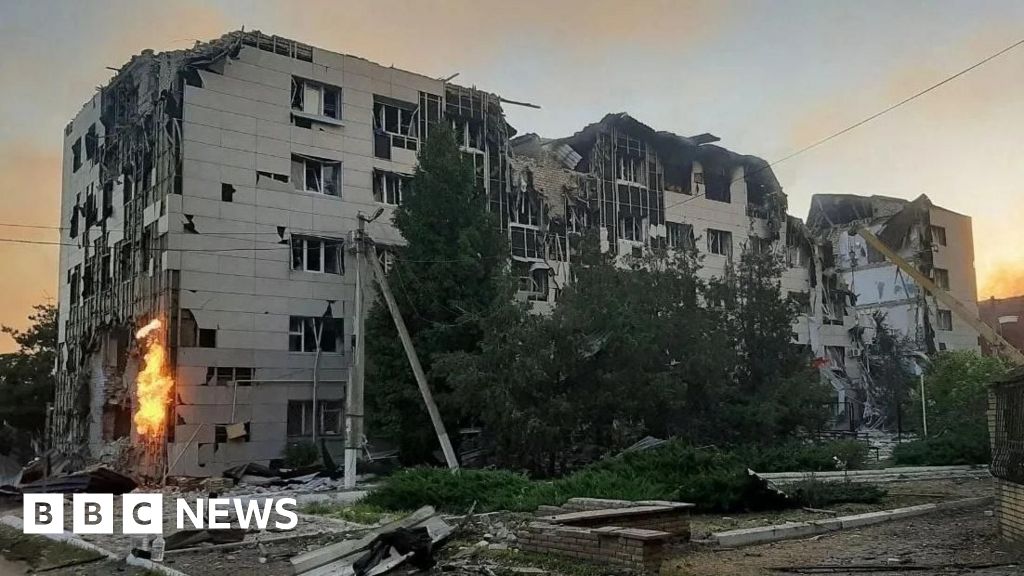
Bbc Ukrainian Drone Strike in Starobilsk Kills at Least 21 Amid Russian Retaliation Threats
Article Content

- •At least 21 people were killed in a Ukrainian drone strike on a Russian-controlled dormitory.
- •Russia has condemned the attack and called for retaliation, labeling it a war crime.
- •Ukraine maintains it targeted a military unit, denying any intent to strike civilians.
A Ukrainian drone strike on a dormitory in Starobilsk, Luhansk region, resulted in at least 21 deaths and 42 injuries. The incident occurred early on May 22, 2026, with Russian officials claiming it targeted civilians, while Ukraine asserted it hit a military unit. Russian President Putin condemned the attack as a 'terrorist strike' and called for retaliation. The UN Security Council held an emergency session following the incident, with Russia demanding accountability for what it termed a war crime. Rescue operations were completed on May 23, revealing the extent of the devastation. The strike has escalated tensions, prompting calls for punitive measures against Europe from pro-Kremlin commentators.
Ask AI about this cluster
Answers cite the sources they use
Timeline
More articles in this cluster (3)
Following this threat?
Track Metafrax in your own feed — you're alerted when they show up in new reporting, leak sites or exploitation.
Free account · no card needed
Continue Reading
 Critical WSO2 API Manager Vulnerability Under Active Exploitation A critical vulnerability (CVE-2026-5430) in WSO2 API Manager is being actively exploited, allowing unauthenticated attackers to forge admin tokens via JWT authentication bypass. This flaw, which has a CVSS score of 10.0, affects multiple WSO2 products including API Manager, Universal Gateway, Traffic Manager, and API…
  Critical Linux Kernel Vulnerability CVE-2025-39682 Under Active Exploitation A critical vulnerability (CVE-2025-39682) in the Linux kernel allows remote code execution through mishandling of zero-length TLS records. This flaw affects kTLS-enabled hosts running vulnerable kernel versions, exposing them to attackers without authentication. CISA added this vulnerability to its Known Exploited…