 Unn.Ua
 Ukrainian Drone Strike Targets Russian Khanskaya Airfield
Article Content

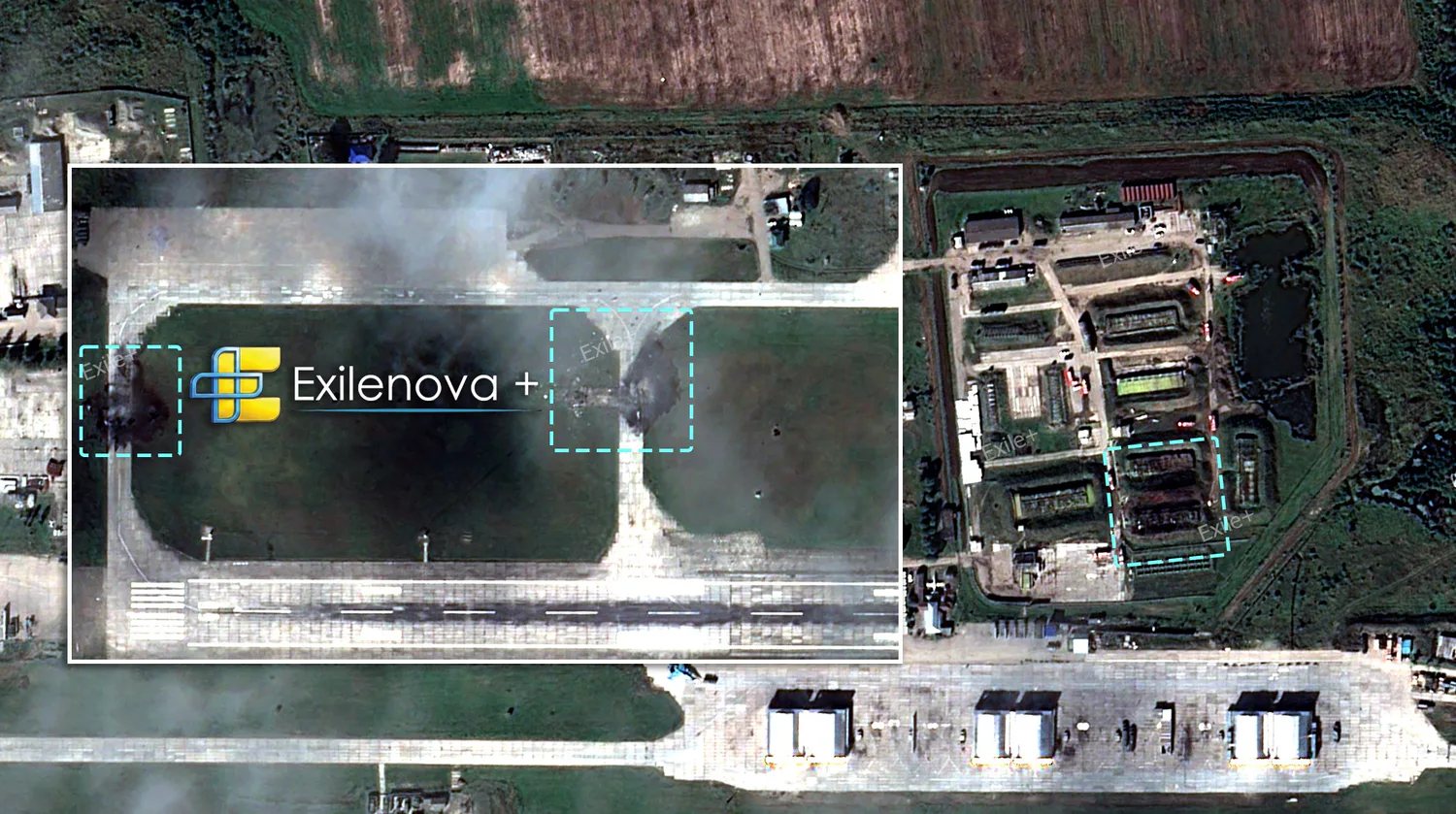
- •Drones attacked the Khanskaya airfield, destroying key Russian military assets.
- •The SBU confirmed the loss of two aircraft and an ammunition depot.
- •Satellite images show significant damage, though independent verification is needed.
On October 4, 2026, the Khanskaya military airfield in Russia's Republic of Adygea was attacked by drones, reportedly resulting in the destruction of a Su-34 and a Su-35 aircraft, along with an ammunition depot. The Security Service of Ukraine (SBU) confirmed the strike, which was captured in satellite images released by the Exilenova+ Telegram channel. Local residents reported explosions and a fire at the airfield during the night. The attack is part of ongoing operations targeting Russian military infrastructure in the region. The Khanskaya airfield is significant for Russian military aviation and is located approximately 500 kilometers from Ukrainian-controlled territory. The SBU's preliminary reports indicate substantial damage, although independent confirmation of the aircraft losses is pending.
Ask AI about this cluster
Answers cite the sources they use
Timeline
More articles in this cluster (2)
Common questions
What was targeted in the drone strike?
Who confirmed the details of the attack?
Is there independent verification of the aircraft losses?
Continue Reading
 Critical Citrix NetScaler Zero-Day Vulnerabilities Exploited Citrix disclosed two critical zero-day vulnerabilities, CVE-2026-88771 and CVE-2026-88772, affecting NetScaler ADC and Gateway systems, which are being actively exploited. Both vulnerabilities have a CVSS score of 9.5 and allow unauthenticated attackers to execute arbitrary commands remotely. CVE-2026-88771 arises…
  Critical Authentication Bypass in Cisco Catalyst SD-WAN Manager Exploited On September 30, 2026, Cisco disclosed a critical vulnerability (CVE-2026-76504) in the Catalyst SD-WAN Manager that allows unauthenticated remote attackers to bypass authentication and gain admin-level access to the system. This flaw stems from improper handling of URI encoding in HTTP requests, enabling attackers to…