 Factmr
Unmanned Underwater Vehicles Market Growth Driven by Defense and Infrastructure Needs
Article Content

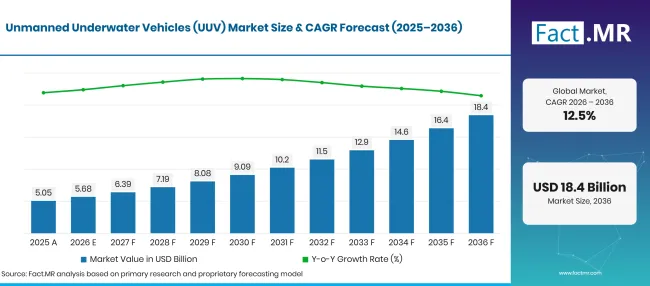
- •UUV market expected to reach USD 18.4 billion by 2036.
- •Growth driven by defense contracts and commercial subsea inspections.
- •68% of Alaska's Arctic waters remain unmapped, increasing demand for UUVs.
The Unmanned Underwater Vehicles (UUV) market is projected to grow from USD 5.7 billion in 2026 to USD 18.4 billion by 2036, reflecting a 12.5% CAGR. This growth is driven by increased demand from navies for mine-hunting and seabed-security vehicles, as well as commercial needs for offshore survey and subsea inspection. The UK Ministry of Defence has committed funding to undersea programs, while NATO's Baltic Sentry initiative addresses damage to undersea cables. The U.S. Interagency Working Group reported that 68% of Alaska's Arctic waters remain unmapped, highlighting the need for advanced UUVs. The market is expected to add USD 12.7 billion in new value, primarily from offshore energy and naval programs. Enhanced battery technology and onboard processing capabilities are enabling UUVs to perform more complex missions efficiently.
Ask AI about this cluster
Answers cite the sources they use
Timeline
More articles in this cluster (4)
Common questions
What is driving the UUV market growth?
How much is the UUV market expected to grow?
What are the implications of uncharted waters?
Continue Reading
 Binance Hack: $6.3 Billion Stolen in Largest Crypto Heist On October 29, 2026, Binance, the world's largest cryptocurrency exchange, reported a major security incident involving an estimated $6.3 billion in stolen funds. The attack was attributed to a compromised laptop belonging to a DevOps engineer, allowing unauthorized withdrawal transactions. Approximately $3 billion in…
 China-Linked Hackers Exploit PHP2Shell Vulnerabilities to Breach U.S. Government Systems On October 21, 2026, the PHP development team released patches for two critical vulnerabilities in PHP, known as PHP2Shell (CVE-2026-109618 and CVE-2026-109619), which allow unauthenticated remote code execution. These vulnerabilities were actively exploited by a suspected China-linked threat actor who compromised 25…