 Scmp
Scmp US Strategic Maneuvering Against China in Energy Dominance
Article Content

- •The US strategy focuses on reshaping global energy flows to weaken China.
- •Key sectors targeted include semiconductors, rare earths, and maritime chokepoints.
- •The 2025 National Security Strategy outlines the US's long-term geopolitical objectives.
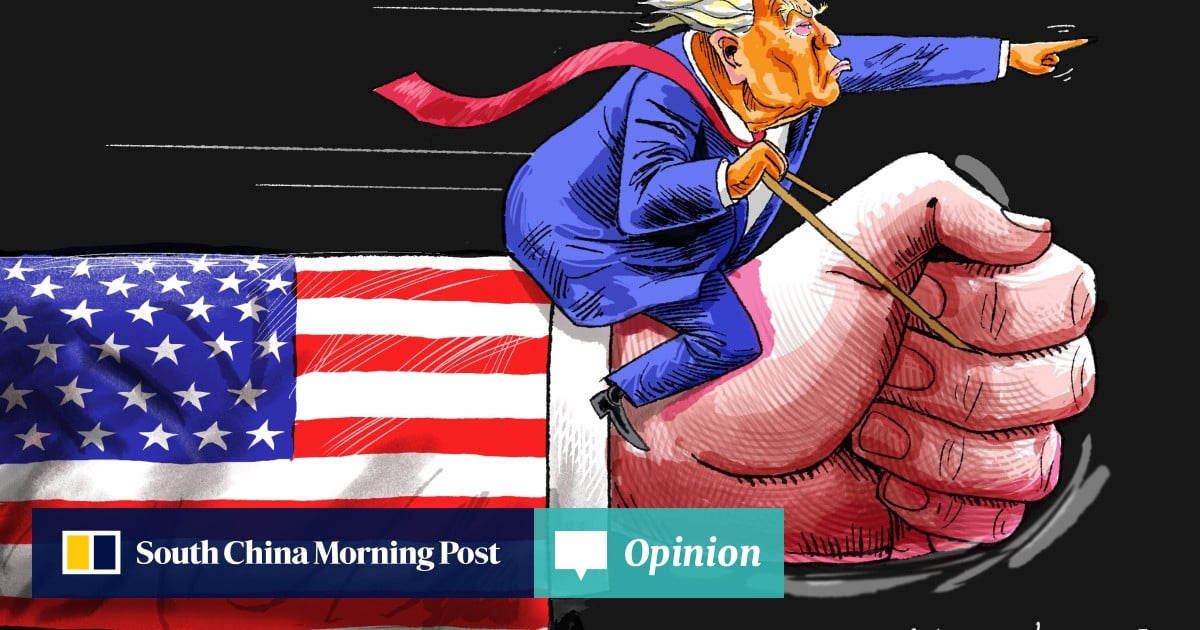
The articles discuss the US strategy under President Trump to reshape global energy flows and undermine China's competitiveness. This approach is characterized by a long-term vision of enhancing US positional power in critical sectors such as semiconductors and energy resources. The US aims to control key economic nodes, thereby indirectly subduing China without direct confrontation. The strategy is reflected in the 2025 National Security Strategy, which emphasizes resource security and geopolitical repositioning. Recent military interventions by the US are interpreted as moves to exploit China's vulnerabilities. Overall, this geopolitical maneuvering is seen as a calculated effort to maintain US dominance in the global economy.
Ask AI about this cluster
Answers cite the sources they use
Timeline
More articles in this cluster (2)
Continue Reading
 Critical Zero-Day Vulnerability in Cisco Secure Email Gateway Exploited On September 14, 2026, Cisco disclosed a critical SQL injection vulnerability (CVE-2026-76461) in its Secure Email Gateway, allowing unauthenticated remote attackers to execute arbitrary commands with root privileges. This vulnerability arises from insufficient validation in the email parsing logic. Cisco confirmed…
  Critical WSO2 API Manager Vulnerability Under Active Exploitation A critical vulnerability (CVE-2026-5430) in WSO2 API Manager is being actively exploited, allowing unauthenticated attackers to forge admin tokens via JWT authentication bypass. This flaw, which has a CVSS score of 10.0, affects multiple WSO2 products including API Manager, Universal Gateway, Traffic Manager, and API…