 Securityaffairs.Co
 CSS Attacks Exploit Webmail Vulnerabilities to Steal Credentials
Article Content

- •CSS bomb attacks exploit vulnerabilities in major webmail services.
- •Attackers can steal passwords and hijack sessions without traditional malware.
- •Public proof-of-concept demonstrations confirm the effectiveness of these attacks.
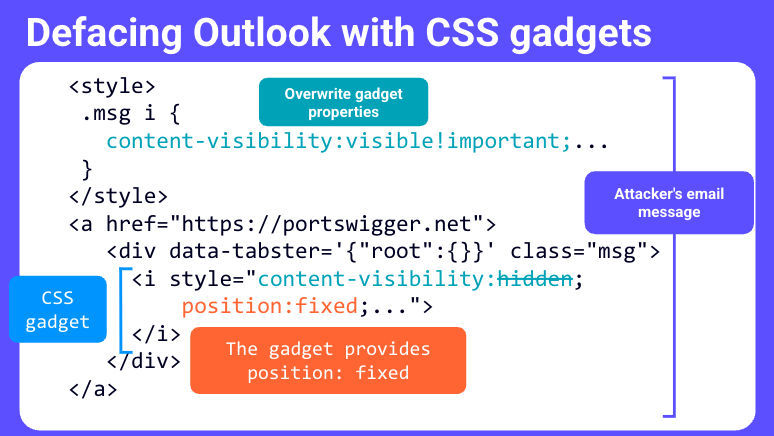
A new class of attacks, termed 'CSS bomb' attacks, have emerged, exploiting CSS styling code in webmail services like Outlook, Gmail, and Yahoo Mail. These attacks can hijack user sessions, spy on activities, and steal passwords without the need for JavaScript or traditional malware. Researchers have demonstrated that these attacks can manipulate AI tools connected to users' inboxes, posing a significant risk to user security. The vulnerabilities affect major webmail platforms, allowing attackers to cross the boundary between emails and trusted inbox interfaces. Public proof-of-concept attacks have confirmed the ability to capture passwords and session tokens. As of now, no specific patches or mitigations have been detailed in the articles, highlighting an urgent need for webmail services to address these vulnerabilities.
Ask AI about this cluster
Answers cite the sources they use
Timeline
More articles in this cluster (5)
Following this threat?
Track AOL Mail in your own feed — you're alerted when they show up in new reporting, leak sites or exploitation.
Free account · no card needed
Continue Reading
 CVE-2015-3306 Exploited in ProFTPD FTP Servers CVE-2015-3306, a vulnerability in ProFTPD 1.3.5, allows remote attackers to read and write arbitrary files using the SITE CPFR and SITE CPTO commands. This exploit can lead to unauthorized access and potential remote code execution, as the commands are executed with the privileges of the ProFTPD service. Active…
  CISA Mandates Urgent Patching of Five Critical Flaws Exploited by Flax Typhoon The U.S. Cybersecurity and Infrastructure Security Agency (CISA) has ordered federal agencies to patch five critical vulnerabilities by October 11, 2026, following exploitation by the China-linked hacking group Flax Typhoon. The vulnerabilities, added to CISA's Known Exploited Vulnerabilities (KEV) catalog, include…