 Back Enlit.World
 Quantum AI chip boosts Australian energy grid forecasts
Silicon Quantum Computing and Schneider Electric secure AU$3.6m to roll out a hybrid AI chip that delivers a 20% jump in energy forecasting accuracy
Australian quantum computing company Silicon Quantum Computing (SQC) and Schneider Electric have partnered to advance energy forecasting with hybrid quantum-classical models.
The initiative, which is being undertaken under the government’s Critical Technologies Challenge Program, has now moved into Stage 2 with the award of AU$3.6 million (US$2.5 million/€2.2 million) in funding for the work to continue in partnership with UNSW Sydney University.
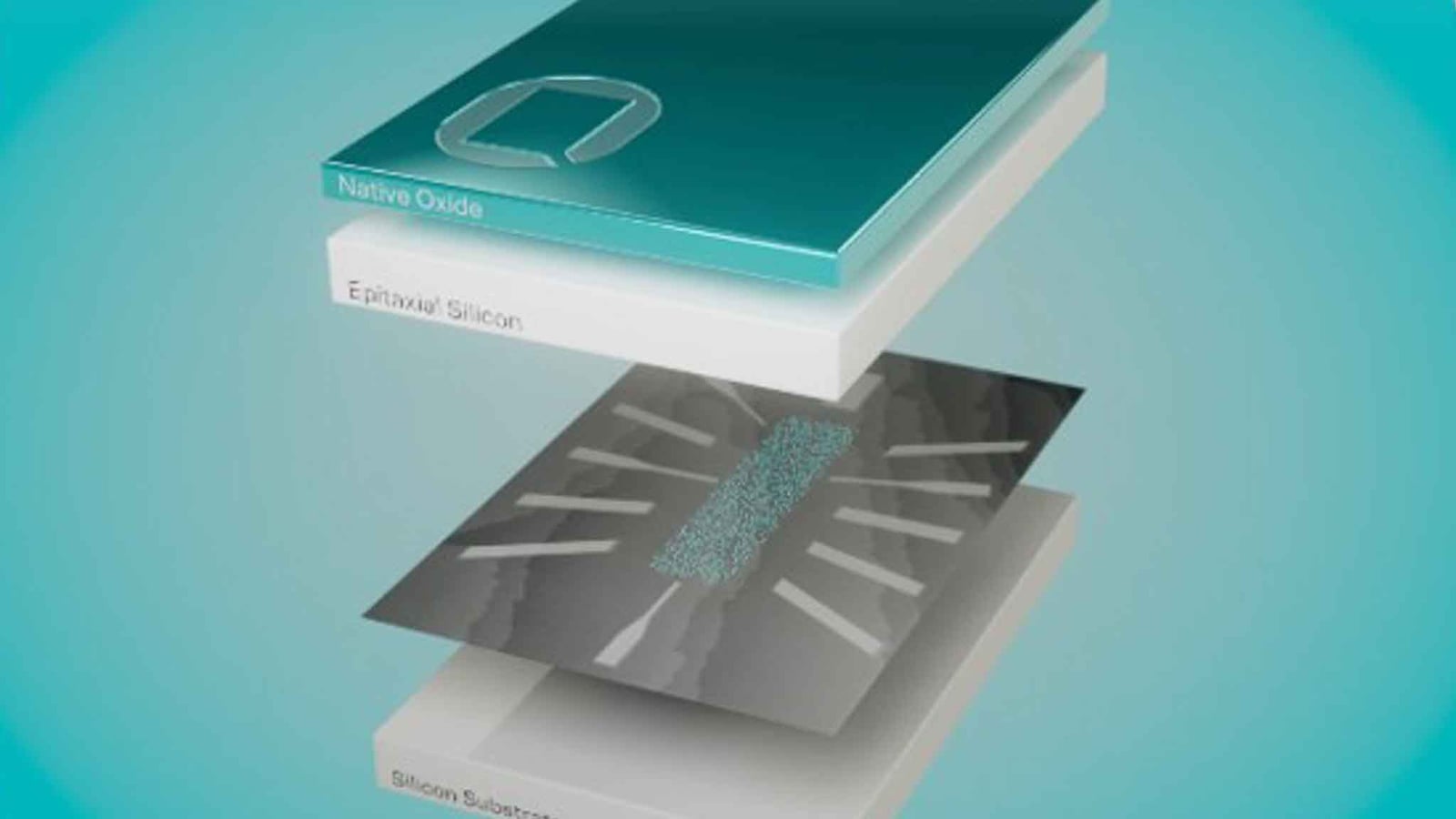
During Stage 1, the joint team explored whether SQC’s atomically engineered, quantum-enhanced AI chip, Watermelon, could improve the accuracy of Schneider Electric’s forecasting models.
Watermelon is designed to generate quantum features that, when used alongside classical features, deliver richer models with greater predictive abilities.
Also of interest Quantum machine learning can boost energy demand forecasts Why quantum innovation will be a key enabler for decarbonising energy systems
“We have always believed that quantum processors would work alongside CPUs and GPUs to deliver real-world performance gains,” commented Michelle Simmons, founder and CEO of SQC.
“The results we have achieved with Schneider Electric demonstrate how quantum-enhanced AI can address practical challenges across the energy sector and time-series datasets more broadly. We’re grateful to the Australian government for continuing to back this important work.”
The grids are under increasing pressure and urgent solutions are required for grid resilience. As rooftop solar, batteries and electric vehicles become widespread, household energy systems have become more dynamic and difficult to predict.
Schneider Electric uses advanced forecasting and optimisation technologies to help balance distributed energy resources, including forecasting when to switch back and forth to solar energy deployment.
Clearly, more accurate forecasting can be beneficial in this context, including increasing renewable energy utilisation and contributing to lower energy costs for consumers.
Building on the Stage 1 results, the Stage 2 funding is intended to expand modelling to hundreds of homes across Australia, with direct integration into Schneider Electric’s AI workflows.
The work is also considered to provide a clear pathway for today’s quantum computing systems to be used in production environments.
Colette Munro, Pacific Zone president at Schneider Electric, said the energy system is becoming more dynamic with new levels of complexity.
“Together with SQC, we've demonstrated how advanced energy technology has the potential to better manage this complexity, lowering costs for consumers and using energy more efficiently across the system.”
Launched in 2025, Watermelon is a quantum feature generator for machine learning combining classical and quantum processors – AKA quantum enhanced AI – that is intended in particular for time series data and sparse data sets.
Available via both cloud and hardware networks, Watermelon has been deployed by customers across the telecommunications, banking and high-frequency trading sectors.
Critical technologies challenge
The Australian government’s critical technologies challenge is focused on addressing issues of national significance using quantum technologies.
In addition to the SQC-Schneider Electric initiative, others focussed on optimising the performance and security of the energy networks being led by the Flinders and La Trobe universities.
The Flinders-led project is investigating the potential of quantum computing supplemented with a digital twin model in managing remote-community energy systems, for example to improve the reliability of renewable supply.
The La Trobe-led project is addressing the potential of quantum-enhanced optimisation to improve the energy efficiency of data centres, with initial findings showing that as the size of the centre increases, the quantum approach scales more favourably than classical methods.
Data, AI and digital tools are transforming how energy is generated, distributed and consumed . This hub tracks the technologies and strategies driving the digital transformation of the energy sector.
How can Europe get more from its energy infrastructure?
Explore how utilities, grid operators and technology providers are using AI, digital twins, automation and secure data exchange to plan, operate and connect Europe’s changing energy system. Check out the Digitalisation sessions, speakers and solutions you can see live in Vienna on 10 - 12 November 2026 .
Through collaboration, interoperability frameworks and practical toolkits, CEI-Sphere is accelerating resilient, flexible energy systems in Europe
Guest/partner contributor
Energy’s operational technology security culture is giving the sector an unexpected head start in AI governance, according to Frank Balonis
Guest/partner contributor
As energy markets grow more complex, AI-powered forecasting is helping market participants optimise flexibility and value.
Guest/partner contributor
Latest in Digitalisation
Data centres reject heat all year, but district heating needs it in winter. The Thunder project bridges that seasonal gap with thermochemical storage.
Guest/partner contributor
Ivan Paić of KONČAR on why delivering energy transformation requires organisations to be bolder in how they invest, innovate and collaborate
Eight projects have been awarded a total of €3 million in space agency funding to enhance wildfire protection and response in Spain.
Jonathan Spencer Jones
The full story
This article is one source in a clustered incident — the cluster page carries the summary, timeline and every other outlet covering it.
