 Back Techtimes
 Seiko SkyBridge Enterprise IoT Routers Hit With Permanent OS Injection: No Fix
Enterprise IoT operators running Seiko Solutions SkyBridge MB-A100 or MB-A110 routers need to act before attackers do: JPCERT/CC and Japan's Information-Technology Promotion Agency disclosed a high-severity OS command injection flaw in those devices on July 1, 2026, and the vendor has confirmed no firmware patch will ever follow. The CVE-2026-50043 disclosure lands on hardware that already carries a confirmed-exploited OS command injection from 2022 — meaning organizations that have deferred replacement are now holding permanently vulnerable equipment with a public vulnerability record that botnet operators can act on immediately.
Tracked as CVE-2026-50043 and classified under CWE-78 (Improper Neutralization of Special Elements Used in an OS Command), the vulnerability resides in the web administration interface of the SkyBridge MB-A100 and MB-A110. An attacker who authenticates to the WebUI with administrator credentials can craft input that injects arbitrary OS commands into a shell call the application makes — standard command separators such as semicolons, pipes, or double ampersands allow additional commands to be appended to a legitimate one. The device executes those commands with the privileges of the application process, giving the attacker full control over the underlying operating system.
The advisory carries a CVSS 4.0 base score of 8.6 and a CVSS 3.0 score of 7.2 — both in the high-severity band. ( JVN#20721579 advisory ) The CVSS vectors assign the vulnerability a "High Privileges Required" rating, which technically moderates the score compared to an unauthenticated attack. In practice, that distinction matters less than it appears: enterprise IoT devices deployed in industrial and remote environments routinely retain factory-default credentials, passwords across large fleets, or have administrator accounts obtainable through phishing campaigns targeting the operations teams that manage them.
All firmware versions of both the MB-A100 and MB-A110 are affected. Seiko Solutions has confirmed in unambiguous terms that the SkyBridge MB-A100/MB-A110 product line is end-of-support, and that no firmware update addressing CVE-2026-50043 will be released. The disclosure was coordinated under Japan's Information Security Early Warning Partnership — a framework operated jointly by IPA and JPCERT/CC — and was reported by Takeshi Kuramori and Kaori Takashima of the National Institute of Information and Communications Technology (NICT) Cybersecurity Research Institute.
What the JVN advisory does not foreground — and what significantly changes the risk calculus for operators still running these devices — is that CVE-2026-50043 is not the first OS command injection flaw discovered in the MB-A100 and MB-A110. It is the third serious wave of vulnerability disclosures on this hardware.
In August 2022, NeroTeam Security Labs researchers Thomas Knudsen and Samy Younsi disclosed CVE-2022-36556: an OS command injection vulnerability in the same product line, also via the web management interface, but carrying a higher practical severity because it was exploitable with elevated privileges via a documented attack path. ( JVN#40604023 prior disclosure ) JPCERT/CC's advisory for that earlier flaw explicitly stated that attacks exploiting CVE-2022-36556 had been observed. The platform was not hypothetically at risk — it was actively compromised.
In March 2023, JPCERT/CC published JVN#40604023, which disclosed fourteen vulnerabilities across the SkyBridge product family including the MB-A100 and MB-A110, among them missing authentication for critical functions (unauthenticated reboot and settings alteration), hard-coded credentials, improper access control allowing connection to the device's ADB port, certificate chain failures, and cleartext transmission of sensitive information. The sheer breadth of that disclosure — fourteen CVEs covering authentication, authorization, confidentiality, and integrity failures simultaneously — describes hardware with foundational security architecture problems, not a device that had a single bad implementation choice corrected.
CVE-2026-50043 is the latest entry in that record. Organizations relying on mitigation-only posture for this hardware are not managing a device with one known flaw — they are operating hardware with a three-year documented vulnerability history, a confirmed prior exploitation event, and now an additional publicly catalogued attack vector that will never receive a vendor fix.
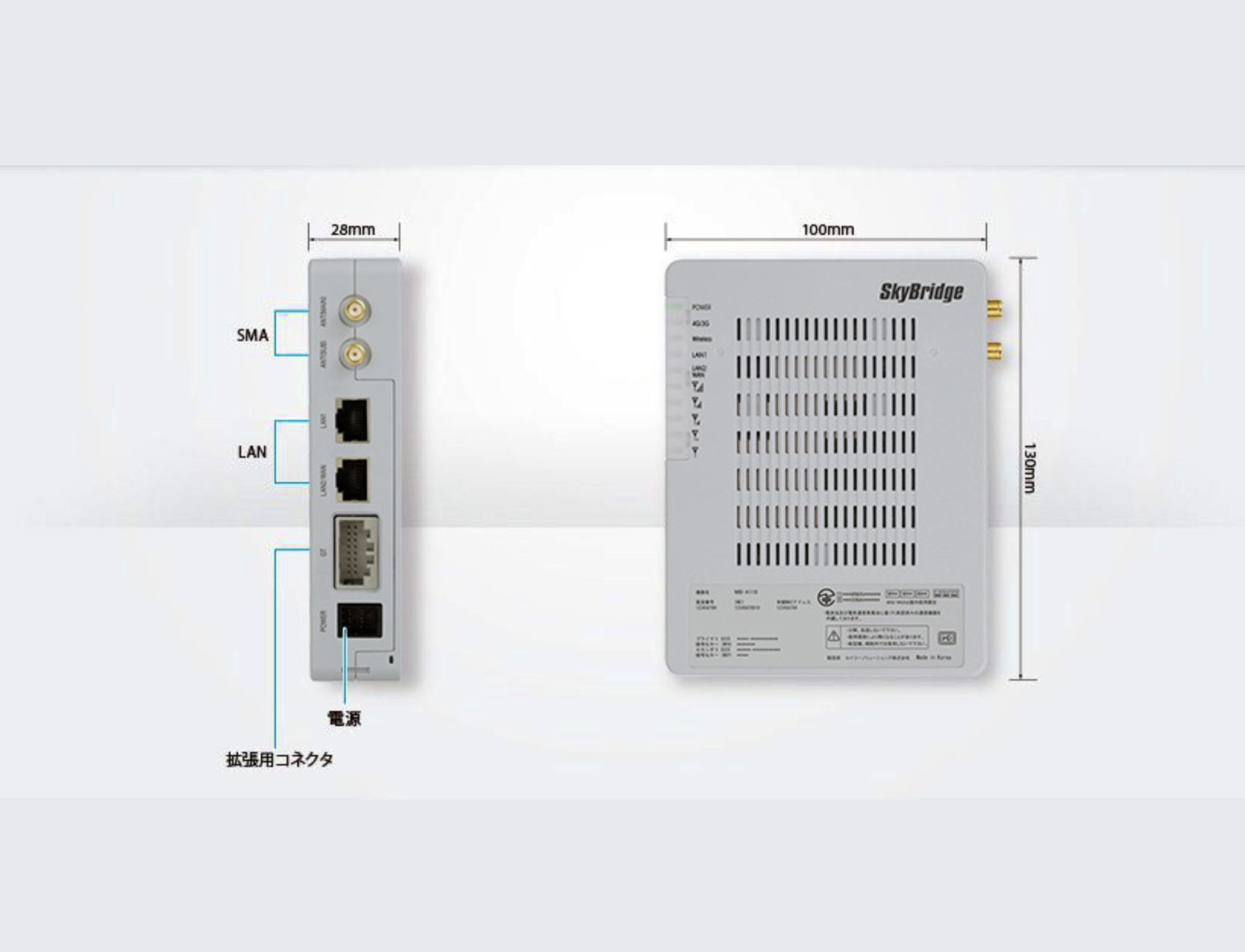
The SkyBridge MB-A100 and MB-A110 are enterprise-grade LTE/3G routers purpose-built for industrial IoT and machine-to-machine (M2M) applications: remote sensor networks, unmanned infrastructure monitoring, and large-scale commercial IoT deployments where hundreds or thousands of routers may be installed and then left to operate without routine on-site maintenance. The web administration interface — the attack surface for CVE-2026-50043 — is the primary mechanism through which operators manage these devices.
An OS command injection flaw at this interface fails at a fundamental level of input handling: the application accepts user-controlled data and passes it, without adequate neutralization of special characters, into a call to the operating system's shell. The shell interpreter reads the injected command separators as legitimate syntax and executes both the intended command and whatever the attacker appended. On a network device, successful exploitation means the attacker can read configuration data, exfiltrate stored credentials, modify routing behavior, install persistent backdoor software, or recruit the device into a botnet — all while the device continues operating normally for its legitimate owner, with no visible signs of compromise. ( CWE-78 exploitation consequences )
The Seiko SkyBridge platform supports FOTA (firmware over-the-air) update capability and the proprietary SRMP management protocol specifically designed for centralized administration of large fleets. Those features represent the product's core value proposition for enterprise IoT — but they cannot be used to distribute a security patch that the vendor has confirmed will never exist. The same architecture that makes the SkyBridge attractive for autonomous mass deployment is what makes enforcing manual mitigations across a deployed fleet operationally difficult.
The Seiko Solutions disclosure does not exist in isolation. It is one instance of what Forescout's 2026 Riskiest Connected Devices report describes as a structural problem across the enterprise network device landscape. Routers moved from fifth place in 2025 to the top of Forescout's riskiest IT device category in 2026, now accounting for roughly one-third of the most critical vulnerabilities observed across enterprise networks. Routers and switches average nearly 32 vulnerabilities per device.
The consequences of unpatched IoT firmware are documented and concrete. According to deepstrike.io's IoT security research , approximately 60% of IoT breaches trace back to unpatched firmware. The Akamai Security Intelligence and Response Team documented in March 2026 how a Mirai botnet variant named tuxnokill began mass-exploiting CVE-2025-29635 — a command injection flaw in D-Link DIR-823X routers that had gone unexploited for approximately twelve months after its March 2025 disclosure. ( Akamai SIRT tuxnokill analysis ) The D-Link DIR-823X routers were end-of-life. No patch was available. The pattern maps directly onto the current Seiko situation.
The Verizon 2026 DBIR , published May 2026, found that vulnerability exploitation has overtaken compromised credentials as the leading initial access vector in data breaches for the first time in the report's history — with 31% of confirmed breaches beginning with an attacker exploiting an unpatched vulnerability. The same report found organizations patched only 26% of critical vulnerabilities in CISA's Known Exploited Vulnerabilities catalog in 2025, down from 38% the year. The arithmetic is straightforward: threat actors are exploiting vulnerabilities faster, and organizations are patching more slowly.
Command injection flaws — the specific class of vulnerability CVE-2026-50043 represents — are among the most actively targeted by botnet operators precisely because successful exploitation delivers immediate, full OS-level control. A router compromised via OS command injection can be turned into a pivot point for lateral movement into connected operational technology networks, a proxy node that obscures the origin of subsequent attacks, or a recruited member of a DDoS-capable botnet, all without disrupting its legitimate function.
Seiko Solutions and JPCERT/CC both recommend organizations that cannot immediately replace affected units apply the following mitigations, in order of priority: disable WebUI access entirely, which eliminates the primary attack surface for CVE-2026-50043; restrict WAN-side access by limiting which external IP addresses can reach the device; change the default administrator password; and place the device on a closed network isolated from direct internet exposure. ( JVN#20721579 mitigation guidance )
Disabling WebUI access is the most effective of these steps, because it directly closes the interface through which the vulnerability is exploitable. But the effectiveness of all four mitigations depends on operators knowing they apply to their specific devices, actively reviewing configuration across every deployed unit, and completing that review before an attacker acts. In large-scale IoT fleets designed for autonomous operation, that assumption should be treated as a planning challenge rather than a baseline.
The longer-term posture is replacement. The JVN advisory is effectively a decommission notice. The vulnerability has a public CVE identifier, no patch will follow, and the device's prior exploitation history demonstrates that the platform is already in threat actors' targeting libraries. Seiko Solutions' own current-generation SkyBridge lineup — the MB-A200 and MB-A130, both of which carry active vendor support — represent the vendor's own recommended migration path. Organizations evaluating replacement should also confirm that any candidate device carries a current active support commitment, not just a current-generation label.
For enterprise IoT operators, the audit sequence should be: identify all MB-A100 and MB-A110 units in service including field-deployed and unattended installations, apply the WebUI-disabling mitigation immediately to every confirmed unit, isolate affected devices in segmented network zones where feasible to limit lateral movement if a device is compromised, and plan hardware replacement with a target timeline that treats the post-CVE-publication exploitation window as closed rather than open.
The gap between public CVE disclosure and first observed exploitation has narrowed significantly. The D-Link DIR-823X parallel case involved roughly twelve months between March 2025 disclosure and March 2026 first exploitation — an unusually long delay, in part because the proof-of-concept exploit was removed from GitHub shortly after publication. The Ivanti Sentry CVSS 10.0 flaw in June 2026 was actively exploited within forty hours of a public proof-of-concept being released. CVE-2022-36556, the prior OS command injection in SkyBridge MB-A100/A110, had confirmed exploitation documented — timeline to first exploitation unknown but attacks were confirmed observed.
CVE-2026-50043 carries CVSS 8.6, requires admin credentials (which are available by default or obtainable through standard attack techniques), and affects hardware that botnet operators have demonstrated interest in targeting through the prior CVE record. There is no credible basis for assuming a long exploitation-free window after a public CVE disclosure on end-of-life enterprise IoT hardware with this specific vulnerability class.
The JVN advisory (JVN#20721579) and CVE record (CVE-2026-50043) are publicly available. Seiko Solutions' vendor advisory is published at the URL linked from the JVN record and is available in Japanese.
No. CVE-2022-36556, disclosed in August 2022, was also an OS command injection vulnerability in the same hardware. JPCERT/CC confirmed at the time that attacks exploiting CVE-2022-36556 had been observed — meaning this specific device family already has a documented history of active exploitation through this vulnerability class. CVE-2026-50043 is the latest addition to a three-year vulnerability record that also includes fourteen separate flaws disclosed in March 2023.
The company has confirmed that the SkyBridge MB-A100 and MB-A110 product line has reached end-of-support. Under standard industry practice, vendors do not develop new firmware for end-of-support hardware. Unlike some vendors who make exceptions when active exploitation is detected, Seiko Solutions has stated no firmware update will be released under any circumstances. This is the same position D-Link has taken with the DIR-823X after active Mirai exploitation began in 2026.
An attacker who authenticates to the device's web administration interface with administrator credentials can execute arbitrary commands on the router's underlying operating system. In practice, that means the attacker can read or modify device configuration, extract stored credentials and network information, install persistent backdoor software that survives reboots, route the device's network traffic through attacker-controlled infrastructure, or recruit the device into a botnet for use in distributed denial-of-service attacks or as a proxy node — all while the device continues to function normally for its operator.
The highest-priority mitigation is disabling WebUI access entirely, which eliminates the primary attack surface for CVE-2026-50043. Second is restricting which external IP addresses can reach the device from the WAN side. Both mitigations should be applied to every MB-A100 and MB-A110 in service, including field-deployed and unattended units. These steps reduce but do not eliminate risk, because the device's operating system remains unpatched and may carry additional unknown vulnerabilities. Hardware replacement with actively supported equipment should be treated as a scheduled commitment, not an open-ended future consideration.
The full story
This article is one source in a clustered incident — the cluster page carries the summary, timeline and every other outlet covering it.
