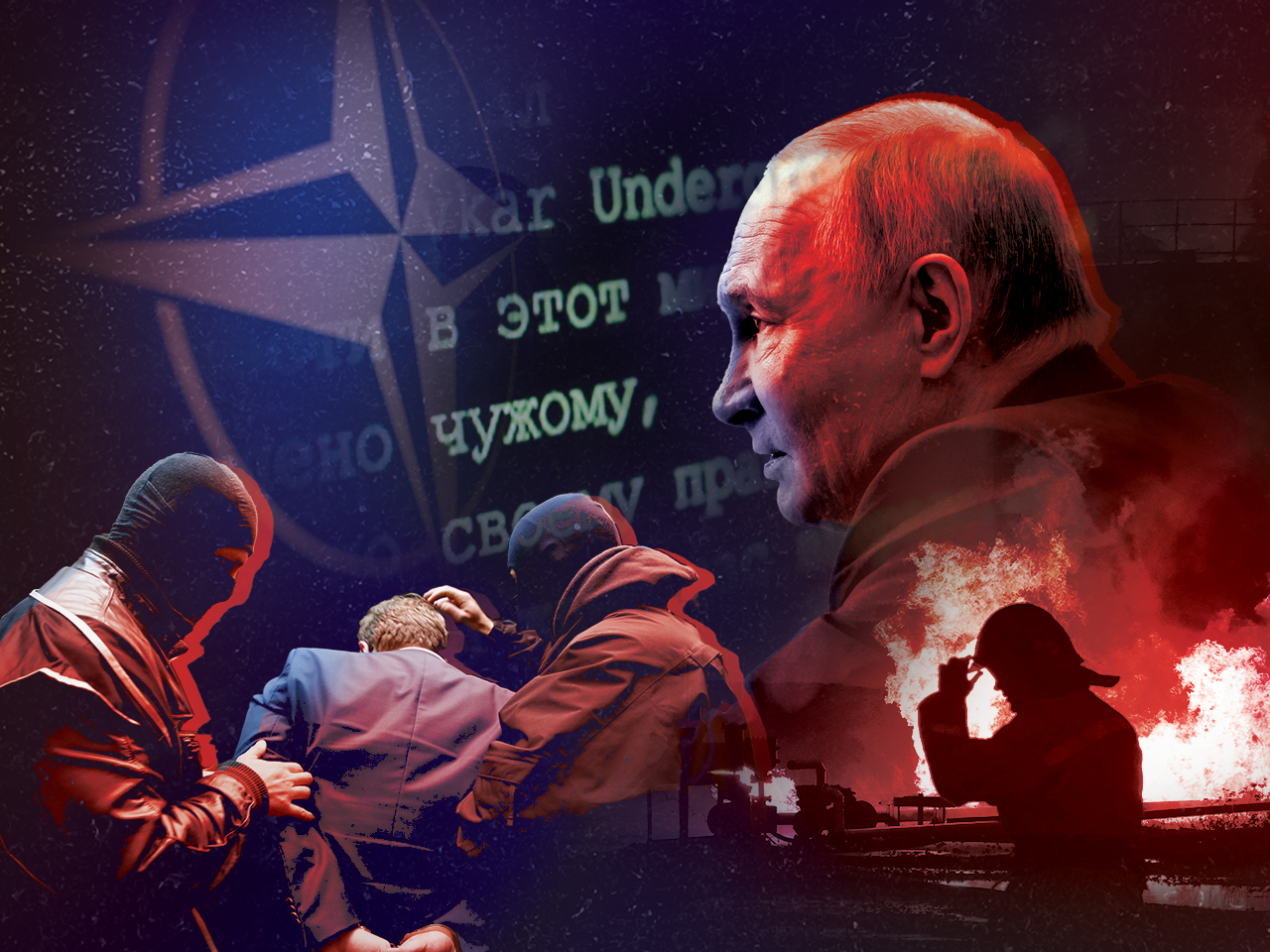
Europe is no longer merely a witness to Russian aggression. It is one of its principal targets. While Ukraine remains the most visible front in Russia’s confrontation with the West — and while it is primarily Ukrainians who are suffering and dying under massive bombardment — it is no longer the only battlefield. Across Europe, Russian-linked actors have sabotaged critical infrastructure, disrupted aviation and energy systems, penetrated digital networks, surveilled military facilities, and targeted political opponents and defense officials, a reality long familiar to several front-line European states. These acts are rarely claimed by their perpetrators, often ambiguously attributed by their victims, and almost never met with decisive retaliation. Taken individually, each attack may appear manageable. Taken together, they constitute something more troubling: a sustained campaign of shadow warfare designed to degrade European security while remaining below the threshold that would trigger a military response.
Over the past year, the Center for European Policy Analysis (CEPA) has conducted a major study of the actors and tactics involved in Russia’s shadow warfare, its strategic underpinnings and governance structures, and the processes and patterns of European response. Since 2022, these activities have become more tightly synchronized with Moscow’s broader war aims in Ukraine. At its core, this research argues that Russia’s shadow warfare is not a temporary or stop-gap expedient, nor a collection of opportunistic “hybrid” adaptations. Rather, it is a system of conflict rooted in ideology, embedded in institutions, and biased toward escalation. The danger it poses thus lies not in the limited damage it causes today, but in the potentially unlimited damage it could cause tomorrow as the risk of inadvertent escalation grows. As a result, deterrence is necessary both to secure Europe against ongoing attacks and to ward off potentially catastrophic eventualities. European states have begun to develop effective responses, and we can already draw valuable lessons from their experience. Troublingly, however, CEPA’s research finds that Europe’s failure to deter this campaign has less to do with a lack of awareness, which would be easily remedied, than with a persistent mismatch between how Russia fights and how the West responds. Overcoming this mismatch will require consistent structural and behavioral change.
At the heart of Russia’s shadow warfare is a worldview that does not recognize clear boundaries between war and peace, or between domestic and foreign threats. In the Kremlin’s eyes, the war in Ukraine, covert operations in Europe, and the repression of dissidents at and abroad are not separate endeavors. Rather, they are fluid fronts in a single, existential struggle, the ultimate aim of which is regime survival. This outlook has deep roots in Soviet, and particularly Stalin-era, concepts of permanent confrontation, in which conflict is not an exception to normal politics, but its organizing principle.
Within this framework, shadow warfare is not a substitute for conventional force, deployed by the weak against the strong. Nor is it merely a means of avoiding escalation. Instead, it is one of several interchangeable tools available to the Russian state, alongside diplomacy, information operations, cyberattacks, and traditional warfare. What makes shadow aggression both attractive and dangerous is that it operates without clear benchmarks for success or failure. These operations depend on a calibrated mix of deniability abroad and visibility at , where the activity itself can be used to validate the regime’s narrative of strength in the face of encirclement. Thus, for the Russians who perpetrate shadow warfare — and whose budgets and political positioning depend on its success — disruption is success, exposure can be framed as proof of relevance, and even failure can justify further investment and greater risk-taking.
This absence of internal discipline creates a powerful bias toward escalation. Russian intelligence and security services are rewarded for initiative rather than restraint. Operations need not achieve specific strategic objectives in order to be validated; they need only demonstrate action. In such a system, escalation is the natural outcome.
Western deterrence models, by contrast, presume an adversary that weighs risks carefully and adjusts in response to the risk of punishment. Against a system that converts pressure into confirmation and disruption into validation, these assumptions break down. The result is that Russian shadow warriors are constrained neither by internal governance structures, nor by external structures of deterrence. In the widening gap between Russian activity and Western response, Moscow has learned to act with increasing confidence.
The empirical record across Europe illustrates how this system operates in practice. Russia’s shadow warfare spans multiple domains, but its effects are cumulative and mutually reinforcing.
One prominent front is infiltration and the use of proxies. Russia routinely relies on criminal networks, loosely affiliated intermediaries, and ideologically flexible recruits to carry out arson, surveillance, intimidation, and sabotage. This “proxyization” serves several purposes at once: It reduces operational risk, blurs lines of responsibility, and stretches Western investigative and legal processes. Perhaps most importantly, it normalizes hostility. When such incidents are treated as isolated crimes rather than elements of a coordinated campaign, they fade into the background noise of daily security challenges — precisely the environment in which shadow warfare thrives.
A second front involves the sabotage and manipulation of critical infrastructure, particularly undersea cables and energy connections. These assets are both highly vulnerable and deeply integrated into civilian and military life. Disrupting them can degrade communications, strain energy markets, and complicate military command and control, all without firing a shot. The use of civilian and dual-use vessels, opaque ownership structures, and operations in contested legal spaces allows Russia to probe European defenses while exploiting gaps in jurisdiction and attribution, a challenge many Nordic and Baltic states have grappled with for years. Even when responsibility is widely understood, the lack of incontrovertible proof sufficient for legal proceedings often delays or dilutes political response.
Cyber operations form a third, closely linked front. Russian-aligned actors have moved beyond episodic disruption toward persistent campaigns that blend espionage, sabotage, and psychological pressure. Cyberattacks increasingly target not just information technology but operational systems — energy grids, transport networks, registries — multiplying the real-world impact of digital intrusion. These operations are designed to scale horizontally across societies, imposing costs on civilians, businesses, and governments alike. Their ambiguity complicates attribution and response, while their integration with other forms of pressure magnifies their strategic effect.
Across these domains, the pattern is consistent. Russia exploits ambiguity, institutional seams, and procedural caution. It probes, observes, and adjusts, confident that the cumulative effect of many small actions will outweigh the limited consequences imposed in response to any single one.
Europe’s difficulty in deterring Russian shadow warfare does not stem from a lack of awareness. In extensive interviews with European and transatlantic security officials, the pattern of Russian activity is understood both in its broad implications and in granular detail. Rather, the failure stems from the ways in which this pattern is assimilated by established European and NATO security structures and practices, and in the habits of response those structures and practices engender.
In particular, CEPA’s research elucidates four critical bottlenecks:
Given these challenges, deterring shadow warfare requires not more activity, but differently organized activity, and different priorities to motivate that activity. Correspondingly, it demands four shifts in how Europe thinks escalation, responsibility, and risk.
Finally, translating these principles of deterrence into practice requires a discrete set of four clear, durable, and consistent policy changes.
Russia’s shadow warfare is not an aberration. It is a durable feature of how the Kremlin understands conflict and power. As long as it remains effective and low-cost, it will continue and likely intensify. Europe’s task, then, is not simply to endure this campaign, nor to expose it for what it is. It is to impose limits. Other adversarial powers, including China, will also be watching how Europe responds. Deterrence will not be measured by the sharpness of condemnations or the ingenuity of defensive measures, but by the consistency with which aggression is met by consequence.
The question is no longer whether Russia will continue to fight in the shadows. It is whether Europe will continue to allow those shadows to set the terms of escalation, or whether it will act now to prevent a larger war.
Over the last year, NATO has seen a dramatic surge in the number and severity of Russian shadow operations in its territory. Russia’s full-scale invasion of Ukraine in 2022 ushered in a period of unprecedented brazenness from Moscow that has deepened as the Kremlin intensifies its war with the West. The airspace incursions, arson, and targeted violence that Europe has endured over the course of the last four years represent a bald-faced escalation of this war without end.
NATO has long struggled to produce an effective deterrence policy against Russian shadow war. Its dread of escalation with Russia since 2014 has so paralyzed the alliance that Vladimir Putin has been able to escalate his war with Ukraine and the broader conflict with NATO on his own terms with impunity. The challenge for NATO is both strategic and structural. NATO’s deterrence posture depends on the consensus of more than 30 democracies constrained by disparate threat perceptions, polarized domestic public opinion, and varying risk tolerance levels and thresholds for escalation. Cognizant of these conditions, Moscow has learned to exploit them by operating its shadow war just below the level that would definitively compel collective action from NATO allies.
Another key challenge for allies that limits their ability to decisively respond to Russian shadow war is attribution. A defining feature of Russian shadow warfare is that it is designed to mask the Kremlin’s involvement and blur clean lines of attribution that would normally trigger clear political or legal responses. Rather than relying on uniformed forces or overt state actors, Russian security services increasingly operate through layers of intermediaries — proxies, criminal facilitators, deniable contractors, and loosely affiliated third-country actors. By ensuring that individual incidents lack a “smoking gun” that could legally tie Moscow to its shadow operations, Russia has slowed decision-making, fractured consensus, and cultivated a propensity toward restraint among NATO allies.
Allied assessments of Russian responsibility must therefore rest not on isolated events or single strands of evidence, but on cumulative pattern recognition over time. Russian security services have demonstrated a consistent operational signature across Europe: the use of deniable intermediaries; targeting operations aligned with Kremlin strategic objectives; and repetition of similar tactics across multiple allied states. In this environment, insisting on incontrovertible proof for each operation before responding leaves initiative in the hands of the Kremlin. Deterrence in the shadow domain will depend not on courtroom standards of evidence, but on strategic judgment informed by patterns, precedent, and intent.
As a result of these muddled attribution lines, the inherent structural challenges within the alliance, and Moscow’s ability to manipulate those structural challenges, NATO has largely failed to deter Russian aggression in its territory over the last decade. The alliance has tolerated a much more aggressive posture from the Kremlin in years since the full-scale invasion of Ukraine and has set up little meaningful deterrence. Moscow, meanwhile, has enjoyed success exploiting divisions and uneven threat perceptions within the transatlantic alliance, conducting infiltration operations on European soil effectively at will without prompting a forceful response.
Thus, when NATO Secretary General Mark Rutte and NATO’s supreme allied commander, Gen. Alexus Grynkewich, took the podium in Brussels on Sept. 12, 2025, just a couple days after more than 20 Russian drones were detected in Polish airspace, there was a palpable expectation for a big announcement detailing a new NATO posture for dealing with Russia’s growing aggression. Seeing as the events from earlier in the week represented the largest drone incursion into allied airspace to date — a clear escalation in what should be perceived by allies as a direct confrontation with NATO’s security apparatus — Rutte and Grynkewich’s presser in Brussels carried a weight not unlike that of a head of state addressing their country on the precipice of war.
What came out of the press briefing, however, was not a distinct, new posture, but more of the same. Rutte and Grynkewich announced Operation Eastern Sentry, aimed at strengthening eastern flank surveillance and air defense response coordination. The operation expands NATO’s air policing and early warning posture, deploying additional fighter aircraft and anti-drone capabilities to the alliance’s eastern flank. 1 It also enhances real-time intelligence sharing between Allied Air Command and national defense agencies to improve detection and reaction times. 2 In concept, Eastern Sentry signals to Moscow that allied airspace is monitored and defended, and that NATO is united in the defense of its territory.
This is a good start. It acknowledges that Russian shadow warfare has breached acceptable boundaries and places additional capability where the threat is most acute. It serves an important reassurance function in that front-line allies now enjoy a more visible NATO presence overhead in the face of encroaching Russian aggression.
But deterrence requires more than increased surveillance and patrols. It requires consequences. Despite Eastern Sentry’s deployment, Russia and its proxies have continued to probe allied airspace — flying drones deep into allied territory (as far west as Belgium and Ireland), drifting surveillance balloons from Belarus into Lithuanian skies, and conducting recurrent incursions across the eastern flank. The persistence of these operations demonstrates that Eastern Sentry has not changed Moscow’s core strategic calculation that Russian hybrid violations remain a low-cost, low-risk method for eroding NATO cohesion.
In its current form, Eastern Sentry is a defensive posture, not a deterrent strategy. It helps NATO see more, but leaves unsettled what the alliance is willing to do it. As long as allied responses remain confined to scrambling jets, finger-wagging, and urging restraint, Russia will continue to escalate, normalizing its presence in NATO skies and transforming the unacceptable into the routine.
What NATO lacks, and what the moment urgently demands, are clearly defined red lines and consequences. Deterrence does not function on ambiguity. It is most effective when an adversary believes two things simultaneously:
Right now, Moscow sees neither. Russian decision-makers perceive NATO’s fear of escalation as a vulnerability to be exploited. Every drone, jet, and balloon that crosses into sovereign airspace without serious repercussion reinforces the perception that Europe’s political will is fragmented and that allies are reaction-averse.
Strength must be paired with predictability. The Kremlin must understand exactly when an intrusion becomes a strategic error. Absent that clarity, Russia will continue to dictate the tempo of escalation.
Russia’s shadow war doctrine increasingly emphasizes infiltration — the deployment of indirect and deliberately ambiguous attacks that fall somewhere between normal criminality and full-out conventional war. The infiltration tactics used by the Kremlin offer Moscow lower-cost, deniable means to test allied resilience, undermine cohesion, and stretch thin the allied security apparatus.
These operations take many forms and test allies’ political will and deterrence capabilities in a variety of ways. Inexpensive drone incursions on NATO’s eastern flank oblige costly responses from allies like scrambling fighter jets and counter-drone systems (which thus far have accomplished little in the way of deterrence); sabotage operations on key infrastructure supporting Ukraine’s defense (like the November 2025 explosion on the Warsaw-Lublin railway line or the plot to kill Rheinmetall CEO Armin Papperger) are routinely conducted by proxy networks and thus not easily attributable to Moscow; and non-kinetic operations like forced migration threaten the European Union’s already fragile internal political unity. In the aggregate, these infiltration tactics collectively test the political will, coordination, and deterrence posture of NATO allies. Infiltration complements Russia’s other hybrid tools by exploiting ambiguity, deniability, and legal asymmetry among allies.
This is Moscow’s adaptation to an uncomfortable reality of its perpetual conflict with the West. Confronting the alliance conventionally is effectively out of the question for Russia. Its gross domestic product of roughly $2.54 trillion is dwarfed by the EU’s $21.1 trillion, and NATO’s military expenditure is 10 times what Moscow has been able to conjure up, even with the Kremlin having fully reoriented the Russian economy to a wartime posture. 3
Unable to carry out its war with the West in a conventionally kinetic manner, Moscow instead seeks to erode NATO political and societal cohesion from within by challenging the alliance through diffuse and hard-to-attribute disruptions. These tactics are relatively inexpensive and scalable — and their success hinges on a lack of European cohesion. For on-the-ground infiltration, Russian intelligence and affiliated networks employ overlapping ecosystems of criminal organizations and ideologically fluid local recruits. The Kremlin benefits from a middle ground between espionage and ordinary crime by non-state actors, enabling it to destabilize adversaries while maintaining plausible deniability to skirt formal responses.
Take as an example the 2024 arson attack on the Marywilska 44 shopping center in Warsaw: Even though local authorities ultimately traced the attack back to Russia through an expansive network of Kremlin proxies, the investigation took over a year and the Polish government still has taken no significant accountability measures. This event illustrates a key point outlined by Sam Greene in the introduction of this report: “While front lines progress or fail, and bombs hit or miss their targets, shadow warfare operations succeed when they disrupt, they succeed when they’re exposed, and they succeed when they fail. As such, in Moscow’s decision-making framework, shadow operations are always a viable option, and more operational risk-taking is always better than less.” 4
In the air, meanwhile, the Kremlin has benefitted the most from NATO’s paralysis.
Russian infiltration operations serve several purposes:
Less than 24 hours after NATO announced Operation Eastern Sentry on Sept. 12, 2025, another Russian drone was detected in Romanian airspace. 5 Less than a week later, three Russian MiG-31 fighter jets violated Estonian airspace above the Gulf of Finland, where they loitered for 12 minutes with their transponders off under no flight plan. 6 Three days after that, sightings of suspected Russian drones over Copenhagen’s airport halted take-offs and landings for over four hours. 7 Belarussian weather balloons over Lithuania; more drone flights over a US Army base in Estonia; another invasion of NATO airspace by Russian military aircraft over Lithuania that prompted the scrambling of NATO jets — all occurred within weeks of NATO’s announcement of its new defense posture. 8
These events demonstrate a Kremlin playbook that uses relatively inexpensive aerial probes to gather intelligence on allied reaction times, strain local air-defense resources, and provoke political division — all while avoiding the threshold that would compel an automatic allied military response.
Taking into account the acceleration of Russian airspace violations, the Kremlin appears little deterred by the early stages of Operation Eastern Sentry. But that doesn’t mean it shouldn’t be celebrated for improving allied defense posture. It augments NATO’s air policing on the eastern flank by deploying additional fighter rotations, mobile radar and sensor assets, enhanced NATO/EU intelligence-sharing links, and counter-drone teams where feasible. These deployments help monitors more quickly spot intrusions and increase the proportion of incursions that are documented, tracked, and interdicted.
One of the main benefits of Eastern Sentry is the discussion it is prompting over NATO’s operational constraints — most notably the alliance’s built-in “national caveats.” NATO members still retain sovereignty over the deployment of military assets for NATO missions, which creates a patchwork of available forces and limits rapid, integrated responses. The US Ambassador to NATO, Matthew Whittaker, noted “It’s no secret that the more ‘national caveats’ there are on — especially our fighter jet assets — the harder it is for [the supreme allied commander] to respond immediately.” 9
Eastern Sentry offers a new avenue for addressing these gaps. It can chip away at institutional barriers within NATO to establish pre-agreed commitments from member states. Under this framework, air, maritime, and counter-drone assets assigned to the eastern flank can be pledged in advance for NATO air-policing and counter-incursion duties. By binding contributors into a shared mission architecture and specifying zones of operation under a unified command, Eastern Sentry can limit discretion at a moment of crisis. The result should be faster decision-making, fewer obstacles, and more credible deterrence. The initiative would signal a meaningful shift toward collective rapid-reaction posture, signaling to Moscow that NATO force contributions are not merely symbolic, but operationally ready under shared rules.
Nevertheless, a recurrent problem facing NATO is that it costs allies more to manage Russian aerial incursions than it costs Russia to launch them. While the drones that traverse NATO airspace are relatively cheap to manufacture and deploy, allied responses — scrambling jets, diverting AWACS and tanker sortie hours, and activating air-defense batteries — are expensive. 10 Shooting down even a small, low-cost drone requires interceptors, rapid-response infrastructure, and politically delicate rules of engagement. Ukraine has excelled at neutralizing Russian drones with low-cost materiel, but NATO’s response mechanisms to similar incursions are typically less cost-effective. For the attacker, the equation is simple: Expend a cheap asset, gather a multitude of data points, accomplish certain political goals, and force the defender to pay the price in resources and attention. Eastern Sentry is an important initial step toward a more integrated aerial defense posture within NATO, but there is still little discussion asymmetry in costs. This issue risks metastasizing into more political dissonance among member states as the EU and NATO persist in the age-old debate of who will foot the bill of European deterrence and security. This is precisely the Kremlin’s objective.
We see this internal political dissonance at play with one of the key allied strategies for addressing Russian incursions into NATO airspace. The idea of building a so-called “drone wall” — a network of radars, sensors, jammers, and interceptors stretching along Europe’s eastern flank — has generated strong support in Brussels and among front-line states, yet the initiative is running into two major constraints. First, the scale and cost of deploying a layered detection and defeat architecture across Russia’s border with Europe is massive. The need for long-term funding, joint procurement, and ongoing sustainment makes the project both expensive and slow. EU Defense Commissioner Andrius Kubilius has admitted that the EU’s “capabilities are really, for the time being, quite limited.” 11
Second, not all European capitals are sold on the idea. Eastern and Baltic states press hard for rapid deployment, while western and southern nations that are less exposed to the immediate threat question both the cost burden and what’s in it for them. Italy’s Georgia Meloni is a key skeptic of the program’s utility for her country’s security. 12 These dual pressures — high cost and split political will — mean that even as the concept of a drone wall resonates rhetorically, its implementation risks being delayed or deferred.
The reality is that augmented detection systems and procedures change what NATO sees more than what NATO does. Eastern Sentry increases the alliance’s situational awareness, which is necessary, but not sufficient, for deterrence. The Kremlin can and will continue to test the alliance as long as the act of being seen imposes no politically meaningful cost.
Surveillance and rapid reaction are necessary building blocks. They buy time and gather the evidence needed for attribution and targeted action. But the true test of deterrence will be whether allies transform that evidence into predictable, materially consequential outcomes that alter Russian cost-benefit calculations. The Kremlin has been able to escalate its probing exercises because the downside is low. The only way to change that arithmetic is to make the downside permanent, visible, and strategically costly.
A well-funded drone wall might reduce the frequency of incursions, but it will not by itself stop the strategic logic that drives them. Only a combined posture — augmented surveillance plus an unambiguous, public escalation ladder tying incursions to actionable responses (including accelerated support for Ukraine) — will make Moscow reconsider its aerial incursion strategy.
Taking into account their various challenges, allies should consider the following:
To make deterrence credible, NATO must ensure that each aerial incursion carries a tangible and escalating consequence. There are several ways to do that, the most effective of which would be to link every violation of allied airspace directly to increased material support for Ukraine, including:
Allies could also tie increased sanctions to aerial infiltration and coordinate the gradual unfreezing and transfer of interest accrued on Russian sovereign assets to Ukraine’s defense fund. This would make clear that each new incursion hastens Moscow’s financial losses.
These measures will invite louder nuclear rhetoric and threats from the Kremlin, but that escalation is inevitable. Tolerating it is part of restoring deterrence. For too long, NATO has allowed Moscow’s bluster to define the boundaries of acceptable action. Deterrence cannot function if fear of rhetorical escalation outweighs the critical security imperatives.
One of the more challenging infiltration methods for allied states to address is the use of proxy networks, nonprofessional actors, and criminal syndicates by Russian intelligence services and other state actors. These operatives carry out attacks on behalf of or in alignment with the Kremlin’s strategic objectives while maintaining layers of deniability for the Russian state. The recruitment process typically targets individuals embedded in Europe who are nonprofessional, financially vulnerable, ideologically ambivalent, or located in jurisdictions with weaker law enforcement mechanisms. Many of these actors carry out operations unaware of their Russian sponsorship. These strategies are now well-known in Europe — German authorities in September 2025 began warning their citizens against becoming “disposable agents” in Russian proxy operations in Europe. 13
A May 2024 arson attack on an Ikea store in Vilnius is a prime example of Russian intelligence services’ recruitment practices. Investigators found that the perpetrators were two Ukrainian citizens, one under 20, the other under 18, who were offered 10,000 euros ($11,000) and a used BMW for undertaking this operation. 14 Arturas Urbelis from the Lithuanian prosecutor general’s office said the attack was linked to Russian military intelligence via a chain of more than 20 intermediaries. 15
Three days later, Marywilska 44 shopping center in Warsaw burned in a massive fire that destroyed one of Poland’s largest retail complexes. The Polish prime minister announced after a yearlong investigation that Russian secret services were behind the attack. 16 Prosecutors charged two Ukrainian citizens who had cooperated with those who carried it out. Poland then ordered the closure of Russia’s consulate in Kraków in response. Public statements framed the fire as part of a broader sabotage campaign targeting states that support Ukraine. 17 While officials have not released the same granular payment details as in Vilnius, the pattern they describe — local, nonprofessional recruits guided by handlers abroad who were, in some cases, unaware of the ultimate sponsor — aligns with the wider recruitment model seen across recent incidents.
The November 2025 sabotage of the Warsaw–Lublin railway line, which carries more than 100 trains daily and is used for transporting military assistance to Ukraine, appears to have followed the same proxy-recruitment model seen in other recent Russian-linked operations. Polish authorities indicated that the plot relied on locally present intermediaries rather than trained operatives, including foreign nationals (among them Ukrainian citizens) who were recruited through informal or criminal networks and directed remotely by handlers operating abroad. 18
Taken together, these incidents reveal a consistent and deliberate recruitment strategy by Russian intelligence services — the use of young, economically vulnerable operatives as proxy saboteurs for deniable operations across NATO and the EU. The frequent use of susceptible Ukrainian nationals is strategically consequential as well. Beyond the primary goals of Russian shadow war, which aims to outsource operational risk to expendable actors while complicating political attribution and blurring the line between victim and perpetrator, the use of Ukrainian nationals seeks to weaponize sympathy for Ukraine.
Since the full-scale invasion of Ukraine, EU and NATO states have made extraordinary political, financial, and social commitments to support Ukrainians fleeing Russia’s war, extending protection, residency, employment access, and social services on an unprecedented scale. By embedding sabotage operations within this population, Russian intelligence services seek to exploit that openness and transform humanitarian solidarity into a perceived security liability. Even isolated cases — magnified through media coverage and political debate — can fuel suspicion of refugees, harden public attitudes, and empower domestic actors arguing for restrictive migration or asylum policies. This dynamic forces democratic governments into a tricky bind: tighten controls and risk undermining their moral commitment to Ukraine or maintain openness and absorb the political fallout of security incidents.
Russia’s use of proxy operatives extends beyond sabotage to include targeted killings and assassination attempts on dissidents, defectors, and individuals Moscow deems strategically threatening. While high-profile GRU poisonings like the Skripal attack in Salisbury involved trained intelligence operatives, European governments have increasingly identified amateur intermediaries and organized-crime facilitators within these networks. These proxies are recruited not for ideological loyalty but for proximity, pliability, and expendability.
The most notorious instance of this approach was the plot against Rheinmetall CEO Armin Papperger. In early 2024, thanks to alerts from US intelligence, German authorities foiled a plot to murder Papperger, whose company is one of Kyiv’s most critical suppliers of armored vehicles and munitions. Western intelligence would later implicate an active Russian proxy network as the perpetrators, though there was insufficient evidence to make arrests. 19
In the spring of 2025, German authorities charged three men with working with Russian intelligence services to spy on and potentially assassinate a German citizen who fought with Ukrainian forces against Russia’s invasion. According to federal prosecutors, the suspects — an Armenian, a Ukrainian, and a Russian national — had been gathering intelligence on the intended target’s location and movements in preparation for what investigators described as a possible killing mission. The men were allegedly directed by the FSB and received instructions to locate and surveil the target in western Germany. 20
As Western security services have hardened against sophisticated GRU operations, the Kremlin has adapted by outsourcing violence to irregular networks whose criminality blurs attribution and complicates legal response. The intent is not only to neutralize individual targets but also to signal to Brussels and European capitals its reach and impunity. Critics of the Kremlin — whether journalists, exiled opposition figures, community organizers, or those aiding Ukraine — face a threat environment in which a neighbor, co-worker, or petty criminal may serve as the weapon of their adversary. These cases underscore a core feature of the Kremlin’s infiltration strategy — outsourced coercion that exploits Europe’s open societies, legal protections, and trust in public space while shielding Moscow behind layers of deniability.Taken together, the cases illustrate a repeatable strategy: Recruiters approach opportunistic, low-skilled actors (often via intermediaries and cross-border meetings) offering modest but salient incentives, and task them with simple, high-impact actions such as arson. The design exploits Europe’s legal and political constraints while maximizing psychological and diplomatic tumult (e.g., consulate closures, emergency statements, and heightened public anxiety).
Russia’s campaign of on-the-ground infiltration across Europe is not a separate phenomenon from its war in Ukraine but an extension of it. Each operation carried out on European soil, whether an arson in Warsaw or a foiled assassination in Germany, serves the same strategic purpose of weakening allied resolve, disrupting military supply routes, and imposing psychological costs on governments supporting Kyiv. The 2024 plot to assassinate Papperger is an apt example, as Rheinmetall has been one of Ukraine’s principal defense suppliers, producing ammunition and armored vehicles critical to Ukraine’s battlefield resilience. Targeting its leadership was not random. It was a calculated signal that European defense industries directly aiding Ukraine are now part of the battlefield.
These operations illustrate how Moscow has expanded the geography of war to encompass Europe’s interior. The Kremlin’s method of using nonprofessional actors who can be plausibly disowned if exposed allows Russia to inflict political and economic disruption at minimal cost and with limited risk of escalation. It also enables Moscow to test NATO’s internal cohesion by seeing whether acts of sabotage and intimidation on allied soil produce unified responses or disjointed national reactions. So far, it has largely been the latter.
Countering this strategy requires both defensive hardening and strategic signaling. The EU and NATO must first make proxy recruitment and sabotage more difficult. To this end, allied intelligence services should:
The success of Russia’s proxy campaigns depends on Europe’s fragmented surveillance, inconsistent prosecutorial frameworks, and slow information-sharing among agencies. Closing those gaps will deprive Moscow of its low-cost, deniable manpower.
Yet even perfect prevention will not suffice for deterrence. What will alter Moscow’s behavior is not restraint or episodic responses, but determined, consistent action over time that reshapes its cost-benefit calculations. Every attack or attempted attack on European soil should trigger a proportional increase in material support to Ukraine. Support for Ukraine is not a parallel effort to countering Russia’s shadow war; it is its strategic center of gravity. Moscow’s shadow war is designed to raise the perceived cost of sustaining Western support for Kyiv by testing allied resolve and exploiting political fatigue. These actions are not isolated provocations, but instruments intended to shape European and transatlantic decision-making on Ukraine. Any deterrence strategy that treats infiltration on NATO territory as separate from the war is a misreading of its purpose.
Aiding Ukraine represents the most direct and cost-effective means for the alliance to impose sustained pressure on Russia without entering a conventional conflict. Material support to Kyiv degrades Russian military capacity, strains its industrial base, and consumes resources that might otherwise be directed toward hybrid operations against NATO members. In this way, reinforcing Ukraine’s territorial integrity is not escalation by proxy, but a form of strategic containment — one that forces Moscow to confront the consequences of its actions on the battlefield.
NATO and the EU must make clear that Russian shadow war will not deter but will rather accelerate the very support that threatens Russia’s war effort. Only by linking infiltration in Europe to punishment on the battlefield can the alliance transform Moscow’s gray-zone strategy from a tool of coercion into a liability of its own making.
One of the more subtle but effective infiltration tactics used by Russia and its allies is the weaponization of migration: the strategic use of migration flows, irregular border crossings, or facilitated transit to pressure allied states, undermine EU cohesion, amplify domestic political tensions, and test border and asylum systems. While Russia’s war in Ukraine focuses attention on the battlefield, its parallel effort to destabilize Europe through the orchestration of migration flows represents an extension of the same strategic logic of fracturing allied unity and deepening domestic polarization.
In 2021, Belarus launched a state- operation to channel migrants, primarily from the Middle East and North Africa, toward the borders of Lithuania, Poland, and Latvia. The move was retaliation for EU sanctions after the fraudulent 2020 Belarusian election and subsequent crackdown on protesters. Belarusian authorities, working with state-controlled travel agencies and Middle Eastern airlines, issued tourist visas and advertised easy access to the EU. Upon arrival, migrants were directed toward EU border zones, where many were supplied with tools to breach fences. 21 Those unable to cross were forced to remain in freezing conditions, while Belarus repeatedly refused Polish aid convoys. 22 At least 20 migrants died in the border area that winter. 23
In 2023, Finland also saw a jump in attempted illegal crossings on its eastern border. Late that year, the Finnish border agency, Raja, said there were “clear indications that authorities of a foreign state or other operators have furthered the entry of those persons who illegally crossed the border into Finland.” 24 This was likely a Russian response to Finland’s NATO membership, which was a direct result of the full-scale invasion of Ukraine.
In both instances, allied nations were forced to take extreme measures to protect their borders. Finland, newly admitted to NATO and directly confronting Russian hybrid tactics, closed all but one of its eastern crossings in late 2023. Helsinki also passed a temporary emergency law allowing border guards to reject asylum claims in specific national-security circumstances, citing the weaponization of migration by Russia. 25 The measure reflected the growing view among northern allies that hybrid border pressure required security-first responses.
Poland, Lithuania, and Latvia had already taken similar steps during the 2021-2022 Belarus-engineered migration crisis. Warsaw declared a state of emergency and constructed a 115-mile steel barrier along its border with Belarus, funded nationally after the European Commission refused to finance physical border walls. 26 Lithuania erected a comparable 300-mile fence and expanded surveillance capabilities. 27 Latvia followed suit by constructing its own fence across its 100-mile-plus border with Belarus. 28
These measures collectively marked the emergence of a Baltic-Nordic security belt, a network of hardened frontiers designed to blunt Russia’s and Belarus’s attempts to use migration as a destabilizing tool. Yet the response also underscored a persistent tension within the EU: Front-line states prioritize deterrence and border control, while Brussels remains wary of breaching asylum and human rights norms. For Moscow and Minsk, that tension is itself a success in that it forces Europe to debate its values under pressure.
The weaponization of migration exposes a fundamental asymmetry between authoritarian and democratic systems. Moscow and Minsk operate without legal, humanitarian, or political constraints. They can manufacture crises, instrumentalize vulnerable populations, and escalate pressure at will, unconstrained by domestic accountability or international norms. Democratic states, by contrast, are bound by rule-of-law obligations, asylum frameworks, judicial oversight, and public scrutiny– constraints that are not weaknesses in peacetime but become exploitable vulnerabilities under deliberate pressure, as is the case today. Russian and Belarusian strategy is built precisely on this imbalance, forcing democracies to choose between acting decisively and upholding their own rules.
There is a clear and consistent strategy at play for Russia and Belarus here:
The defensive steps taken by Finland, Lithuania, Latvia, and Poland triggered unease in Brussels. Critics, including the European Commission and human rights advocates, warned that these measures and laws enacted by border states risked breaching EU asylum standards and the bloc’s broader human rights obligations. This underscores a recurring dilemma for the EU: Coercive migration pressures force front-line states to choose between upholding EU norms and defending their borders. Each new crisis exposes the political and legal asymmetries within the EU’s migration system, in which the moral burden of protection falls disproportionately on states that border Russia and Belarus.
This is precisely the pressure Moscow seeks to generate. Weaponized migration creates both humanitarian and institutional crises. It strains the Schengen system, fuels far-right political movements across member states, and challenges the credibility of the EU’s governance model. By forcing the bloc to debate whether security trumps legality, Russia achieves its central goal — not territorial gain, but political paralysis.
The pattern of state-orchestrated migration pressure is now well established. The EU and NATO should no longer treat future incidents as unforeseen humanitarian emergencies but as anticipated instruments of shadow aggression. Advance preparation — clear emergency legal authorities, predefined coordination among front-line allies, and standing mechanisms for rapid political attribution — allows democracies to respond firmly without improvisation or erosion of legitimacy. Preparedness is how democratic systems reclaim agency in a contest where authoritarian actors seek to weaponize restraint itself.
Deterring the weaponization of migration requires more than ad hoc national emergency measures. It demands a coherent EU-NATO framework that both denies Moscow operational leverage and imposes political costs when coercive tactics are used. Several strands are key:
Allies should establish an EU-NATO hybrid border mechanism that treats orchestrated migration flows as a persistent security challenge rather than a series of isolated humanitarian incidents. This should include:
Europe must raise the cost for state and commercial enablers .
Airlines, travel agencies, and logistics firms that knowingly participate in artificially manufactured migration flows should face consequences, including:
Strategic communications must expose manipulation while preserving Europe’s humanitarian narrative.
Governments should publicly distinguish genuine asylum-seekers from the hostile state behavior that placed them at the border. Doing so blunts extremist exploitation at and denies Moscow the ability to brand European responses as arbitrary cruelty.
Deterrence requires making clear that coercive migration will come at a high price.
Each documented episode of weaponized migration should be tied to concrete Western steps that Russia cares , including:
The challenge confronting NATO and the European Union today is not a lack of awareness of Russian aggression, but a lack of strategic follow-through. Over the past decade, and especially since 2022, Moscow has systematically expanded the geography of confrontation to encompass Europe’s interior. From drone incursions and arson attacks to proxy assassinations and weaponized migration, these operations aim to make shadow war the new normal.
What is often missing in allied debates is a clear-eyed recognition of how profoundly the threat has evolved since the period before Russia’s annexation of Crimea. A dozen years ago, Russian coercion largely operated at the margins, through influence campaigns, cyber probing, and episodic pressure on vulnerable neighbors. Today, Moscow is executing a far more integrated and operationally mature campaign that blends intelligence services, criminal networks, proxies, and emerging technologies into a continuous pressure strategy inside NATO territory. These are not sporadic provocations but a sustained and holistic campaign to normalize hostile action below the threshold of war and recalibrate what Europe comes to accept as routine. Treating today’s shadow warfare as an extension of earlier hybrid activity underestimates both its scale and its intent. The Kremlin has moved from testing NATO’s red lines to exploiting the assumption that red lines no longer exist. Russia has also learned that ambiguity and deniability is a cheaper and more effective tool than conventional escalation. Each operation that goes unanswered reinforces Moscow’s perception that NATO will monitor and condemn but not retaliate.
To reverse this dynamic, deterrence must be restored as a perpetual, adaptive strategy rather than a static posture. To this end, allies should reorient their strategic thinking along the following lines:
NATO and the EU must accept that Russia’s shadow war in Europe is not peripheral to the war in Ukraine, but rather an extension of it.
Every drone over NATO airspace or proxy sabotage in Europe is a means of shaping the battlefield in Ukraine by exhausting allies while testing their unity and stretching their resources.
The alliance’s defensive mechanisms like Eastern Sentry, the prospective “drone wall,” and the Baltic-Nordic security belt improve detection, but deterrence is measured by the adversary’s restraint, not by allies’ visibility.
To change Moscow’s calculus, allies must create predictable, escalating consequences that both establish red lines and tie every act of shadow war aggression to a tangible cost. A holistic EU-NATO hybrid escalation ladder could resemble the following:
If NATO and the EU can unite in these principles — clear red lines, guaranteed response, and political endurance — they can finally move from being observers of Russian aggression to architects of its containment. Deterrence will not be restored through vigilance alone, but through conviction.
Minna Ålander and Mathieu Boulègue
Critical underwater infrastructure has become ever-more critical, especially in the Baltic Sea region. Recent damage to data cables has reminded policymakers across NATO nations that the alliance is highly vulnerable to disruption by nefarious state actors. 29
Critical underwater infrastructure (CUI) generally includes surface and underwater energy infrastructure (pipelines, power cables, wind farms, etc.); fiber optic data and communication cables; and fishing and shipping infrastructure. Of these, fiber optic cables are the most vulnerable. While more resilient, data cables are nevertheless vulnerable to physical damage, with more than 200 reported incidents each year. 30 The vast majority of damage is due to human error (anchoring and trawling activities by fishing vessels and commercial shipping), structural issues (obsolescence of the cables), or natural occurrences (seabed movements and abrasion, earthquakes, etc.). 31
In recent years, however, the Baltic Sea area has become a testbed for targeted disruption of such infrastructure, particularly data cables. Past cases show how sabotage takes place and illustrate Moscow’s (and Beijing’s) likely involvement. 32 Given the technical challenges associated with fore...
The full story
This article is one source in a clustered incident — the cluster page carries the summary, timeline and every other outlet covering it.
