 Back Biometricupdate
World brings biometric proof of human to banking and AI agents
World is bringing biometric proof of personhood into banking and financial services with a suite of tools designed to counter deepfake impersonation, verify customers during sensitive transactions and connect AI agents to the humans they represent.
Tools for Humanity CEO and World co-founder Alex Blania unveiled World ID for banking and finance on stage. It brings together three products: the World ID app , World ID for Zoom and World ID for Agents . All three are built around cryptographic proofs that establish whether someone is a unique human, whether they are present in the moment, and specific identity attributes such as age or nationality.
Bain Capital, OpenExchange, Outtake, Pantera Capital and VanEck Funds are the initial design partners, according to the company’s announcement . No bank is among the named partners.
The launch follows a period of investment in World’s identity infrastructure. In July , Biometric Update reported that the World Foundation raised $52.5 million through a one-year locked token sale led by Pantera Capital to accelerate deployment of World ID across consumers, enterprises and AI agents.
Bain Capital Crypto also participated in the sale. Both Pantera Capital and Bain Capital, which is affiliated with Bain Capital Crypto, are now named as design partners for the banking and finance offering.
Proof of Human as a gate for transactions
In a conversation with Mesh CEO Bam Azizi at Money20/20, Blania described the thinking behind World’s approach to digital identity as AI agents become more capable.
“One of the core beliefs we had is that the future would be agentic,” Blania said.
He described a future in which AI systems operate over extended periods, create videos and replicate human behavior online. In that world, he said, the way people establish trust in digital interactions changes fundamentally.
“We would need a proof-of-human, and such a technology would turn out to be kind of the gate for almost any transaction on the internet,” Blania said.
According to World, automated traffic surpassed human traffic on the web for the first time this year. For financial institutions, that makes it increasingly important to distinguish requests from real customers, impersonators and AI agents acting on customers’ behalf.
Why banking and financial services
Financial institutions are prime targets for AI-enabled fraud because their digital interactions involve money, sensitive information and consequential decisions. Generative AI has made it easier for criminals to impersonate customers, executives and business partners with convincing synthetic audio, video and identity documents.
World’s announcement cites Deloitte estimates that generative AI-enabled fraud losses in the United States could reach $40 billion by 2027 , up from an estimated $12.3 billion in 2023.
In early 2024, an employee at engineering firm Arup in Hong Kong transferred approximately $25.6 million after a video conference in which every other participant was a deepfake. Later that year, the U.S. Treasury’s Financial Crimes Enforcement Network warned financial institutions that criminals were using deepfake photos and videos to get past identity checks during account opening.
World says its new offering helps institutions establish trust in sensitive interactions while limiting the personal data they collect and store.
World ID for Zoom: Verified humans in high-stakes meetings
What if the Arup employee who transferred $25.6 million following a deepfake video conference had required participants to verify themselves before joining? Verification tied to the intended participants’ credentials could have exposed the impersonation before the transfer.
World ID for Zoom is designed for these types of high-stakes interactions, including transaction approvals, investment discussions and merger negotiations.
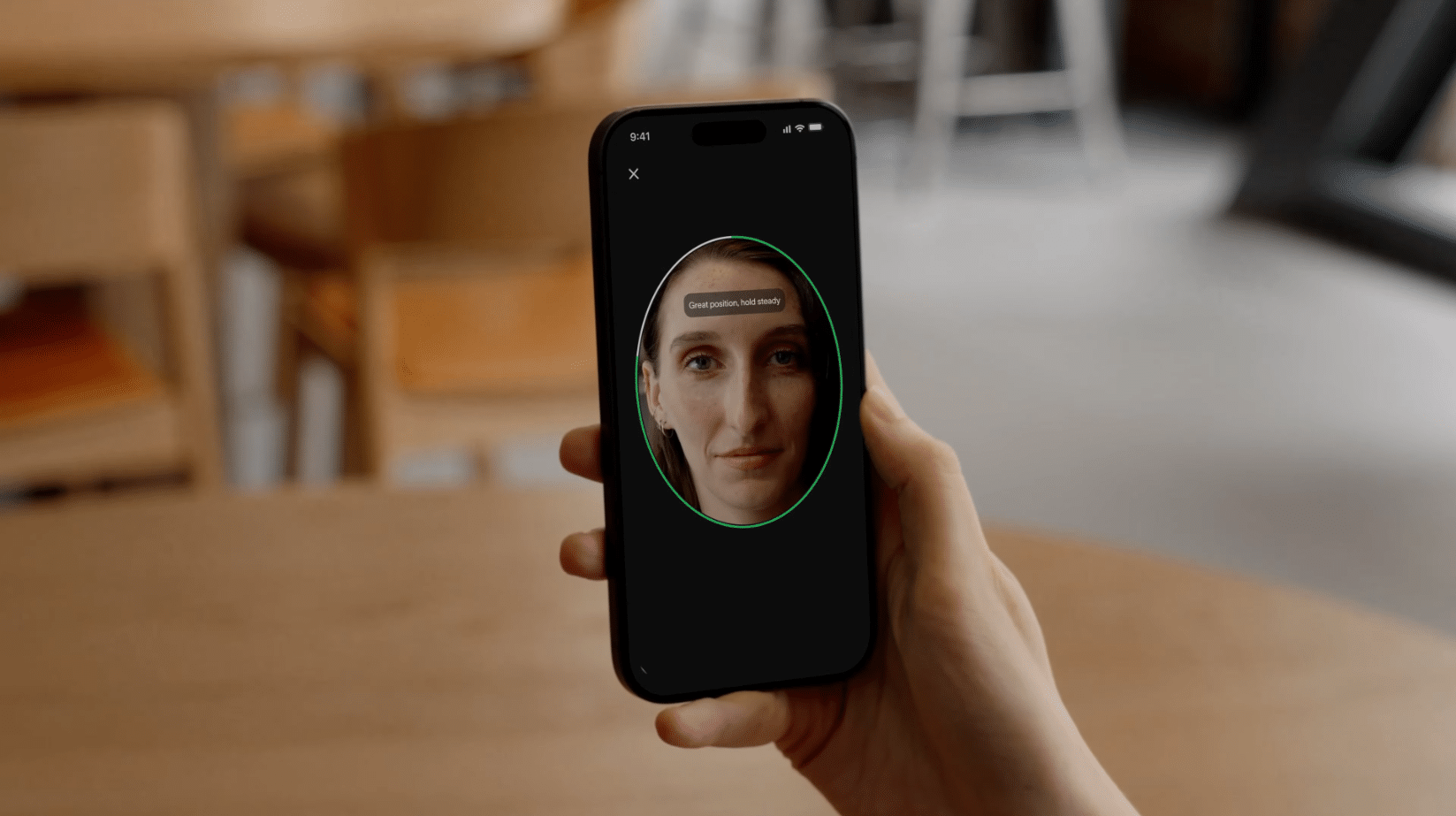
According to the company, participants first complete a one-time biometric verification at a World Orb and connect their World ID to Zoom. When joining a meeting, a live selfie confirms that the participant matches the previously verified individual.
Once authenticated, a Human Badge appears on the participant’s Zoom tile. Any participant can request verification during a call, while meeting hosts will soon be able to require verification in a Zoom waiting room before admitting attendees.
World says Zoom receives no personal information during verification.
World ID app: Three proofs in one wallet
The World ID app is available through the App Store and Google Play in more than 150 countries. It is an identity wallet where individuals claim, manage and present cryptographic proofs. It is separate from World Money, the company’s financial app, and proofs previously claimed in World App carry over automatically.
Proof of Human establishes that someone is a real and unique human through a one-time visit to an Orb. According to World, Orbs are also available at the New York Stock Exchange.
Proof of Presence uses a smartphone-based liveness check to confirm that a person is present during an interaction. It does not require Orb verification.
Proof of Attributes confirms specific information from an official government credential, such as nationality or being over a certain age, while revealing only the requested information.
According to World, financial institutions can use these proofs when customers visit branches, open accounts, transfer significant sums or recover access to their accounts.
The company highlights human-bound approvals for ACH and wire transfers, along with account recovery requirements designed to prevent account takeover.
Individuals do not need to complete Orb verification to use the World ID app. They can claim and present Proof of Presence and Proof of Attributes independently.
World ID for Agents: Connecting AI agents to verified humans
Imagine a customer instructing an AI agent to compare mortgage refinancing offers from several banks. How can those institutions establish that the automated requests originate from an agent acting on behalf of a genuine human?
World addresses this through AgentKit , a suite of developer tools currently in beta that allows individuals to delegate cryptographic proofs to AI agents.
In the mortgage example, the agent presents a delegated Proof of Human to participating banks, which can cryptographically verify its connection to a real person without receiving the customer’s underlying personal information.
According to World, delegated proofs allow agents to demonstrate that they are acting on behalf of verified humans. The company expects the capability to become increasingly relevant as autonomous agents perform more financial tasks, particularly those subject to consumer protection and compliance requirements.
Built on World ID 4.0
The suite runs on World ID 4.0 , the latest version of World’s identity protocol, released earlier this year.
According to the company, the architecture incorporates post-quantum security and privacy protections. It is designed for enterprise deployment, with account recovery and compatibility with existing security infrastructure.
World ID uses zero-knowledge cryptography, allowing individuals to prove that a statement is true without revealing the underlying information. A customer, for example, can demonstrate that they meet a minimum age requirement without disclosing their date of birth.
One-time-use nullifiers are designed to prevent separate verification interactions from being linked together, protecting individuals against tracking across services.
World also reports that more than 18 million people hold a Proof of Human. The company cited a similar figure in July, along with more than 475 million proof presentations. Updated presentation figures were not provided in the latest announcement.
An expanding ecosystem
The banking and finance launch builds on World ID integrations and partnerships across consumer, enterprise and AI platforms.
In April, World announced an expansion of its integrations, including Tinder for online dating, Razer and Mythical Games for gaming, and Concert Kit for ticket reservations. Thirty Seconds to Mars also plans to use the technology to reserve a portion of tickets for verified humans during its 2027 tour.
On the enterprise side, Zoom is incorporating World ID into video meetings, while Docusign is working with World to introduce Proof of Human into digital agreement workflows.
World is also expanding into AI agent authentication. Vercel is incorporating human verification into developer workflows, while Okta plans to integrate World ID into its Human Principal offering, connecting AI agents to verified humans.
These partnerships extend World’s technology across online dating, gaming, entertainment, enterprise communications, digital agreements and autonomous AI.
The banking and finance suite brings those capabilities into financial services, where institutions increasingly need to establish whether the people and AI agents behind digital interactions are genuine and authorized to act.
With the new offering, World is extending Proof of Human from underlying identity infrastructure into commercial applications that connect verified humans, businesses and AI agents.
AI agents | biometric liveness detection | biometric verification | deepfake detection | digital identity | Money 20/20 | World | World ID | World ID Orb
The full story
This article is one source in a clustered incident — the cluster page carries the summary, timeline and every other outlet covering it.
