 Blogs.Cisco
Emerging Threat: Patching Delays Amidst AI-Driven Vulnerabilities
Article Content

- •Patching delays have worsened, with fixes arriving after exploits.
- •Microsoft's recent patch release included 1,411 updates, emphasizing vulnerability management challenges.
- •AI advancements are enabling individuals to conduct sophisticated attacks previously requiring teams.
Patrick Smyth from Chainguard reports that the average time to patch vulnerabilities has decreased significantly, with patches now arriving seven days after exploitation. This shift is attributed to advancements in frontier AI models, which enable attackers to exploit vulnerabilities more rapidly. For instance, Microsoft recently released 1,411 patches, including 70 critical flaws and 3 zero-days, highlighting the urgency for defenders. Despite this, organizations still take up to 43 days to patch, creating a substantial risk. The trend indicates that individual attackers can now operate with capabilities that previously required team resources, complicating the defense landscape. The situation is exacerbated by the increasing number of vulnerabilities identified, leading to a cat-and-mouse scenario between defenders and attackers.
Ask AI about this cluster
Answers cite the sources they use
Timeline
More articles in this cluster (2)
Following this threat?
Track Shai-hulud and Ubuntu in your own feed — you're alerted when they show up in new reporting, leak sites or exploitation.
Free account · no card needed
Common questions
What is the current patching timeline?
How many vulnerabilities were recently patched by Microsoft?
What tools are being used to exploit vulnerabilities?
Continue Reading
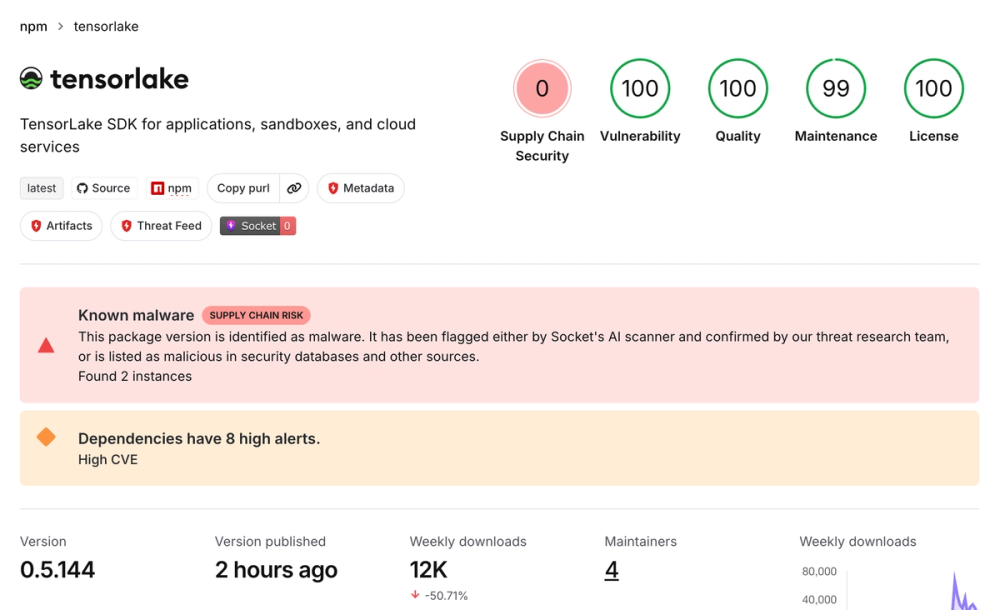 Tensorlake npm Package Compromised by Shai-Hulud Worm On October 8, 2026, the Tensorlake npm package version 0.5.144 was compromised, delivering a credential-stealing worm known as Shai-Hulud. The malware, which was published through a compromised maintainer account, executes a preinstall hook that runs an obfuscated loader to harvest credentials from local files and CI…
 Cisco Email Bug Exploited as Zero-Day by Unknown Actors A zero-day vulnerability in Cisco's email system has been by unknown criminals. The flaw, described as a 'make-me-root' bug, allows attackers to gain root access via email. Cisco has not disclosed specific details about the vulnerability or the affected systems. The exploit is reportedly being used in the wild…