 Straitstimes
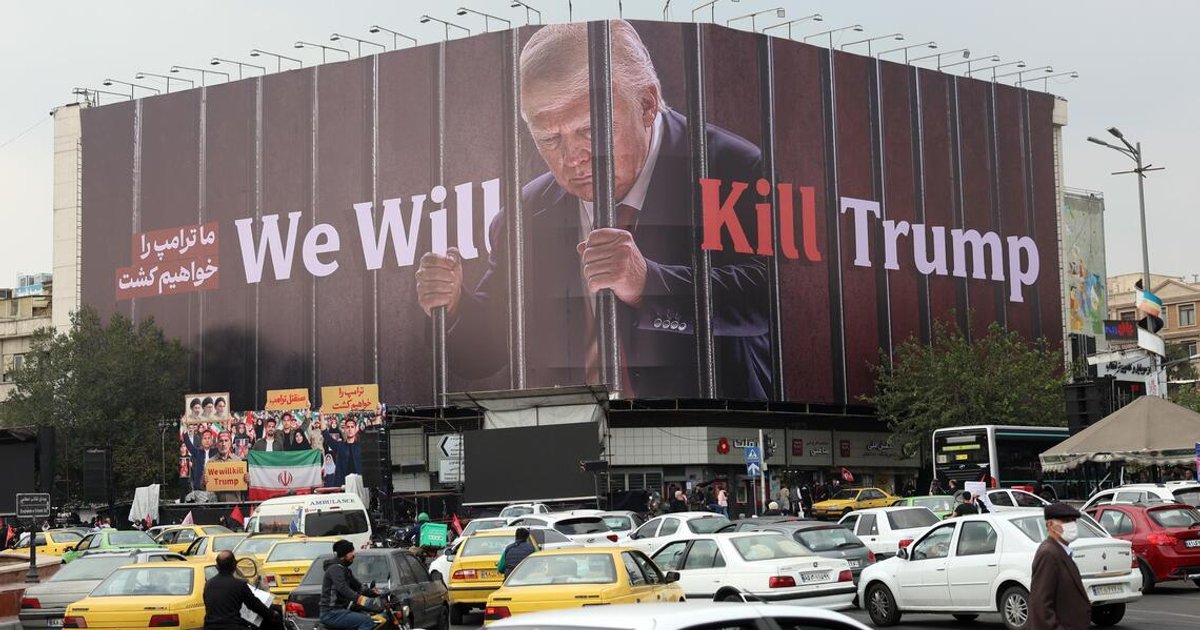
Iran Displays Billboards Threatening Trump Amid Rising Tensions
Article Content

- •Iran unveiled a billboard threatening Trump, escalating anti-US rhetoric.
- •Crowds in Tehran called for revenge following the assassination of Khamenei.
- •Diplomatic efforts are ongoing to prevent further conflict amid rising tensions.
On November 3, 2026, Iran unveiled a massive billboard in Tehran proclaiming, "We will kill Trump," amidst escalating anti-US sentiment following the assassination of Supreme Leader Ayatollah Ali Khamenei. The billboard depicted Trump behind bars, while another featured him alongside US and Israeli officials with bloodied faces. Crowds gathered in Enghelab Square, waving red flags and calling for revenge, reflecting the heightened tensions in the region after Khamenei's death on February 28, 2026, due to US-Israeli attacks. Diplomatic efforts are ongoing to prevent further conflict, as Trump faces midterm elections in the US. The public displays mocking Trump, including art exhibitions and life-sized replicas, signify a shift in Iran's public rhetoric against the US and Israel. Tehran accuses the US of targeting civilians during the ongoing conflict, which has resulted in significant casualties. The situation remains volatile as both sides navigate the potential for renewed negotiations.
Ask AI about this cluster
Answers cite the sources they use
Timeline
More articles in this cluster (2)
Common questions
What triggered the billboard display?
What is the current status of US-Iran relations?
How has the public reacted in Iran?
Continue Reading
 Critical Zero-Day Exploited in BeyondTrust Remote Support by China-linked Group A critical vulnerability in BeyondTrust Remote Support, tracked as CVE-2026-102764 with a CVSS score of 9.3, has been exploited by the China-linked espionage group Armory Castle since August 29, 2026. This flaw allows unauthenticated remote attackers to perform file operations, gaining root control and access to…
 Critical RCE Vulnerability in Prefab UI Disclosed A critical remote code execution vulnerability, CVE-2026-120338, was disclosed on November 1, 2026, affecting Prefab UI's Generative UI sandbox. The flaw allows attackers to execute arbitrary Python code by exploiting Deno's permissions, enabling file read/write access on the host server. This vulnerability affects…