 Euronews
Iran Protests Mark US Embassy Takeover Amid Political Tensions
Article Content

- •Iran commemorated the 1979 US embassy takeover with mass protests.
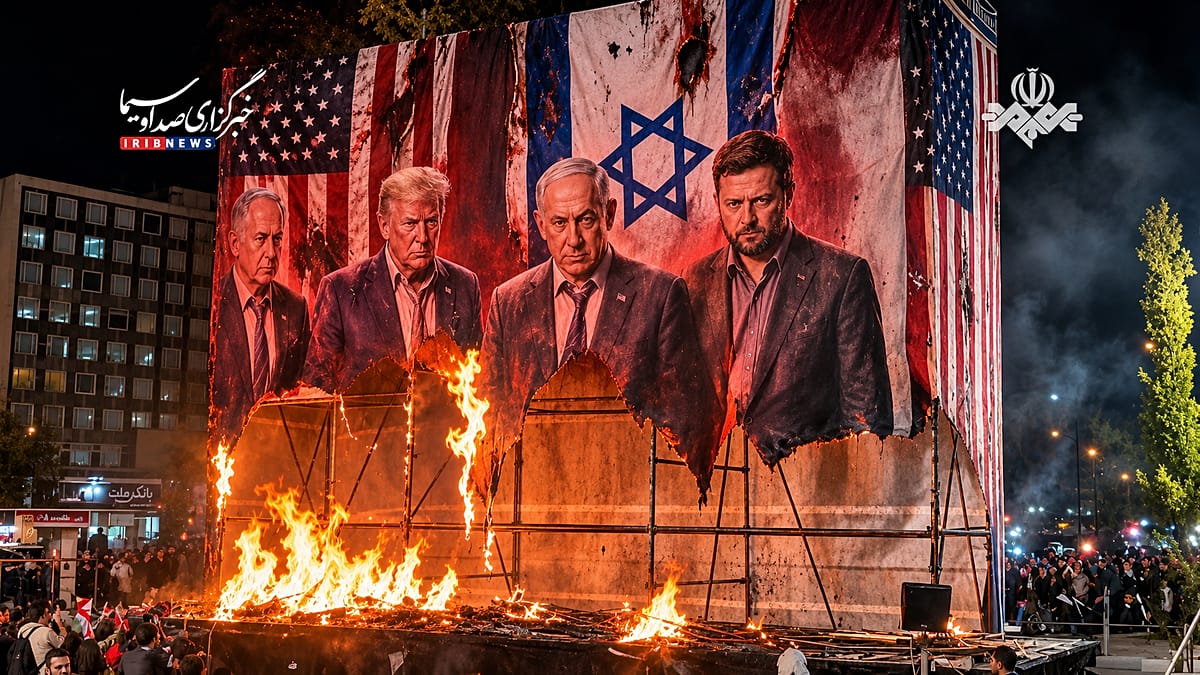
- •Demonstrators burned a banner depicting US and Israeli leaders in Tehran.
- •The protests were linked to a perceived electoral defeat for Trump and his allies.
On November 4, 2026, Iran held mass rallies in Tehran to commemorate the 1979 US embassy takeover, coinciding with a perceived electoral defeat for the US and Israeli leaders. Demonstrators burned a large banner depicting Donald Trump, JD Vance, Benjamin Netanyahu, and Steve Witkoff, with chants of 'Death to America' and 'Death to Israel'. The protests were fueled by recent events, including the death of Iran's supreme leader, Ayatollah Ali Khamenei, in a US-Israel initiated conflict earlier in the year. Tehran officials claimed the US and Israel faced significant defeats in the recent US congressional midterm elections, which they interpreted as a rebuke of Trump's policies. The protests featured effigies and caricatures of Trump and Netanyahu, with one portraying Trump as a dog on a leash. The rallies reflect ongoing tensions between Iran and the US, with no immediate resolution in sight.
Ask AI about this cluster
Answers cite the sources they use
Timeline
More articles in this cluster (2)
Common questions
What triggered the protests in Iran?
What messages were conveyed during the protests?
How did Iranian officials respond to the US midterm elections?
Continue Reading
 Critical RCE Vulnerability in Prefab UI Disclosed A critical remote code execution vulnerability, CVE-2026-120338, was disclosed on November 1, 2026, affecting Prefab UI's Generative UI sandbox. The flaw allows attackers to execute arbitrary Python code by exploiting Deno's permissions, enabling file read/write access on the host server. This vulnerability affects…
 China-Linked Hackers Exploit PHP2Shell Vulnerabilities to Breach U.S. Government Systems On October 21, 2026, the PHP development team released patches for two critical vulnerabilities in PHP, known as PHP2Shell (CVE-2026-109618 and CVE-2026-109619), which allow unauthenticated remote code execution. These vulnerabilities were actively exploited by a suspected China-linked threat actor who compromised 25…