 Bleepingcomputer
 Kodak Confirms Data Breach Linked to ShinyHunters Gang
Article Content

- •Kodak confirmed a data breach involving over 2.2 million records stolen by ShinyHunters.
- •The breach includes customer PII and internal corporate data, with a deadline for Kodak to respond.
- •Kodak is collaborating with cybersecurity experts and law enforcement to investigate the incident.
Kodak has confirmed a data breach after the ShinyHunters extortion group claimed responsibility for stealing over 2.2 million records, including customer personally identifiable information (PII) and internal corporate data. The company stated that an unauthorized third party gained temporary access to a limited amount of data. Kodak is currently working with external cybersecurity experts and law enforcement to investigate the breach. ShinyHunters threatened to leak the stolen data unless Kodak contacted them by June 18, 2026. The method of access has not been disclosed, but the group has a history of exploiting vulnerabilities in various organizations. This incident follows a series of breaches attributed to ShinyHunters, including attacks on Salesforce customers. Kodak has reassured that there is no ongoing threat to its systems or operations.
Ask AI about this cluster
Answers cite the sources they use
Timeline
More articles in this cluster (6)
Following this threat?
Track Charter Communications and CVE-2026-35273 in your own feed — you're alerted when they show up in new reporting, leak sites or exploitation.
Free account · no card needed
Continue Reading
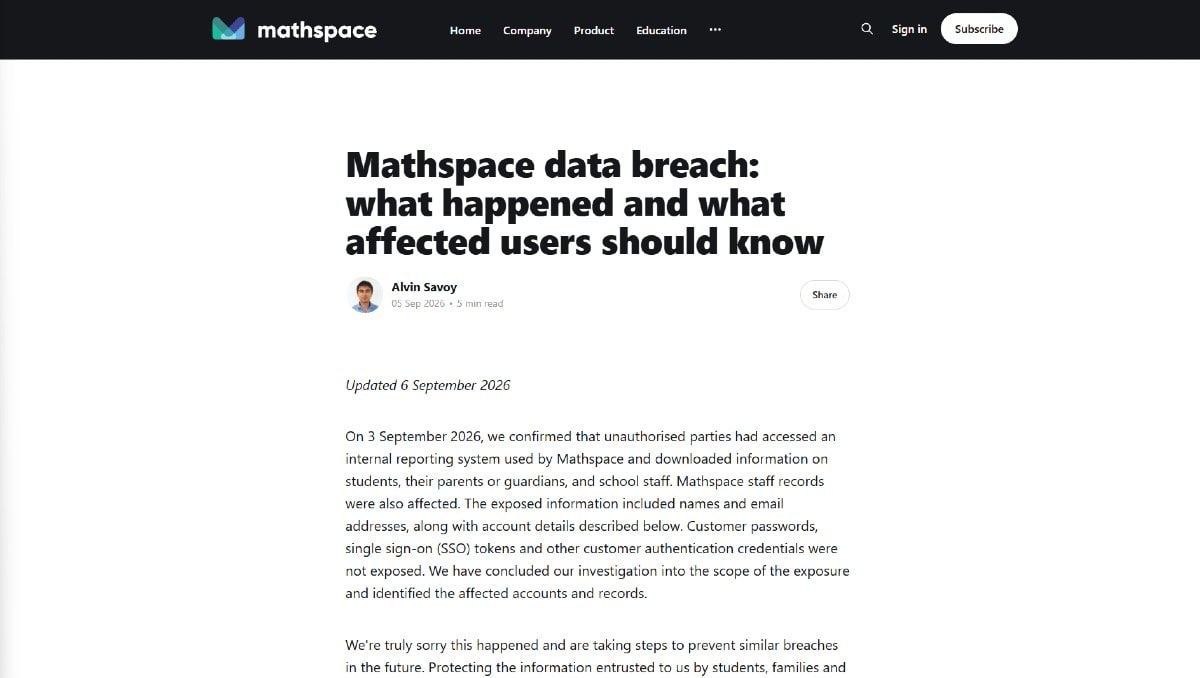 Mathspace Data Breach Exposes Over 1 Million Users' Information On September 3, 2026, Mathspace confirmed a data breach affecting 1,079,819 individuals in Australia and New Zealand. Unauthorized parties accessed an internal reporting system, exploiting a vulnerability in their self-hosted Metabase installation, which had not been patched since a critical advisory on August 6. The…
  Critical Zero-Day Vulnerability in Cisco Secure Email Gateway Exploited On September 14, 2026, Cisco disclosed a critical SQL injection vulnerability (CVE-2026-76461) in its Secure Email Gateway, allowing unauthenticated remote attackers to execute arbitrary commands with root privileges. This vulnerability arises from insufficient validation in the email parsing logic. Cisco confirmed…