 Ransomware.Live
Krybit and Qilin Target Organizations with FortiBleed Exploits
Article Content

- •Krybit and Qilin are exploiting the FortiBleed vulnerability (CVE-2022-40684).
- •Both attacks involve the exposure of FortiOS SSL-VPN credentials.
- •CVE-2022-40684 is classified as critical with a CVSS score of 9.8.
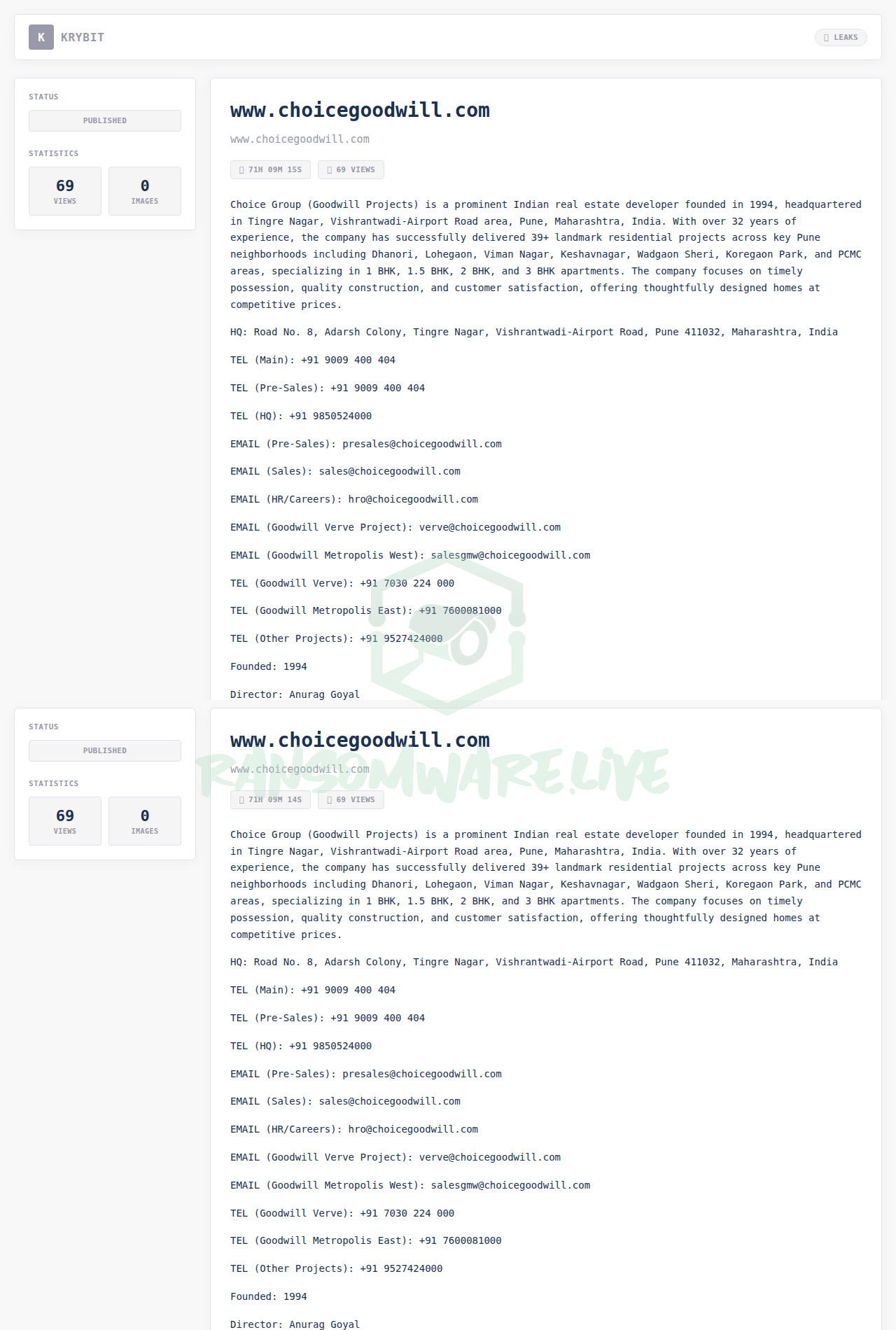
Cybercriminal groups Krybit and Qilin have recently published details of their attacks on organizations using FortiOS SSL-VPN, exploiting the FortiBleed vulnerability (CVE-2022-40684). Krybit's latest victim is www.zhservices.com, while Qilin has targeted Revi Group. Both incidents involve the exposure of FortiOS SSL-VPN credentials due to the vulnerability, which has been since its addition to the CISA KEV catalog in October 2022. The vulnerability has a CVSS score of 9.8, indicating a threat level. Organizations using affected FortiOS versions are urged to take immediate action to mitigate risks. Current reports indicate that these attacks are ongoing, with multiple victims potentially affected.
Ask AI about this cluster
Answers cite the sources they use
Timeline
More articles in this cluster (3)
Following this threat?
Track Revi Group and CVE-2022-40684 in your own feed — you're alerted when they show up in new reporting, leak sites or exploitation.
Free account · no card needed
Common questions
What systems are affected by CVE-2022-40684?
How can organizations protect themselves?
Are there any known victims?
Continue Reading
 CyberXero Campaign Targets Ukrainian Records Using AI Tools CyberXero, a Russian-speaking initial access broker, has launched a dual-pronged campaign targeting WordPress sites and Ukrainian critical infrastructure, leveraging AI tools like Claude Code. The operation has led to the exfiltration of over 628,000 records from Ukrainian entities, with confirmed compromises in…
 Hackers Exploit Firewalls, Compromise 70,000 Credentials Globally A large-scale cyber campaign has targeted exposed network edge devices, specifically Fortinet FortiGate and Palo Alto Networks GlobalProtect firewalls, leading to the compromise of over 70,000 credentials. The threat actor, known as k0t, has been active since October 2025 and is linked to ransomware groups like Qilin…