 Bleepingcomputer
 Maine's Breach Portal Misused for Fake Data Breach Reports
Article Content

- •Maine's breach portal was exploited to submit fake data breach notifications.
- •VRChat and Discord were impersonated in fraudulent disclosures affecting millions.
- •Maine has temporarily disabled the breach notification portal for review.
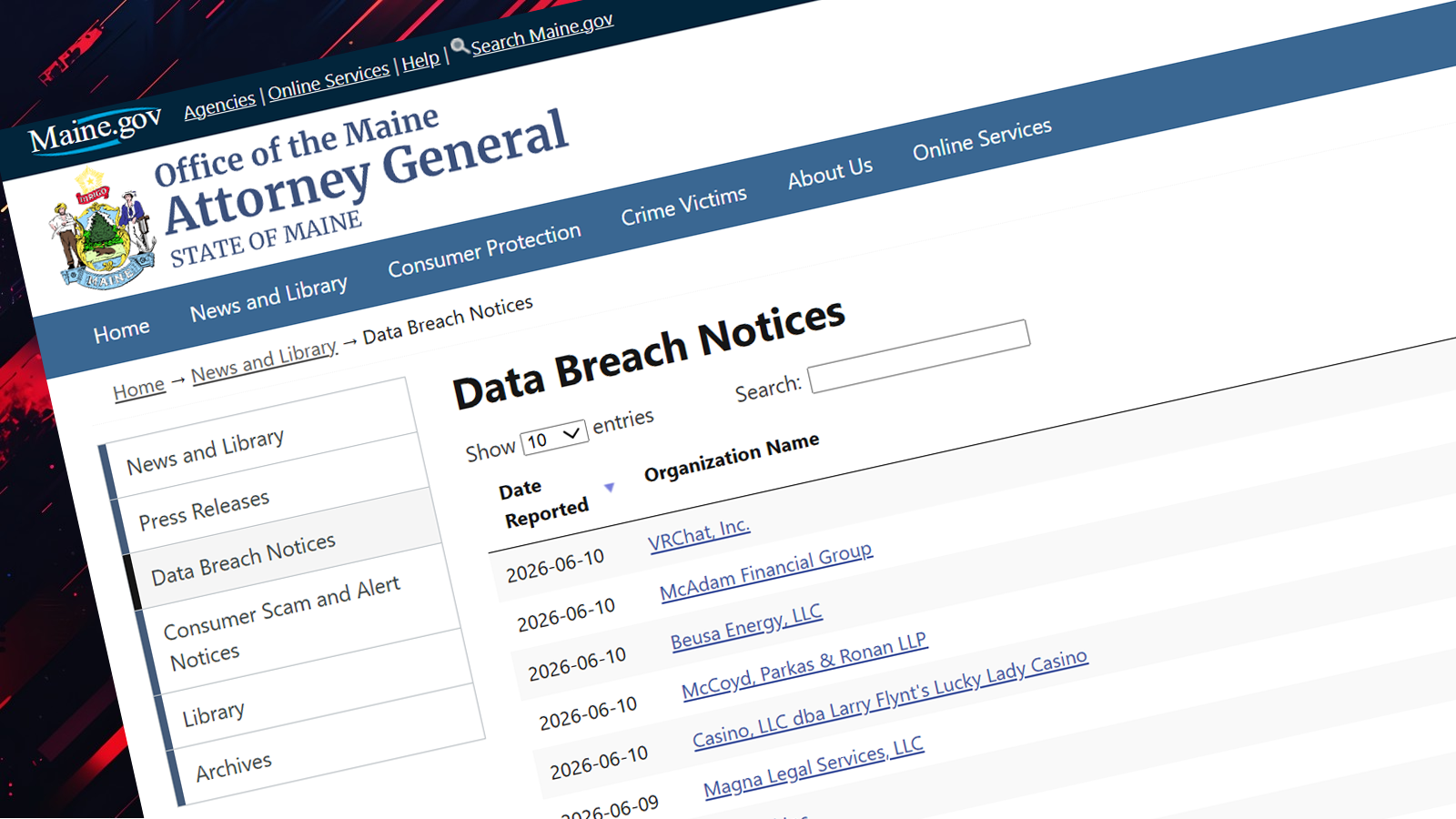
Maine's official data breach notification portal was exploited to submit fraudulent disclosures, including a fake report from VRChat claiming a breach affecting over 2.4 million users. The Maine Attorney General's Office confirmed that these submissions were hoaxes and have since removed them from the database. Following this incident, Maine has temporarily disabled public access to the breach notification portal while reviewing its procedures to prevent future abuses. The fraudulent entries included fabricated details and impersonated legitimate companies like Discord and VRChat. VRChat has publicly denied the authenticity of the reports and is working with the Attorney General's office to rectify the situation. No legitimate data breaches have been reported by either company. The incident highlights vulnerabilities in the automated reporting system that allowed unverified claims to be published. The Attorney General's office is now reviewing the submission process to enhance security.
Ask AI about this cluster
Answers cite the sources they use
Timeline
More articles in this cluster (10)
Following this threat?
Track Maine Office Of The Attorney General in your own feed — you're alerted when they show up in new reporting, leak sites or exploitation.
Free account · no card needed
Continue Reading
 Critical WSO2 API Manager Vulnerability Under Active Exploitation A critical vulnerability (CVE-2026-5430) in WSO2 API Manager is being actively exploited, allowing unauthenticated attackers to forge admin tokens via JWT authentication bypass. This flaw, which has a CVSS score of 10.0, affects multiple WSO2 products including API Manager, Universal Gateway, Traffic Manager, and API…
  Critical Linux Kernel Vulnerability CVE-2025-39682 Under Active Exploitation A critical vulnerability (CVE-2025-39682) in the Linux kernel allows remote code execution through mishandling of zero-length TLS records. This flaw affects kTLS-enabled hosts running vulnerable kernel versions, exposing them to attackers without authentication. CISA added this vulnerability to its Known Exploited…