 Straitstimes
Malware Spread via Hijacked WhatsApp Accounts Targeting Computer Users
Article Content

- •Malware is spread via hijacked WhatsApp accounts of known contacts.
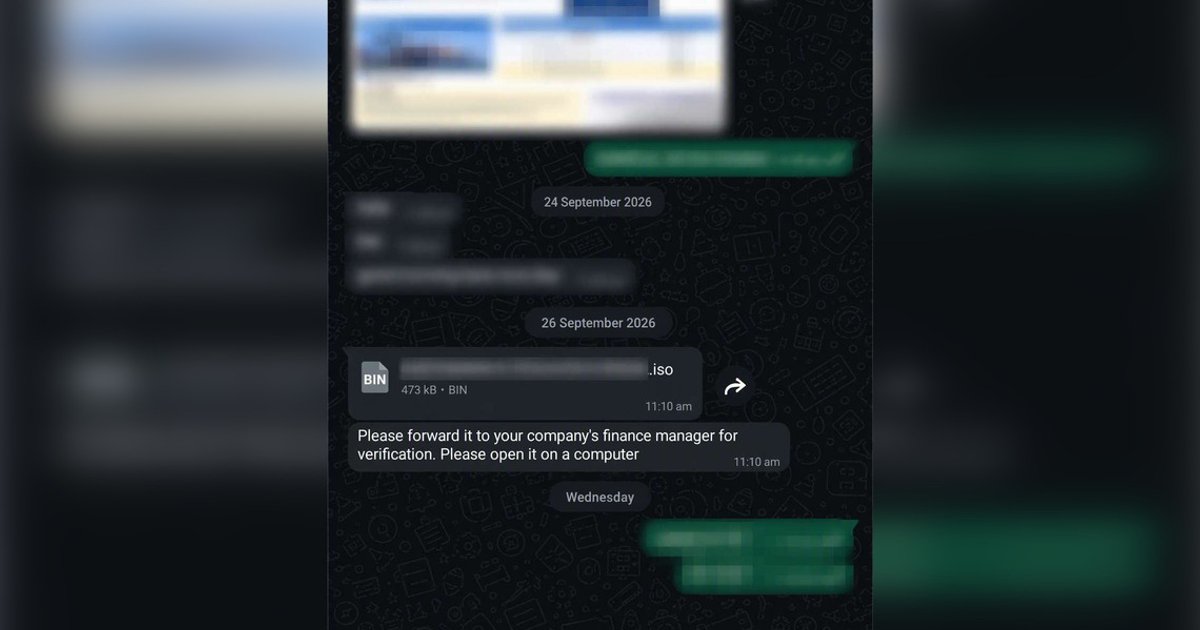
- •Victims are tricked into opening malicious attachments disguised as work files.
- •Police recommend enabling two-step verification and verifying unexpected files.
Police in Singapore have issued a warning about a new scam involving malware that is spread through hijacked WhatsApp accounts of friends and colleagues. Victims receive messages with attachments disguised as work files, which they are instructed to open on their computers. Once opened, the malware can record keystrokes, take screenshots, and allow hackers to control the infected devices. Although no financial losses have been reported yet, personal data theft is a significant risk. The police recommend enabling two-step verification, checking linked devices, and verifying unexpected files before opening them. The Singapore Cyber Emergency Response Team (SingCERT) has also advised against opening attachments from known contacts without verification. The scam has been linked to a broader trend of increasing scams in Singapore, with significant financial losses reported in the first half of 2026.
Ask AI about this cluster
Answers cite the sources they use
Timeline
More articles in this cluster (4)
Common questions
What types of files are being used in this scam?
How can I protect myself from this malware?
Have there been any financial losses reported?
Continue Reading
 Critical Zero-Day Exploited in BeyondTrust Remote Support by China-linked Group A critical vulnerability in BeyondTrust Remote Support, tracked as CVE-2026-102764 with a CVSS score of 9.3, has been exploited by the China-linked espionage group Armory Castle since August 29, 2026. This flaw allows unauthenticated remote attackers to perform file operations, gaining root control and access to…
 Critical RCE Vulnerability in Prefab UI Disclosed A critical remote code execution vulnerability, CVE-2026-120338, was disclosed on November 1, 2026, affecting Prefab UI's Generative UI sandbox. The flaw allows attackers to execute arbitrary Python code by exploiting Deno's permissions, enabling file read/write access on the host server. This vulnerability affects…