 Latimes
NASA's Swift Observatory Set to Reenter Earth This Week
Article Content

- •NASA's Swift Observatory is set to reenter Earth's atmosphere this week.
- •Experts predict that around 100 kilograms of debris may survive the reentry.
- •The spacecraft has contributed to over 7,000 published papers in its 22-year mission.
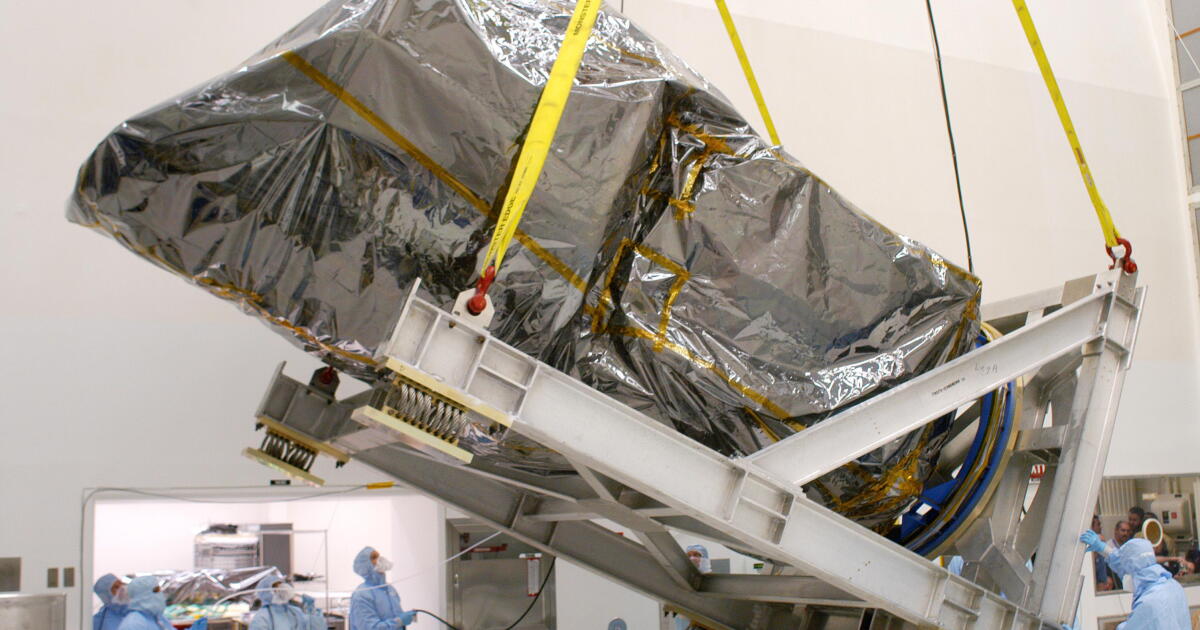
NASA's Neil Gehrels Swift Observatory is expected to reenter Earth's atmosphere between November 1 and 3, 2026, after a failed rescue mission. The spacecraft, which has been operational for nearly 22 years, will mostly burn up upon reentry, but experts estimate that around 100 kilograms of debris could survive. The reentry zone spans parts of Africa, Australia, India, Southeast Asia, and Central and South America, with the likelihood of debris landing in the ocean being high. Swift has made significant contributions to astrophysics, observing over 2,000 gamma-ray bursts and 1,400 supernovae. The mission's end comes after intense solar activity accelerated its orbital decay, leading to its current altitude of less than 171 miles. NASA's Katalyst Space Technologies launched a rescue mission in July 2026, but it failed to reach Swift before its systems were shut down. The final observations were made on October 20, 2026.
Ask AI about this cluster
Answers cite the sources they use
Timeline
More articles in this cluster (4)
Common questions
What is the expected reentry date?
What will happen to the debris?
How has Swift contributed to science?
Continue Reading
 Critical RCE Vulnerability in Prefab UI Disclosed A critical remote code execution vulnerability, CVE-2026-120338, was disclosed on November 1, 2026, affecting Prefab UI's Generative UI sandbox. The flaw allows attackers to execute arbitrary Python code by exploiting Deno's permissions, enabling file read/write access on the host server. This vulnerability affects…
 China-Linked Hackers Exploit PHP2Shell Vulnerabilities to Breach U.S. Government Systems On October 21, 2026, the PHP development team released patches for two critical vulnerabilities in PHP, known as PHP2Shell (CVE-2026-109618 and CVE-2026-109619), which allow unauthenticated remote code execution. These vulnerabilities were actively exploited by a suspected China-linked threat actor who compromised 25…