 Haaretz
Netanyahu Faces Coalition Challenges After Arab Voter Surge
Article Content

- •Netanyahu's Likud party won only 46 seats, failing to secure a majority.
- •Gadi Eisenkot's coalition, including Arab parties, holds 67 seats, complicating Netanyahu's government formation.
- •The US midterm elections have further destabilized Netanyahu's political calculations.
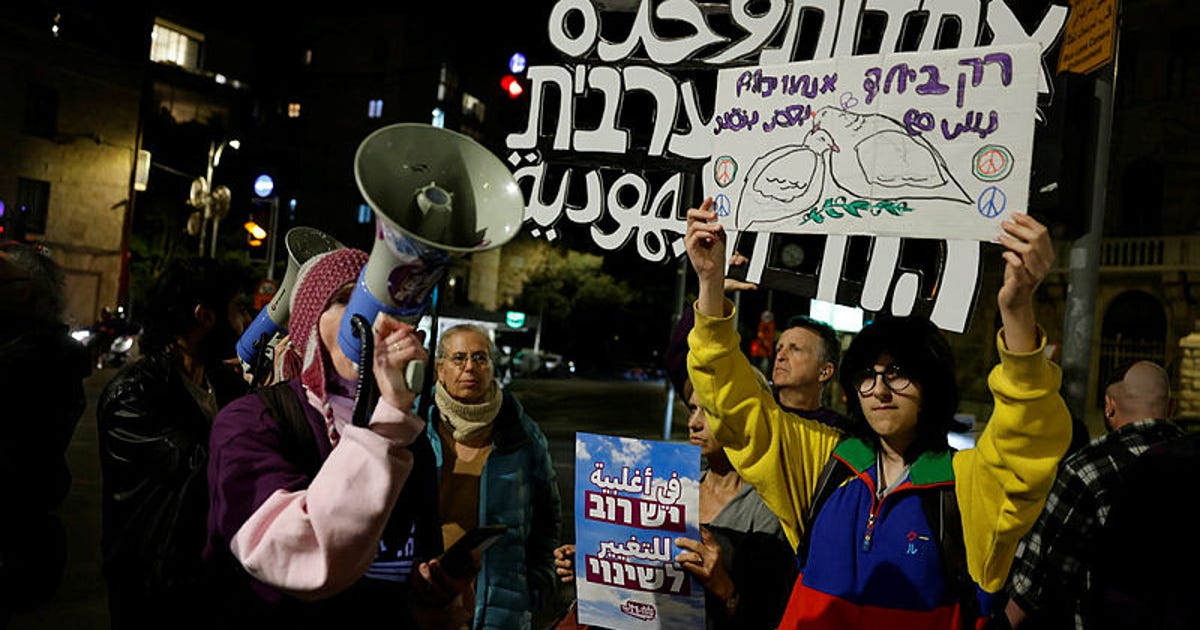
In the aftermath of Israel's parliamentary elections on November 3-4, Prime Minister Benjamin Netanyahu's Likud party secured only 46 seats, while opposition leader Gadi Eisenkot's coalition, including Arab parties, gained 67 seats. This shift in power dynamics, driven by unprecedented Arab voter turnout, complicates Netanyahu's plans to form a government. The Likud party's failure to achieve a majority has led to calls for a unity government, but resistance remains from Jewish opposition leaders against collaborating with Arab parties. The recent US midterm elections, which saw a Democratic sweep, further threaten Netanyahu's political strategy. The Joint List and Ra’am, two Palestinian-led parties, achieved a historic 19 seats combined, marking a significant moment in Israeli politics. As protests emerge calling for an Arab-Jewish coalition, the political landscape in Israel is increasingly polarized.
Ask AI about this cluster
Answers cite the sources they use
Timeline
More articles in this cluster (2)
Common questions
What are the current seat distributions?
What is the significance of Arab voter turnout?
What are the next steps for Eisenkot?
Continue Reading
 Critical RCE Vulnerability in Prefab UI Disclosed A critical remote code execution vulnerability, CVE-2026-120338, was disclosed on November 1, 2026, affecting Prefab UI's Generative UI sandbox. The flaw allows attackers to execute arbitrary Python code by exploiting Deno's permissions, enabling file read/write access on the host server. This vulnerability affects…
 China-Linked Hackers Exploit PHP2Shell Vulnerabilities to Breach U.S. Government Systems On October 21, 2026, the PHP development team released patches for two critical vulnerabilities in PHP, known as PHP2Shell (CVE-2026-109618 and CVE-2026-109619), which allow unauthenticated remote code execution. These vulnerabilities were actively exploited by a suspected China-linked threat actor who compromised 25…