 Paloaltonetworks
 Palo Alto Networks Achieves FedRAMP Authorization for Quantum-Safe Security
Article Content

- •Palo Alto Networks' QSS solution gains FedRAMP Moderate authorization.
- •Federal agencies must transition to post-quantum cryptography by 2030-2031.
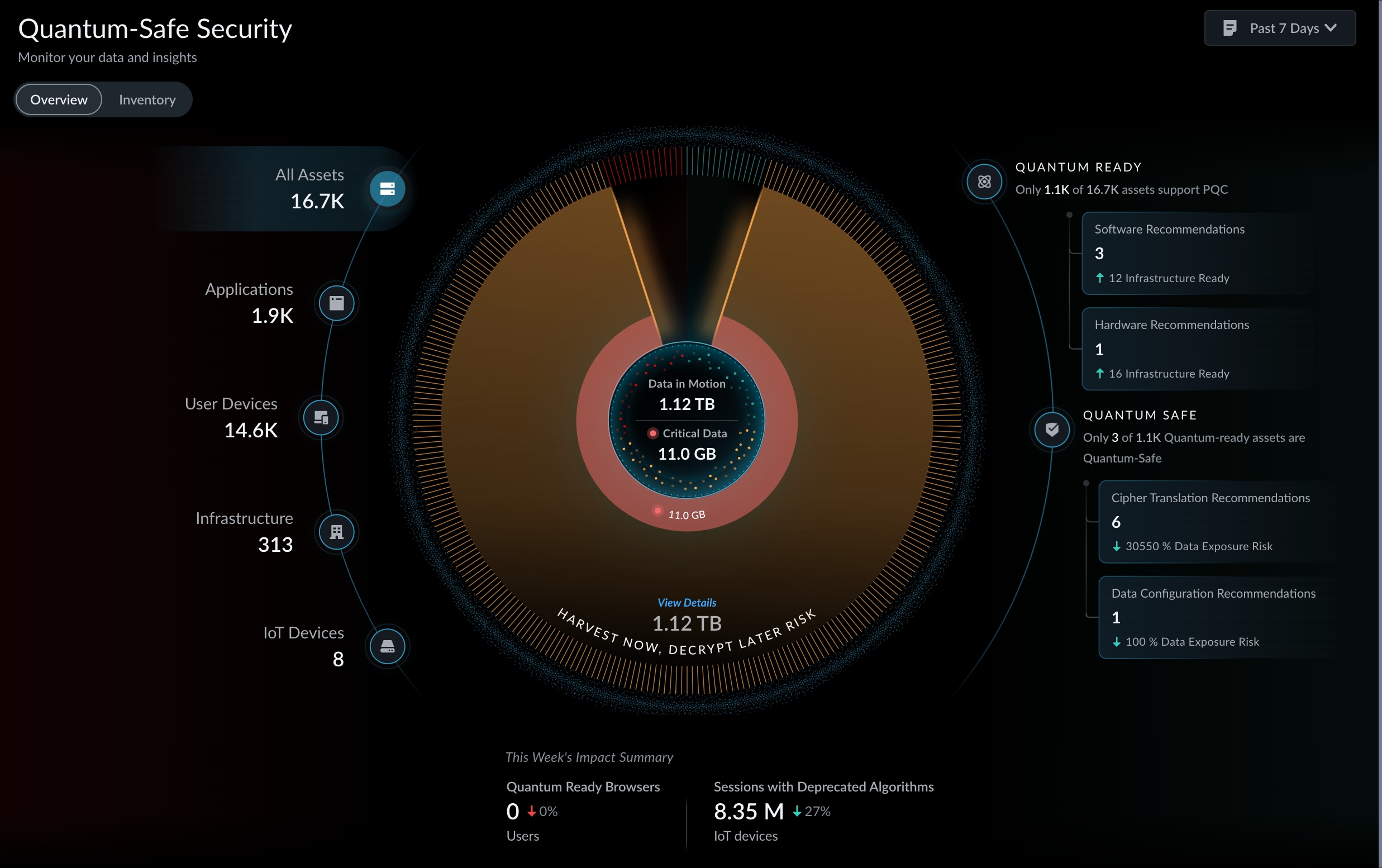
- •QSS automates cryptographic discovery and risk assessment for federal networks.
Palo Alto Networks has received FedRAMP Moderate authorization for its Quantum-Safe Security (QSS) solution, enabling federal agencies to deploy it immediately. This certification allows agencies to transition to post-quantum cryptography (PQC) more rapidly, with deadlines set for December 31, 2030, for key establishment and December 31, 2031, for digital signatures. The QSS solution automates cryptographic discovery and risk assessment, providing real-time visibility into cryptographic posture without requiring new hardware. This is crucial as federal mandates accelerate the transition to PQC ahead of the original 2035 target. The solution leverages existing federal firewalls as sensors, facilitating a seamless migration to PQC. The QSS operationalizes the PQC migration lifecycle through agentless discovery, prioritized risk intelligence, and active inline remediation.
Ask AI about this cluster
Answers cite the sources they use
Timeline
More articles in this cluster (2)
Continue Reading
 Critical Cisco FMC Vulnerabilities Under Active Exploitation Cisco's Secure Firewall Management Center (FMC) Software has two critical vulnerabilities, CVE-2026-20079 and CVE-2026-20316, that are currently being exploited by state-sponsored and ransomware actors. CVE-2026-20079, rated 10.0 on the CVSS scale, allows unauthenticated remote attackers to bypass authentication and… Critical Zero-Day Vulnerability in Cisco Secure Email Gateway Exploited On September 14, 2026, Cisco disclosed a critical SQL injection vulnerability (CVE-2026-76461) in its Secure Email Gateway, allowing unauthenticated remote attackers to execute arbitrary commands with root privileges. This vulnerability arises from insufficient validation in the email parsing logic. Cisco confirmed…