 www.nature.com
Research Reveals Thymine's UV Vulnerability in DNA Evolution
Article Content

- •Thymine is more UV-damage prone than uracil, which may have evolutionary implications.
- •The study suggests thymine's damage pathways could favor reversibility, aiding early genetic material.
- •Research does not confirm the origins of DNA or the survival of early organisms.
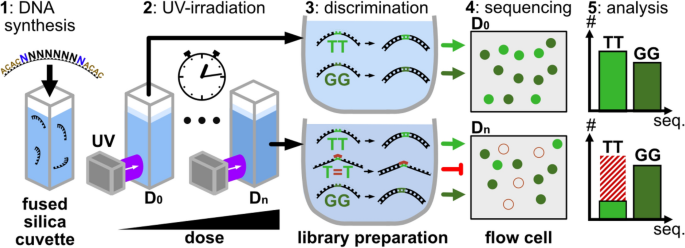
Recent studies indicate that thymine, a key DNA base, is more susceptible to UV damage than uracil, its RNA counterpart. This vulnerability may have played a role in the evolution of DNA, as it favors reversible damage pathways. The research conducted by Texas A&M University suggests that while thymine accumulates UV damage faster, its chemistry could have contributed to the persistence of early genetic material. The findings, published in the Proceedings of the National Academy of Sciences, do not confirm how DNA originated or if early organisms survived due to thymine's properties. The study highlights the importance of understanding molecular responses to UV radiation in the context of DNA's evolutionary history.
Ask AI about this cluster
Answers cite the sources they use
Timeline
More articles in this cluster (2)
Common questions
What is the significance of thymine's UV vulnerability?
How does this research impact our understanding of DNA?
What are the practical applications of this study?
Continue Reading
 Critical Zero-Day Exploited in BeyondTrust Remote Support by China-linked Group A critical vulnerability in BeyondTrust Remote Support, tracked as CVE-2026-102764 with a CVSS score of 9.3, has been exploited by the China-linked espionage group Armory Castle since August 29, 2026. This flaw allows unauthenticated remote attackers to perform file operations, gaining root control and access to…
 Silent Lynx Targets CIS Governments via WinRAR Exploit The threat actor Silent Lynx has launched a series of attacks against government organizations in the Commonwealth of Independent States (CIS) from June 2025 to August 2026. These attacks exploit a vulnerability in WinRAR (CVE-2025-8088) to deploy reverse shells, including FoalShell and PickleShell, facilitating…