 Independent.Co.Ug
SEACOM Enhances East Africa's Digital Infrastructure with New Fibre Route
Article Content

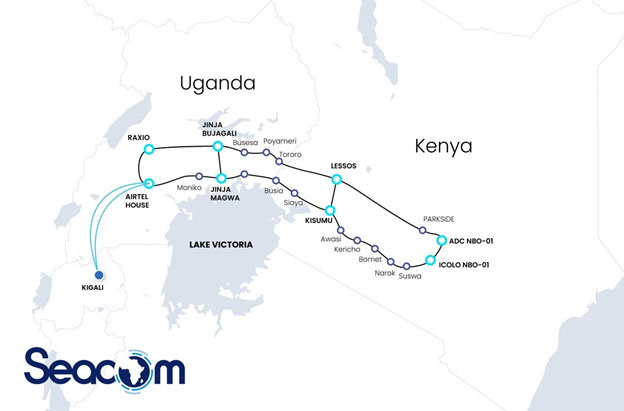
- •SEACOM launched a high-capacity fibre route linking Nairobi, Kisumu, and Kampala.
- •The upgrade aims to meet the increasing demand for data in East Africa's digital economy.
- •The project enhances resilience against disruptions and improves connectivity for key sectors.
SEACOM has launched a high-capacity fibre route linking Nairobi, Kisumu, and Kampala, aimed at enhancing internet connectivity in East Africa. This upgrade, announced in June 2026, is designed to support the growing demand for data across key sectors such as telecommunications and financial services. The new route strengthens a vital corridor that carries internet traffic from submarine cables on Kenya’s coast into landlocked Uganda. SEACOM's Chief Technology Officer, David Kariuki, emphasized that the upgrade is a carrier-grade network built to meet modern digital economy demands. The infrastructure includes a multilayered network starting from the Indian Ocean, with the Mombasa Cable Landing Station serving as a critical gateway for international data traffic. The project aims to improve network capacity and performance for businesses in Uganda, ensuring resilience against terrestrial cuts by leasing backup capacity from partner networks. The deployment utilizes Dense Wavelength Division Multiplexing (DWDM) technology to expand data capacity without additional physical infrastructure.
Ask AI about this cluster
Answers cite the sources they use
Timeline
More articles in this cluster (2)
Following this threat?
Track Bandwidth & Cloud Services (bcs) Group in your own feed — you're alerted when they show up in new reporting, leak sites or exploitation.
Free account · no card needed
Common questions
What areas are affected by the new fibre route?
What technology is used in the upgrade?
How does this upgrade benefit businesses?
Continue Reading
 Critical RCE Vulnerability in Prefab UI Disclosed A critical remote code execution vulnerability, CVE-2026-120338, was disclosed on November 1, 2026, affecting Prefab UI's Generative UI sandbox. The flaw allows attackers to execute arbitrary Python code by exploiting Deno's permissions, enabling file read/write access on the host server. This vulnerability affects…
 Chinese Actor Compromises US Government Networks via PHP2Shell Exploit A suspected Chinese nation-state actor exploited vulnerabilities in Palo Alto Networks firewalls using a chained PHP2Shell exploit and a Linux kernel privilege escalation flaw. The attack, which began on October 23, targeted 25 servers across the US, Japan, Taiwan, and South Korea, with a focus on US…