 Dexpose
 Surge in DDoS Attacks Driven by IoT Botnets in 2026
Article Content

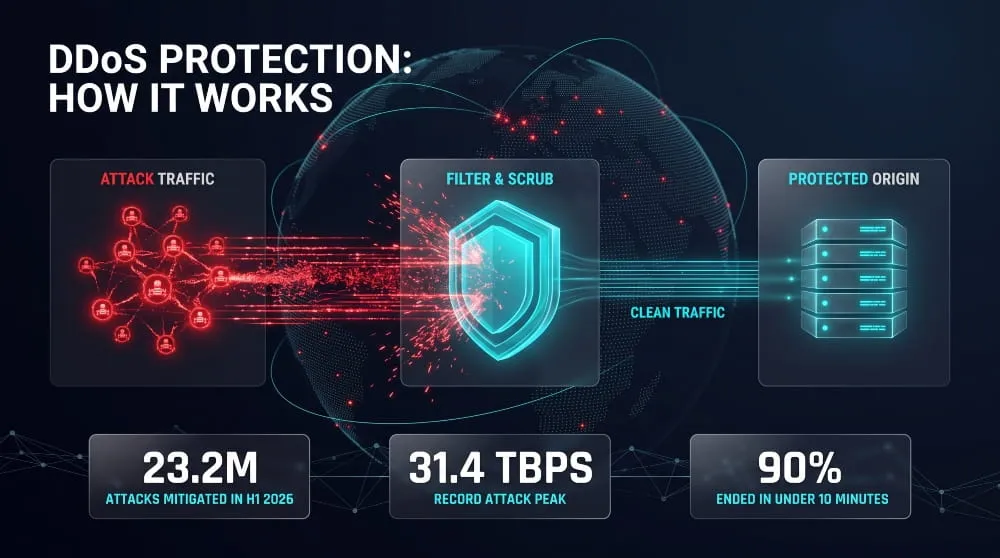
- •Cloudflare mitigated 23.2 million DDoS attacks in H1 2026.
- •Turbo Mirai-class botnets exploit IoT devices for massive DDoS attacks.
- •Adaptive DDoS Protection enhances mitigation capabilities for service providers.
In 2026, DDoS attacks have surged, with Cloudflare reporting 23.2 million mitigated network-layer attacks in the first half of the year. These attacks are increasingly leveraging compromised IoT devices, particularly through Turbo Mirai-class botnets, which can generate terabits per second. The Adaptive DDoS Protection (ADP) extension by Arbor aims to enhance mitigation capabilities against these threats. The attacks have resulted in significant service outages, reputational damage, and increased costs for service providers. NETSCOUT's AI-powered solutions are being utilized to detect and stop attacks at their origin, thereby reducing the impact on networks and customers. The current status indicates ongoing efforts to bolster defenses against these evolving threats.
Ask AI about this cluster
Answers cite the sources they use
Timeline
More articles in this cluster (2)
Following this threat?
Track Turbo Mirai in your own feed — you're alerted when they show up in new reporting, leak sites or exploitation.
Free account · no card needed
Common questions
What types of devices are being exploited?
How severe is the impact of these DDoS attacks?
What measures can be taken to mitigate these attacks?
Continue Reading
 FBI Seizes NightmareStresser DDoS-for-Hire Domains in Major Crackdown On September 15, 2026, the FBI seized the domains of NightmareStresser, a notorious DDoS-for-hire service linked to hundreds of thousands of attacks since 2022. This operation, part of the ongoing Operation PowerOFF, targeted infrastructure enabling users to launch distributed denial-of-service attacks against various…
  CVE-2015-3306 Exploited in ProFTPD FTP Servers CVE-2015-3306, a vulnerability in ProFTPD 1.3.5, allows remote attackers to read and write arbitrary files using the SITE CPFR and SITE CPTO commands. This exploit can lead to unauthorized access and potential remote code execution, as the commands are executed with the privileges of the ProFTPD service. Active…