T1055.012 - Process Hollowing is a mitre_attack tracked across 23 threat clusters and 29 intelligence report mentions on ThreatCluster. First observed November 6, 2025; most recent activity July 22, 2026.
ESET researchers have identified two new Windows variants of the SprySOCKS backdoor, previously exclusive to Linux, attributed to the Chinese cyberespionage group FishMonger. The variants, labeled WIN_DRV and WIN_PLUS,…
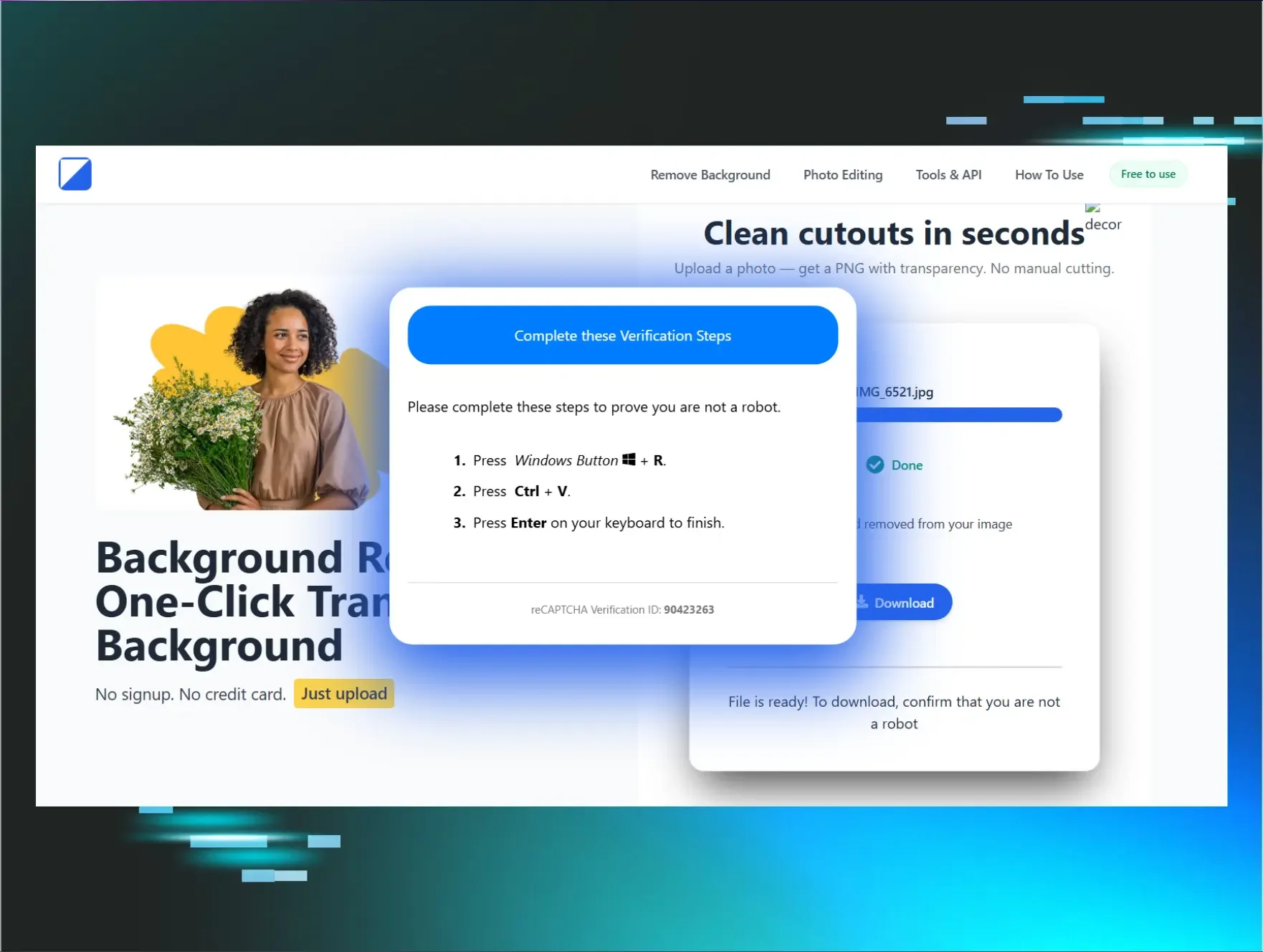
A new cyber threat identified by Huntress involves a fake background removal website that tricks users into executing malicious commands. Dubbed BackgroundFix, this site masquerades as a free image-editing service,…
A significant cybersecurity campaign has emerged, exploiting the legitimate remote access tool ScreenConnect to deploy AsyncRAT malware. Attackers utilized spoofed websites and typosquatted domains, masquerading as…
A new phishing campaign has been identified that distributes a variant of the PureLogs infostealer malware through deceptive purchase-order-themed emails. The campaign utilizes a malicious JavaScript file contained in a…
A new phishing campaign distributing a variant of the Remcos RAT has been identified, targeting Microsoft Windows users. The attack utilizes a fake shipping document to deliver a malicious Word file that exploits…
A new variant of TrickBot has been identified using DNS tunneling instead of HTTP for command-and-control (C2) communication. This shift allows the malware to conceal its traffic within malformed DNS queries, making…
A new cryptojacking campaign is targeting high-performance PC users through malicious downloads disguised as trusted utilities. Attackers leverage SEO poisoning and AI chatbot manipulation to direct users to fake…
A Russian-speaking cybercriminal group, dubbed BlackSanta, is targeting corporate HR teams by sending fake job applications that install malware capable of disabling endpoint detection and response (EDR) tools. This…
An exposed server functioning as a malware delivery lab was discovered following an MDR alert. The lab contained over 1,000 artifacts, showcasing how attackers are leveraging generative AI for rapid lure generation and…
In May 2026, a malspam campaign utilizing the Google DoubleClick domain was identified, delivering the DesckVB remote access trojan (RAT). The attack begins with an HTML email attachment that redirects users through…