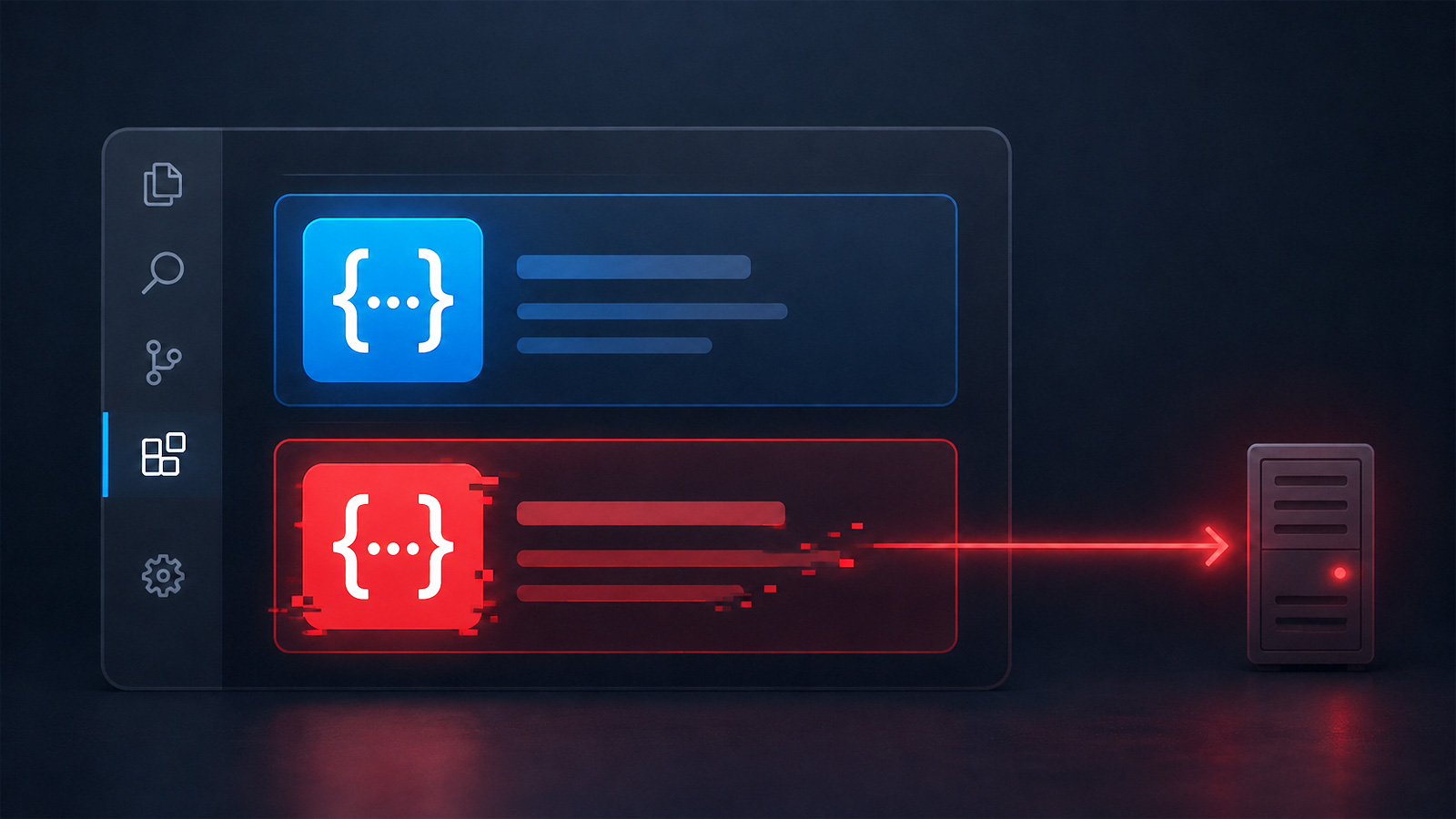
GitHub Codespaces is a technology platform tracked by ThreatCluster, appearing in 4 threat clusters built from 5 intelligence report mentions.
GitHub Codespaces is a technology platform tracked across 4 threat clusters and 5 intelligence report mentions on ThreatCluster. First observed February 5, 2026; most recent activity August 4, 2026.
Between July 26 and August 1, 2026, 77 malicious extensions were discovered on the Open VSX marketplace, impersonating legitimate tools to harvest developer information. These 'evil twin' extensions were linked through…
Researchers from Mozilla's 0DIN have demonstrated a new attack vector that allows AI coding agents, specifically Anthropic's Claude Code, to execute malicious payloads from seemingly benign GitHub repositories. The…
Orca Security researchers identified multiple attack vectors in GitHub Codespaces that allow remote code execution (RCE) by opening malicious repositories or pull requests. Attackers can exploit VS Code configuration…
A cybersecurity incident has emerged where attackers exploited GitHub Issues to inject malicious instructions that are processed by Copilot during the launch of a Codespace. This attack leverages the zero-day…
GitHub Codespaces is a technology platform tracked by ThreatCluster, appearing in 4 threat clusters built from 5 intelligence report mentions.
The most recent intelligence report mentioning GitHub Codespaces on ThreatCluster is dated August 4, 2026. Activity was first observed February 5, 2026, giving a tracked span from then to August 4, 2026.
Across ThreatCluster reporting, GitHub Codespaces most frequently co-occurs with Data Breach, Remote Code Execution, Supply Chain Attack, Evil Twin, Microsoft, among 12 tracked related entities.
The most significant recent cluster is “77 Counterfeit Open VSX Extensions Harvest Developer Data” (2 articles · Updated August 4, 2026). GitHub Codespaces appears across 4 threat clusters in total, listed above with sources.
GitHub Codespaces appears in 5 intelligence report mentions across 4 deduplicated threat clusters, aggregated from 17,000+ monitored sources.