 Newsweek
 China Increases Military Presence at Scarborough Shoal Amid Philippine Concerns
Article Content

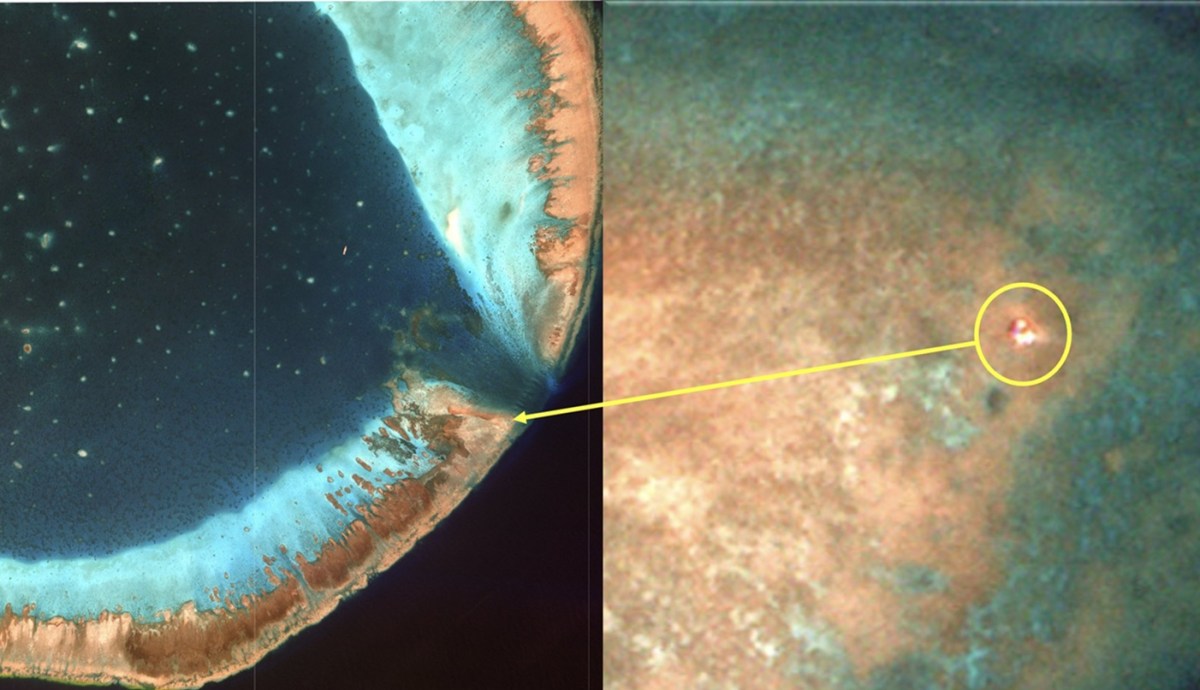
- •Satellite imagery shows an unidentified object at Scarborough Shoal, raising concerns.
- •Philippine Defense Secretary warns of severe threats from China, despite US-China thaw.
- •Philippine military tracked 82 Chinese vessels in May, highlighting ongoing tensions.
Recent satellite imagery has revealed an unidentified object near Scarborough Shoal, a disputed area in the South China Sea claimed by both China and the Philippines. Philippine Defense Secretary Gilberto Teodoro stated that the country remains under severe territorial and political threat from China, despite recent US-China diplomatic thawing. The Philippine military reported tracking 82 Chinese vessels in its exclusive economic zone in May, with 39 around Scarborough Shoal. China's coast guard has conducted patrols in the area, asserting its rights against what it describes as violations. The situation is exacerbated by ongoing tensions and military exercises between the Philippines and the US. Philippine officials are investigating the nature of the object identified in satellite images, which could potentially alter the status quo in the contested region. The presence of Chinese vessels and patrols continues to challenge Philippine sovereignty and maritime rights.
Ask AI about this cluster
Answers cite the sources they use
Timeline
More articles in this cluster (8)
Continue Reading
 Critical WSO2 API Manager Vulnerability Under Active Exploitation A critical vulnerability (CVE-2026-5430) in WSO2 API Manager is being actively exploited, allowing unauthenticated attackers to forge admin tokens via JWT authentication bypass. This flaw, which has a CVSS score of 10.0, affects multiple WSO2 products including API Manager, Universal Gateway, Traffic Manager, and API…
  Critical Linux Kernel Vulnerability CVE-2025-39682 Under Active Exploitation A critical vulnerability (CVE-2025-39682) in the Linux kernel allows remote code execution through mishandling of zero-length TLS records. This flaw affects kTLS-enabled hosts running vulnerable kernel versions, exposing them to attackers without authentication. CISA added this vulnerability to its Known Exploited…