 Cepa
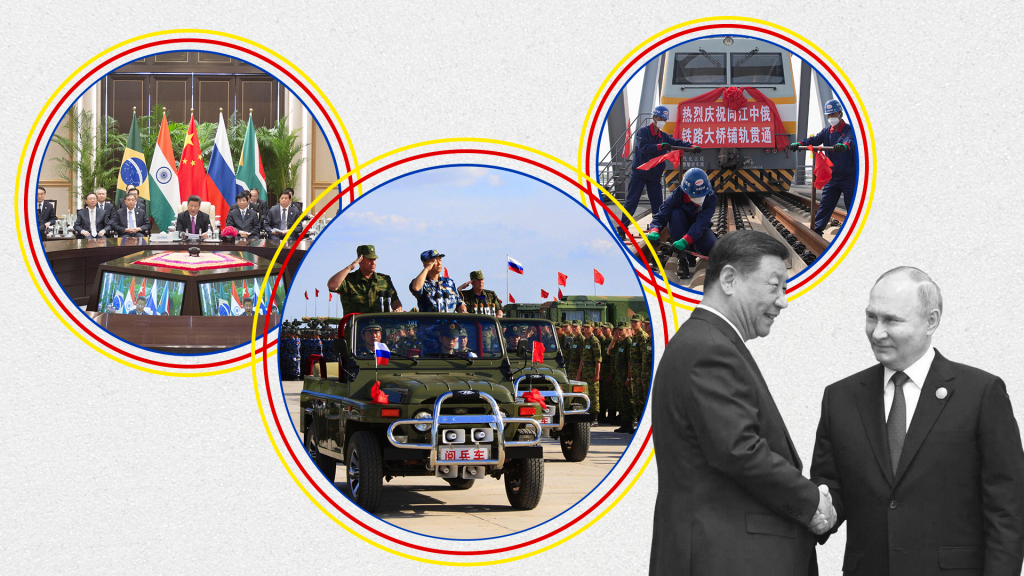
China-Russia-Iran Axis: Authoritarian Collaboration in Ukraine Conflict
Article Content

- •North Korea contributes 50% of Russian artillery in Ukraine, showcasing deep military ties.
- •China provides dual-use components and training to Russia, despite claiming neutrality.
- •Iran supports Russia with drones and intelligence, enhancing military operations in Ukraine.
As of early 2026, the collaboration between China, Russia, Iran, and North Korea has significantly impacted the ongoing war in Ukraine. North Korean troops have been actively fighting alongside Russian forces, contributing to approximately 50% of the artillery used on the Ukrainian front. China has provided crucial support to Russia, including dual-use components and training for Russian soldiers. Iran has supplied drones and technical assistance to enhance Russia's military capabilities. This network of authoritarian regimes has created a mutual support structure that complicates the geopolitical landscape. The situation illustrates a failure of imagination among democratic policymakers regarding the extent of authoritarian cooperation. The report from the Center for European Policy Analysis highlights both the strengths and weaknesses of this partnership, emphasizing the need for a calibrated policy response from democracies.
Ask AI about this cluster
Answers cite the sources they use
Timeline
More articles in this cluster (6)
Following this threat?
Track cuba in your own feed — you're alerted when they show up in new reporting, leak sites or exploitation.
Free account · no card needed
Continue Reading
 Critical RCE Vulnerability in Prefab UI Disclosed A critical remote code execution vulnerability, CVE-2026-120338, was disclosed on November 1, 2026, affecting Prefab UI's Generative UI sandbox. The flaw allows attackers to execute arbitrary Python code by exploiting Deno's permissions, enabling file read/write access on the host server. This vulnerability affects…
 Chinese Actor Compromises US Government Networks via PHP2Shell Exploit A suspected Chinese nation-state actor exploited vulnerabilities in Palo Alto Networks firewalls using a chained PHP2Shell exploit and a Linux kernel privilege escalation flaw. The attack, which began on October 23, targeted 25 servers across the US, Japan, Taiwan, and South Korea, with a focus on US…